
Lawmakers unveil BETS OFF Act targeting prediction markets linked to government
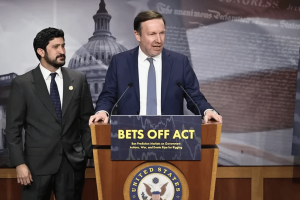
Breaking: U.S. Lawmakers Launch Major Crackdown on Prediction Markets Tied to Government Actions
In a bold move that’s sending shockwaves through the tech and betting industries, U.S. lawmakers have introduced groundbreaking legislation targeting prediction markets linked to government decisions and sensitive geopolitical events.
The BETS OFF Act: A Game-Changer in Tech Regulation
Senator Chris Murphy and Representative Greg Casar unveiled the Banning Event Trading on Sensitive Operations and Federal Functions Act—dubbed the BETS OFF Act—in a dramatic press conference that’s already gone viral across social media platforms. The proposed legislation represents the most significant regulatory challenge yet to the rapidly growing prediction market industry.
What’s at Stake?
The bill specifically targets platforms like Polymarket and Kalshi, prohibiting them from offering contracts tied to:
– Official government decisions and actions
– Military operations and war-related events
– Terrorist activities and assassination attempts
– Any event where insiders could have advance knowledge
– Situations controlled by single individuals
“This is about protecting the integrity of our government and preventing financial exploitation of classified information,” Murphy stated emphatically. “These markets create perverse incentives that could fundamentally corrupt our democratic processes.”
The Iran Strike Controversy: Catalyst for Action
The legislation gained momentum following explosive revelations about suspicious betting activity surrounding U.S. military strikes against Iran. According to Murphy, prediction markets saw a surge of unusual wagers placed just 24 hours before the attacks occurred.
“We’re talking about bets worth hundreds of thousands of dollars placed by accounts created that same day,” Murphy revealed. “The timing and pattern suggest someone with inside knowledge was cashing in on classified military plans.”
The Numbers Tell a Disturbing Story
Representative Casar provided additional details that have tech analysts buzzing:
– Approximately 150 accounts placed highly unusual wagers
– 109 accounts bet more than $10,000 each
– 16 accounts reportedly earned over $100,000
– One bettor allegedly walked away with nearly $500,000 in profits
“This isn’t gambling—it’s insider trading on steroids,” Casar declared. “We cannot allow people in positions of power to profit from decisions that affect millions of lives.”
Beyond Military Operations: The Broader Implications
The proposed legislation addresses numerous concerning scenarios where prediction markets could be exploited:
– Politicians betting on their own policy announcements
– Corporate insiders trading on regulatory decisions
– Intelligence officials profiting from classified information
– Media manipulation to influence market outcomes
One particularly disturbing case involved Israeli journalist Emanuel Fabian, who received death threats from Polymarket bettors after his reporting about an Iranian missile strike affected a high-stakes betting contract.
“The harassment was relentless,” Fabian reported. “They demanded I change my reporting to manipulate the market outcome. This is the dark side of prediction markets that no one’s talking about.”
The Tech Industry’s Response
Prediction market platforms have defended their operations, arguing they provide valuable forecasting tools and aggregate public information effectively. However, the BETS OFF Act represents a significant challenge to their business model.
“Prediction markets can be useful for forecasting trends in entertainment or sports,” Murphy acknowledged. “But when it comes to government actions, classified information, and national security, the risks far outweigh any potential benefits.”
Viral Tech Policy: A New Frontier
The BETS OFF Act is part of a broader trend of viral tech policy initiatives gaining traction in Washington. As social media amplifies political messaging, lawmakers are increasingly using dramatic revelations and viral moments to advance regulatory agendas.
“This legislation combines serious policy concerns with viral-worthy revelations,” tech policy expert Dr. Sarah Chen noted. “The Iran betting scandal provides the perfect narrative hook for what could otherwise be a dry regulatory debate.”
What Happens Next?
The bill faces an uncertain path through Congress, with tech industry lobbyists already mounting opposition campaigns. However, the viral nature of the controversy surrounding prediction markets may give the legislation momentum.
If passed, the BETS OFF Act would represent one of the most significant regulatory interventions in the tech industry since the GDPR in Europe, potentially reshaping how platforms handle sensitive information and government-related content.
Tags: #BETSOFFAct #PredictionMarkets #GovernmentRegulation #TechPolicy #InsiderTrading #NationalSecurity #DigitalGambling #ViralPolitics #TechCrackdown #GovernmentAccountability
Viral Phrases: “Insider trading on steroids,” “corrupt markets,” “perverse incentives,” “gullible consumers,” “rigged markets,” “fraud on a massive scale,” “democracy for sale,” “classified information casino,” “tech regulation gone viral,” “Washington’s tech awakening”
Viral Sentences: “Someone in the Situation Room shouldn’t be able to bet on war,” “These aren’t markets—they’re information casinos,” “When government secrets become gambling chips, everyone loses,” “The Iran strike betting scandal is just the tip of the iceberg,” “Prediction markets: where classified meets capitalism,” “This isn’t innovation—it’s exploitation,” “Washington finally woke up to Silicon Valley’s dark side,” “The tech industry’s free-for-all is over,” “Viral policy meets serious regulation,” “Your government secrets shouldn’t be someone’s lottery ticket”,

Leave a Reply
Want to join the discussion?Feel free to contribute!