
Lenovo Unveils an Attachable AI Agent ‘Companion’ for Their Laptops

Lenovo Unveils Revolutionary AI-Powered Accessories at Mobile World Congress 2025
In a bold move that’s set to redefine the laptop experience, Lenovo has unveiled a suite of cutting-edge AI companions and modular computing concepts at the Mobile World Conference in Barcelona, Spain. These innovations represent a significant leap forward in human-computer interaction, blending artificial intelligence with intuitive design to create devices that don’t just compute—they collaborate.
Tico: The Adorable AI Companion That Lives on Your Laptop
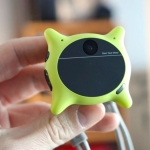
Perhaps the most charming revelation from Lenovo’s showcase is Tico, a diminutive circular module that magnetically attaches to the top of select Lenovo laptop displays via the company’s proprietary Magic Bay system. This isn’t just another piece of hardware—it’s a personality-driven AI agent designed to make your computing experience more engaging and productive.
Tico features an animated companion with expressive eyes and customizable reactions that respond to your interactions. Users can communicate with Tico through multiple modalities: text input, voice commands, or even emoji-based communication. The versatility is impressive—send a book emoji, and Tico will don virtual glasses and sit attentively as if reading alongside you, creating a sense of companionship during long work sessions.
The functionality extends beyond novelty. Tico can manage your music playback, launch web pages, answer queries, and serve as a productivity assistant. One particularly thoughtful feature is the integrated Pomodoro-style timer, helping users maintain focus through structured work intervals—a boon for those practicing time management techniques.
While Lenovo has confirmed plans to bring the Magic Bay accessory to market later this year, specifics regarding pricing and exact availability remain under wraps. Industry analysts speculate the accessory could range from $99 to $199, positioning it as an accessible enhancement rather than a premium add-on.
AI Workmate: The Futuristic Desktop Companion
Taking the concept of AI assistance to another dimension, Lenovo introduced the AI Workmate—a stationary tabletop robot that wouldn’t look out of place in a Pixar film. This orb-headed, lamp-like device represents a paradigm shift in workspace technology, functioning as a bridge between physical and digital realms.
The AI Workmate is equipped with an array of sensors including cameras, microphones, and projectors, enabling it to perform tasks that blur the line between digital assistant and creative collaborator. During demonstrations, the device showcased its ability to transform handwritten notes into digital assets, recognize hand gestures for intuitive control, and summarize complex tasks with remarkable accuracy.
Perhaps most impressively, the Workmate can project presentations directly onto walls with its robotic head swiveling to ensure optimal viewing angles. This eliminates the need for separate projectors or complex setup procedures, streamlining the presentation process for professionals.
Lenovo positions the AI Workmate as a proactive productivity partner that surfaces priority tasks the moment you sit down, maintains context across applications, and helps organize workflows without requiring constant manual input. The company emphasizes its on-device AI processing, addressing privacy concerns by ensuring sensitive data never leaves the local environment.
ThinkBook Modular AI PC: The Future of Flexible Computing
Lenovo’s ThinkBook Modular AI PC concept pushes the boundaries of traditional laptop design with its innovative dual-screen architecture. At first glance, it appears to be a conventional laptop, but a closer look reveals a removable secondary screen that can be repositioned in multiple configurations.
The modular screen can be detached and attached to the keyboard deck, effectively replacing the physical keyboard (which then functions wirelessly), or used as a portable external monitor connected via an included cable. This flexibility allows users to customize their workspace based on specific tasks—ideal for creative professionals, coders, or anyone who benefits from expanded screen real estate.
Industry experts view this concept as one of Lenovo’s most practical innovations, with many predicting it could reach consumer shelves within the next 18-24 months. The modular approach addresses a growing demand for adaptable computing solutions in an era where work styles continue to evolve rapidly.
Yoga Book Pro 3D Concept: A New Dimension in Display Technology
Perhaps the most technically ambitious of Lenovo’s concepts is the Yoga Book Pro 3D, which employs directional backlight and eye-tracking technology to create glasses-free 3D experiences. This isn’t the stereoscopic 3D of previous generations—instead, the device plays slightly different images to each eye, creating a convincing depth illusion without requiring special eyewear.
The 3D functionality extends beyond passive viewing. Users can manipulate 3D models through gesture control, making it particularly valuable for designers, architects, and other professionals who work with three-dimensional assets. The device features dual OLED displays and introduces “snap-on pads”—magnetic accessories that, when placed on the screen, reveal contextual control menus for adjusting lighting, viewing angles, and color tones.
This level of integration between hardware and software represents Lenovo’s vision for the future of creative computing, where the interface adapts to the task rather than forcing users to adapt to the interface.
Industry Impact and Future Implications
Lenovo’s announcements at MWC 2025 signal a broader industry trend toward more anthropomorphic and interactive computing devices. As artificial intelligence becomes increasingly sophisticated, tech companies are exploring ways to make these capabilities more accessible and engaging through physical embodiments and personality-driven interfaces.
The success of these concepts could influence the entire laptop market, pushing competitors to develop similar AI companions and modular designs. However, challenges remain—battery life optimization for always-on AI features, privacy concerns regarding always-listening devices, and the balance between functionality and distraction will all factor into consumer adoption.
What’s clear is that Lenovo is betting heavily on the convergence of AI, modular hardware, and intuitive interfaces as the future of personal computing. Whether consumers embrace these anthropomorphic assistants or prefer more traditional approaches remains to be seen, but one thing is certain: the laptop of tomorrow will be far more interactive, adaptable, and intelligent than anything we’ve seen before.
Tags & Viral Phrases:
- AI companion that reads with you
- Lenovo’s adorable Tico laptop buddy
- Magic Bay magnetic attachment system
- Pixar-style desktop robot assistant
- AI Workmate transforms your workspace
- Modular laptop with removable second screen
- Future of computing is modular and AI-powered
- Glasses-free 3D laptop technology
- Gesture control for 3D models
- Snap-on pads reveal hidden control menus
- Lenovo’s most futuristic laptop concepts yet
- AI that greets you when you sit down
- Transforming sketches into presentations instantly
- Bridging physical and digital worlds
- Next-generation AI work companion
- The laptop that adapts to you
- Lenovo’s MWC 2025 game-changing announcements
- Computing that feels like collaboration
- Personality-driven artificial intelligence
- The end of traditional laptop design
,
Leave a Reply
Want to join the discussion?Feel free to contribute!