
Lightning ‘Whistler’ Detected on Mars For The First Time, Scientists Report : ScienceAlert
For the first time, scientists have detected the eerie “howl” of a lightning-like discharge echoing across the Martian sky. NASA’s MAVEN spacecraft, orbiting the red planet, recorded an unusual electromagnetic signal on June 21, 2015. Now, researchers have confirmed it as a ‘whistler’ — a dispersed radio wave produced when lightning-generated emissions travel through a planet’s ionosphere. This discovery proves that electrical discharges do occur in the Martian atmosphere, and that the way their radio waves travel through plasma follows the same physical rules that shape lightning signals here on Earth.
Earth and Mars are similar in many ways, but different enough that scientists can’t be sure the same phenomena even occur at both planets, let alone that they are driven by the same mechanisms. Take lightning, for instance. These powerful zig-zags of raw electricity are thought to occur when turbulent conditions in an atmosphere jostle particles around, rubbing them together to generate charge. Eventually, so much charge builds up that it has to discharge.
Here on Earth, lightning is most strongly associated with clouds of water vapor, but there’s very little water in Mars’ atmosphere. The good news is that wetness isn’t required. On Earth, lightning discharges rage in the giant spumes of ash belched forth by volcanoes, for instance. And just last year, scientists announced that they had finally detected electrical discharges on Mars — likely generated by jostling particles of sand in the red planet’s wild dust weather.
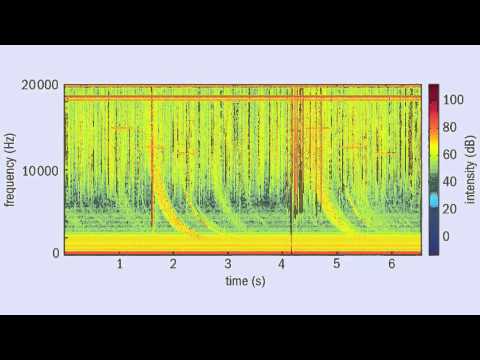
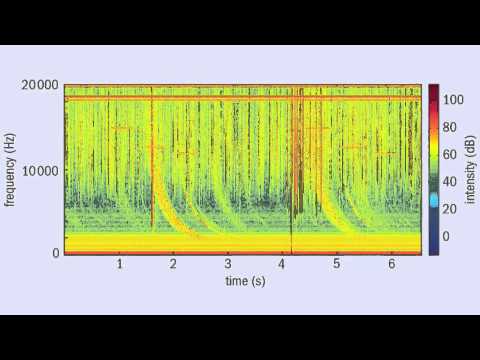
A whistler is a particular type of signal emitted by lightning. When lightning strikes, it emits electromagnetic radiation — the spectrum that includes light — from very low frequency radio waves all the way up to X-rays. The lowest-frequency radio waves in this emission can propagate upward through the planet’s ionosphere, traveling as plasma waves along magnetic field lines. Because higher-frequency waves travel faster than lower-frequency ones, the signal spreads out in time. When converted to audio from plasma wave data, it produces a descending tone, like the distant call of a whale.
The video below captures an example of whistlers generated by lightning during a volcanic eruption on Earth.
frameborder=”0″ allow=”accelerometer; autoplay; clipboard-write; encrypted-media; gyroscope; picture-in-picture; web-share” referrerpolicy=”strict-origin-when-cross-origin” allowfullscreen>
Mars doesn’t have a global magnetic field, so it seems unlikely that whistlers could propagate there. However, it does have localized patches of magnetic field, preserved through magnetized minerals in its crust — a sort of fossilized remnant of the magnetic field it once had. Studies from decades ago had suggested that these crustal magnetic fields could facilitate whistlers.
MAVEN started taking observations of Mars in 2014, equipped with a suite of instruments that included a plasma wave instrument recording in the right frequencies. Led by atmospheric physicist František Němec of Charles University in Czechia, a team of scientists made a careful study of 108,418 plasma wave recordings, looking for the telltale features of a whistler. Amazingly, they found one. Even more amazingly, it matched the predictions made decades ago.
The single whistler event was recorded over a crustal magnetic field, at an altitude of 349 kilometers (217 miles) on the night side of Mars. This last part is crucial: When under the direct glare of the Sun, Mars’ ionosphere compresses, suppressing the propagation of plasma waves. The event looked very similar to whistlers on Earth. It lasted about 0.4 seconds, sweeping downward in frequency over time, and was about 10 times stronger than the background noise.
When the team modeled Mars’ magnetic field and plasma density in that region, and combined it with how long such a signal would take to travel from the surface, they got an almost perfect match. It wouldn’t have been weak lightning, either. Even though the measured signal was relatively weak compared to Earth whistlers, when the researchers accounted for signal loss during travel, the estimated energy at the source would be comparable to a strong lightning discharge by Earth standards.
The result also shows why more such signals haven’t been detected. Besides the fact that we have very few orbital instruments monitoring Mars compared to Earth, the conditions have to be exactly right: an almost vertical magnetic field, on the nightside, with a weak enough ionosphere that plasma waves can propagate. Fewer than 1 percent of the wave snapshots were recorded in regions with the right magnetic geometry. So you need a powerful electrical discharge, at a specific place and time, with a spacecraft carrying the right instruments to record it passing by just at the right moment.
This means it’s likely that lightning occurs on Mars more than we know. Which on its own is pretty exciting — with some even more exciting implications. Some origin-of-life experiments in the lab have shown that electrical discharges can spark the formation of key organic molecules — lightning-like processes that may have helped kickstart prebiotic chemistry on early Earth. If similar discharges occur on Mars, those processes become one more factor astrobiologists can consider when evaluating whether the red planet ever had conditions suitable for life.
The research has been published in Science Advances.
#tags
Mars lightning, Martian whistler, MAVEN spacecraft, electrical discharges on Mars, plasma waves, crustal magnetic fields, origin of life, astrobiology, Martian atmosphere, electromagnetic signals
#viral phrases
First-ever lightning-like signal on Mars detected, eerie Martian howl captured by NASA, lightning on the red planet confirmed, MAVEN spacecraft hears Martian whistler, electrical discharges spark life’s building blocks, Mars may have more lightning than we thought, cosmic echoes from the red planet, lightning’s role in Martian chemistry, Martian plasma waves travel just like Earth’s, fossilized magnetic fields enable Martian whistlers.,


Leave a Reply
Want to join the discussion?Feel free to contribute!