
Linkerbot works on giving robots human-like hands to act in the real world · TechNode
Linkerbot’s Robotic Hands Are Redefining Embodied AI—Here’s Why It Matters
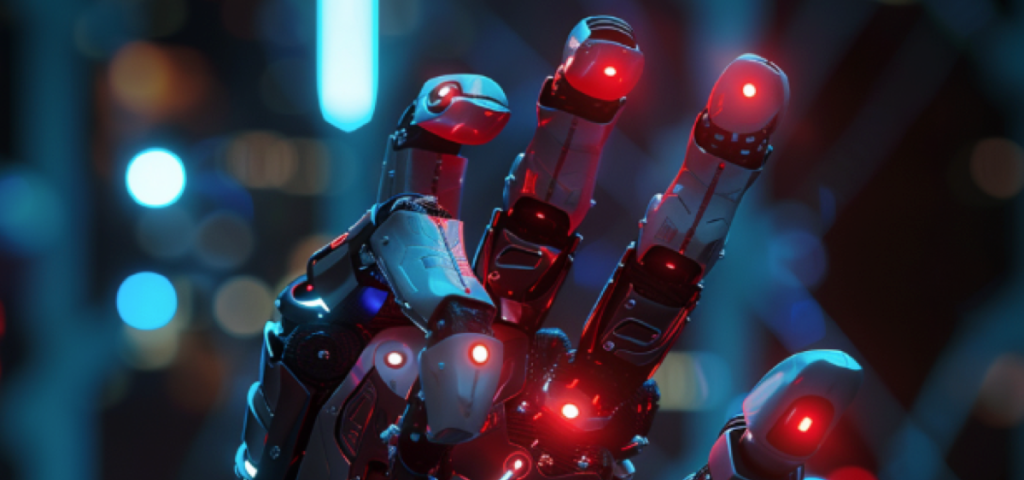
If artificial intelligence is the brain, then robotic hands are the body. And right now, Linkerbot is building the most advanced robotic hands on the planet, pushing the boundaries of what machines can physically do in the real world. As NVIDIA CEO Jensen Huang has said, the next wave of AI is physical—and Linkerbot is betting that the bottleneck isn’t computing power, but hardware that can keep up.
Linkerbot’s vision is bold: to create the foundational infrastructure for embodied intelligence. Their high-DOF (Degree of Freedom) dexterous robotic hands are not just lab experiments—they’re already being deployed in factories, hospitals, and even homes. From precision micro-assembly in automotive and electronics to caregiving tasks like folding clothes and pouring coffee, these robotic hands are designed to free humans from dangerous, repetitive, and physically demanding work.
What sets Linkerbot apart? They’ve introduced a PEEK-based (Polyether Ether Ketone) reducer, making their robots lighter, more efficient, and more durable. They’re also exploring multiple technical paths—tendon-driven, linkage-based, and direct-drive—while developing AI-powered hands with integrated perception. On the software side, they’ve built a physical world model, launched the Linker Creation Model, and created Linker OS and a real-world reinforcement learning framework to close the loop from data collection to model training.
But the real challenge isn’t just building advanced hands—it’s earning trust in the physical world. In factories, a software bug can be fixed with a patch, but in real-life scenarios, a bug can mean physical damage or safety risks. Linkerbot’s Linker Hand series has survived crash tests, drop tests, and even helped set national standards. On the global ManipulationNet benchmark, they’ve completed remote Peg-in-Hole manipulation validation, a key test for fine motor control.
Linkerbot is also bridging the gap between academic research and industrial deployment. Their modular teleoperation system, Open TeleDex, is built on the TripleAny concept—any hand, any arm, any device—making it easier for developers to experiment and collaborate. Their products are already being used in labs at Stanford and Cambridge, and they’re paying close attention to healthcare and eldercare needs in aging societies like Japan and South Korea.
Scaling up is where the real impact begins. Linkerbot can now produce over 1,000 high-dexterity robotic hands per month and aims to scale that up to 50,000–100,000 units per year by 2026. With their recent Series A++ funding led by Sequoia China and CCV, they’re betting that more human-like hands, produced at real industrial scale, will lay the groundwork for the future of physical AI.
As Linkerbot’s team puts it: “When we deliver 100,000 dexterous hands, that means 100,000 dangerous, exhausting, or repetitive jobs can be taken over by robots. That’s our long-term commitment to using technology for good.”
Tags:
Embodied AI, Robotic Hands, Dexterity, Physical AI, Linkerbot, NVIDIA, Jensen Huang, PEEK, High-DOF, Automation, Manufacturing, Healthcare, Eldercare, Open Source, Reinforcement Learning, Scalability, Industrial Deployment, Innovation, Future of Robotics
Viral Sentences:
- “The next wave of AI is physical—and Linkerbot is building the body for it.”
- “Linkerbot’s robotic hands are not just tools—they’re the future of embodied intelligence.”
- “From factories to homes, Linkerbot is redefining what machines can do in the real world.”
- “Scale is where real impact begins—100,000 robotic hands could change the world.”
- “Linkerbot’s hands are built to survive crashes, drops, and the toughest real-world tests.”
- “The bottleneck isn’t computing power—it’s hardware that can keep up with AI’s potential.”
- “Linkerbot is bridging the gap between lab demos and real-world deployment.”
- “When robots learn to see, touch, move, and adapt, embodied intelligence begins to take shape.”
- “Linkerbot’s hands are not just for research—they’re for real-world impact.”
- “The future of AI isn’t just digital—it’s physical, and Linkerbot is leading the way.”
,

Leave a Reply
Want to join the discussion?Feel free to contribute!