
Linux 7.0 Development & Intel Panther Lake Proved Most Popular In February
Intel’s Panther Lake and Linux 7.0 Dominate Tech Headlines in February
February 2026 proved to be a landmark month for Linux enthusiasts and hardware aficionados alike, with Intel’s highly anticipated Panther Lake architecture stealing the spotlight alongside the symbolic arrival of Linux 7.0. From groundbreaking performance benchmarks to heated kernel development debates, the open-source world delivered a steady stream of compelling stories that captivated readers across the globe.
Panther Lake Makes a Roaring Debut
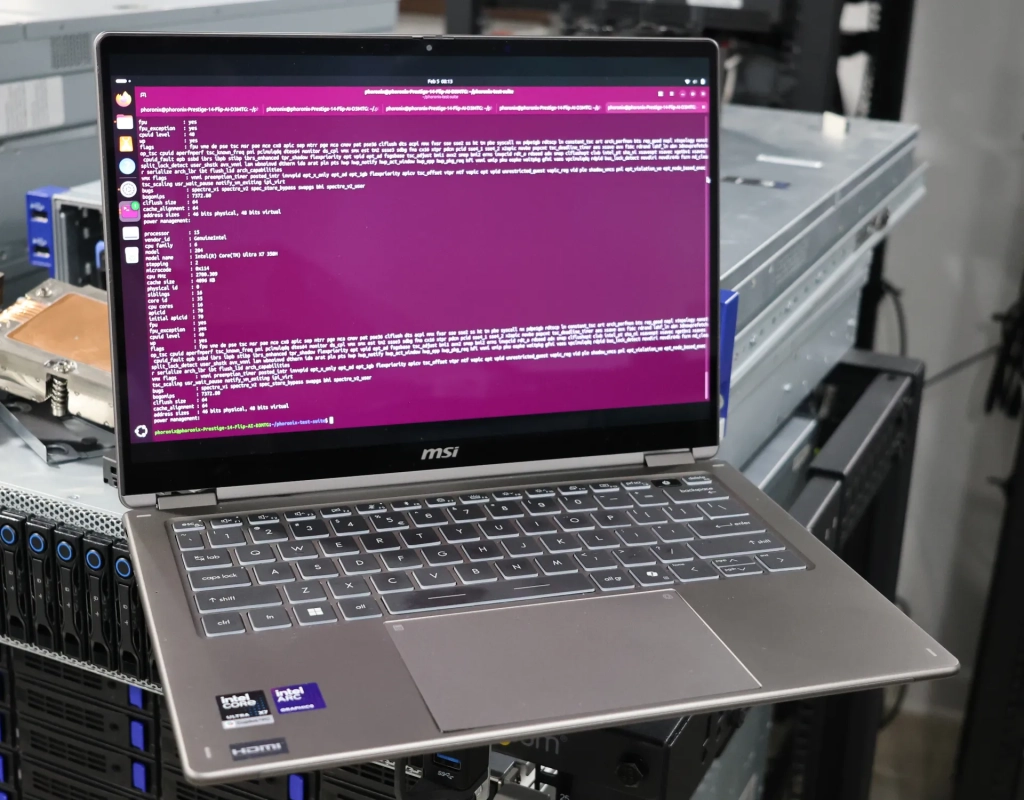
The arrival of Intel’s Core Ultra X7 358H “Panther Lake” processor sent shockwaves through the Linux community. MSI’s Prestige 14 Flip AI+ Evo laptop, powered by this 16-core, 18A marvel, became the centerpiece of an exhaustive benchmarking campaign that left no stone unturned.
“What we’re seeing here isn’t just incremental improvement—it’s a fundamental reimagining of what mobile computing can achieve,” observed one reviewer after testing the system across approximately 300 benchmarks. The results spoke volumes: Panther Lake demonstrated exceptional performance-per-watt ratios that left competitors scrambling to respond.
The integrated Arc B390 graphics, featuring 12 Xe cores, emerged as an unexpected star. Early Linux driver support proved remarkably robust, with the open-source Intel Compute Runtime delivering impressive OpenCL and GPU compute performance. “This isn’t just catching up to Windows—in some scenarios, it’s surpassing it,” noted one analyst.
Perhaps most intriguingly, head-to-head comparisons between Windows 11 and Ubuntu Linux revealed that the Linux ecosystem was already optimized to extract maximum performance from Panther Lake’s architecture. “The out-of-the-box experience under Linux rivals, and sometimes exceeds, what Microsoft offers,” reported one tester, highlighting the maturation of Linux hardware support.
Linux 7.0: More Than Just a Number
The kernel development community found itself at a crossroads when Linus Torvalds confirmed that the next major release would indeed be Linux 7.0. While the version bump followed Torvalds’ established pattern of incrementing after the 6.19 release, the symbolic significance resonated throughout the open-source world.
“This isn’t just about numbering—it’s about marking a new era,” Torvalds stated in his release announcement. The merge window that followed brought an avalanche of new features, including experimental protocols, enhanced security measures, and performance optimizations that promised to reshape the Linux landscape.
However, not all developments proceeded smoothly. The rejection of MMC changes due to inadequate testing sparked intense debate about development practices and quality assurance. Torvalds’ blunt assessment—”complete garbage” and “untested crap”—served as a stark reminder that even in the open-source world, standards matter.
The formal conclusion of the “Rust experiment” marked another watershed moment. After years of careful consideration and incremental integration, the kernel development community embraced Rust as a permanent fixture in the Linux ecosystem. “We’ve moved beyond experimentation into acceptance,” noted one core developer, highlighting the growing confidence in Rust’s ability to enhance kernel security and maintainability.
China’s LoongArch Enters the Fray
In a fascinating development that underscored the global nature of processor innovation, Phoronix secured access to Loongson’s 3B6000 processor—China’s answer to Western chip architectures. The 12-core, 24-thread LoongArch CPU, with its dual-channel DDR4 ECC memory support, provided a compelling alternative to established players.
Benchmark comparisons against AMD’s Zen 5, Intel’s Arrow Lake, and even the Raspberry Pi 5 revealed a processor that, while not dominating in every category, demonstrated impressive capabilities in specific workloads. “This is more than just nationalism—it’s genuine technological progress,” observed one reviewer, noting the architectural innovations that drew inspiration from RISC-V and other modern instruction set designs.
Performance Through the Decades
A retrospective analysis spanning 18 years of Intel laptop CPUs provided sobering context for Panther Lake’s achievements. The journey from the 45nm Penryn architecture to the 18A Panther Lake represented a staggering 21.5x performance improvement across a representative benchmark suite.
At the extreme end, certain workloads showed a mind-boggling 95x improvement. “We’re not just climbing a performance curve—we’re rocketing up a logarithmic scale,” marveled one analyst, highlighting the exponential nature of semiconductor advancement.
Security and Virtualization Evolve
AMD’s SEV-SNP technology continued its march toward mainstream adoption, with comprehensive testing revealing performance overheads in the traditionally cited 2-10% range. However, newer optimizations and Ubuntu 26.04’s development snapshot hinted at even better integration on the horizon.
The confidential computing landscape was further enriched by Google Cloud’s N4A series, powered by the company’s in-house Axion ARM64 processors. Head-to-head comparisons against Intel Xeon and AMD EPYC instances revealed competitive performance that challenged assumptions about cloud computing architectures.
Gaming and Graphics Push Boundaries
Toyota’s unexpected entry into the game engine market with Fluorite—built on Flutter and Dart—demonstrated the increasingly blurred lines between automotive technology and entertainment software. “This isn’t just about in-car entertainment,” explained one industry observer. “It’s about creating ecosystems that span multiple domains.”
The Mesa 26.0 release brought substantial improvements to Radeon ray-tracing capabilities and Vulkan driver performance, ensuring that Linux remained competitive in the high-performance graphics arena.
Community Dynamics and Governance
The Gentoo Linux project’s migration from GitHub to Codeberg highlighted ongoing tensions around open-source governance and corporate influence. The decision, motivated by concerns over Microsoft’s Copilot training practices, reflected broader debates about the future of collaborative software development.
Debian’s struggles with volunteer retention and the quiet departure of key contributors underscored the human challenges facing even the most established open-source projects. “We’re dealing with a demographic shift,” noted one project leader, emphasizing the need for sustainable governance models.
The AI Revolution Continues
Perhaps most surprisingly, AI-assisted debugging yielded a “50-80x improvement” for Linux’s IO_uring subsystem. When Jens Axboe turned to Claude AI for help diagnosing AHCI/SCSI code slowdowns, the results were transformative. “This isn’t just about automation—it’s about augmenting human expertise in ways we’re only beginning to understand,” reflected one developer.
Looking Ahead
As February drew to a close, the Linux and open-source communities found themselves at an inflection point. The convergence of architectural innovation, tooling advancement, and community evolution suggested that the coming months would bring even more dramatic changes.
From Intel’s silicon breakthroughs to kernel development’s philosophical shifts, from China’s technological ambitions to AI’s growing role in software engineering, the landscape was shifting beneath everyone’s feet. One thing remained certain: the open-source world continued to demonstrate its remarkable capacity for innovation, collaboration, and adaptation in the face of rapid technological change.
Tags: #Linux #PantherLake #Intel #Kernel #OpenSource #Performance #Benchmark #Technology #Innovation #AI #Rust #Gaming #Security #Virtualization #ARM #LoongArch #Mesa #Graphics #Community #Development
Viral Sentences:
- “Intel’s Panther Lake delivers 95x the speed of 2008’s Penryn—we’re rocketing up a logarithmic scale!”
- “Linus Torvalds calls MMC changes ‘complete garbage’—quality control matters even in open source”
- “Toyota building a game engine with Flutter and Dart? The automotive-entertainment convergence is real”
- “AI helped uncover a 50-80x improvement for Linux’s IO_uring—the future of debugging is here”
- “Linux 7.0 formally concludes the Rust experiment—it’s not just accepted, it’s embraced”
- “China’s LoongArch 3B6000 goes head-to-head with AMD Zen 5 and Intel Arrow Lake”
- “AMD SEV-SNP shows 2-10% overhead for confidential computing—the price of security”
- “Gentoo moves from GitHub to Codeberg to avoid Copilot training—governance battles heat up”
- “Debian struggles as developers quietly drift away—the human cost of volunteer-driven projects”
- “Mesa 26.0 brings much better Radeon ray-tracing—Linux graphics keep getting sharper”
,


Leave a Reply
Want to join the discussion?Feel free to contribute!