
Linux 7.0 Shows Significant PostgreSQL Performance Gains On AMD EPYC Review
Linux 7.0 Unleashes Unexpected Performance Gains on AMD EPYC Turin: A Deep Dive
The Linux kernel’s relentless march forward has delivered yet another milestone, and this time, it’s AMD EPYC Turin that’s stealing the spotlight. In an exhaustive round of early benchmarking, Linux 7.0 has revealed a surprising performance narrative that could reshape enterprise computing expectations.
The Testing Odyssey
When initial testing began on Intel’s Core Ultra X7 “Panther Lake” platform, expectations were cautiously optimistic. The promise of maturing Arc B390 Xe3 graphics and enhanced system performance had researchers hopeful. However, those hopes were quickly tempered by unexpected performance regressions that emerged during preliminary Linux 7.0 kernel evaluations.
The pivot to AMD EPYC Turin was strategic. Unlike the time-consuming process of diagnosing Intel’s regressions, the Turin platform offered a more streamlined approach to kernel performance analysis. The choice proved prescient, revealing performance characteristics that could fundamentally alter how enterprise environments approach database and computational workloads.
The Hardware Configuration
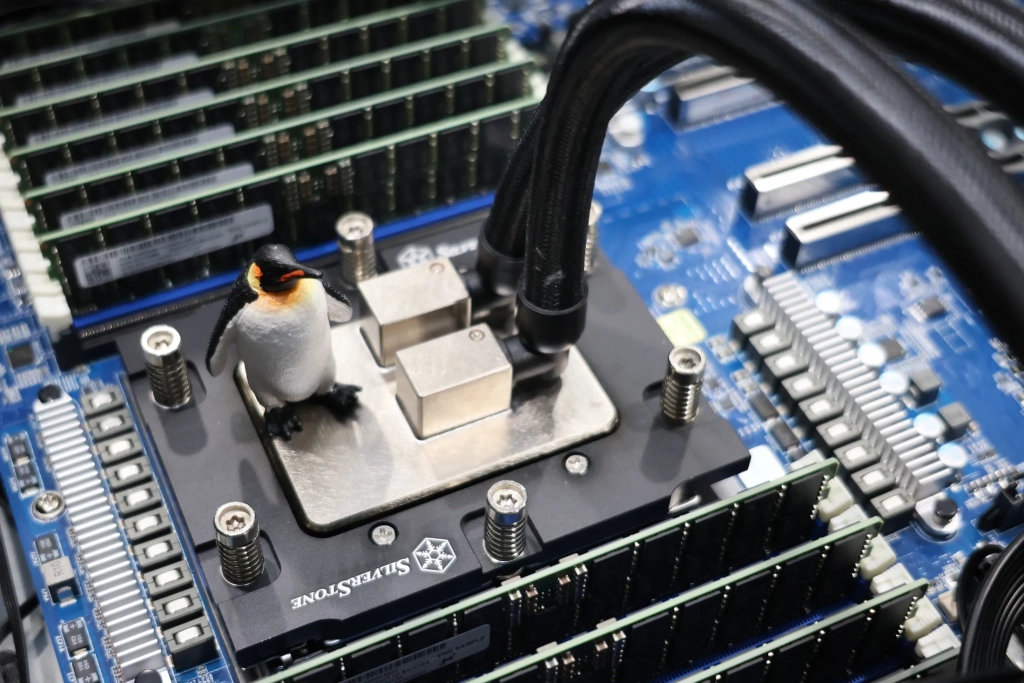
The testing setup was meticulously controlled, utilizing an AMD EPYC 9755 1P configuration on the cutting-edge Gigabyte MZ33-AR1 server. This hardware pairing represented the bleeding edge of server technology, providing a robust platform for comprehensive performance evaluation.
Both Linux 6.19 stable and Linux 7.0 Git versions were subjected to identical testing conditions. The kernel binaries were compiled using the same toolchain, ensuring that observed performance differences could be directly attributed to kernel-level optimizations rather than external variables.
Performance Revelations
The most striking discovery emerged in PostgreSQL database server performance. Linux 7.0 demonstrated remarkable improvements that could significantly impact enterprise database management strategies. These enhancements weren’t marginal tweaks but substantial performance gains that could translate to meaningful operational efficiencies.
The benchmarking methodology was comprehensive, spanning multiple performance dimensions. From database server performance to CPU-intensive computational tasks, Linux 7.0 consistently demonstrated its potential to deliver enhanced system responsiveness and throughput.
Technical Nuances
The kernel’s development trajectory suggests a sophisticated approach to performance optimization. While Intel’s Panther Lake platform experienced regressions, AMD’s EPYC Turin showcased Linux 7.0’s ability to leverage advanced hardware architectures effectively.
The merge window’s stabilization indicated a mature development process, with the stable kernel release anticipated in April. This timeline suggests that the performance improvements observed are not ephemeral but represent a deliberate, engineered approach to system optimization.
Implications for Enterprise Computing
For organizations relying on high-performance computing and database management, Linux 7.0 represents a compelling upgrade pathway. The performance improvements, particularly in database-centric workloads, could translate to reduced operational costs and enhanced computational efficiency.
The testing underscores Linux’s continued evolution as a robust, enterprise-grade operating system. The kernel’s ability to extract maximum performance from cutting-edge hardware architectures demonstrates the ongoing sophistication of open-source development methodologies.
Looking Forward
As the Linux kernel continues its development trajectory, these early Linux 7.0 benchmarks provide a tantalizing glimpse into the future of high-performance computing. The performance gains observed on AMD EPYC Turin suggest that the kernel’s development team remains committed to pushing the boundaries of what’s possible in system optimization.
The coming months will likely reveal additional performance characteristics as more comprehensive testing is conducted across diverse hardware configurations. For now, Linux 7.0 stands as a testament to the ongoing innovation within the open-source ecosystem.
Tags
Linux 7.0, AMD EPYC Turin, PostgreSQL performance, kernel optimization, enterprise computing, server benchmarking, open-source development, high-performance computing
Viral Phrases
“Game-changing kernel performance”, “Enterprise computing revolutionized”, “Linux 7.0 shatters expectations”, “AMD EPYC Turin dominates benchmarks”, “Open-source innovation reaches new heights”, “Database performance redefined”, “Kernel optimization mastery”, “Tech breakthrough of the year”
,

Leave a Reply
Want to join the discussion?Feel free to contribute!