
Linux 7.1 Will Power Off The System By Default If A Fatal ACPI Error Occurs
Linux 7.1 Introduces Automatic Shutdown on Fatal ACPI Errors: A Game-Changing Default Behavior
In a significant shift that’s set to redefine how Linux systems handle critical hardware errors, the upcoming Linux 7.1 kernel is introducing a default behavior that will automatically power off systems when encountering fatal ACPI (Advanced Configuration and Power Interface) errors. This change marks a departure from the longstanding practice of merely logging such errors while allowing systems to continue operating.
The Evolution of ACPI Error Handling in Linux
For years, Linux kernels have taken a relatively passive approach to fatal ACPI errors. When these critical errors occurred, the system would simply log a message reading “Fatal opcode executed” to the kernel system log, but otherwise continue running as if nothing had happened. This approach, while seemingly practical from a user experience standpoint, has technically been out of compliance with the ACPI specification for quite some time.
The ACPI specification explicitly states that when a fatal error occurs, the operating system “must log the fatal event and perform a controlled OS shutdown in a timely fashion.” Linux’s previous behavior of simply logging the error and moving on has been a deviation from this intended behavior, albeit one that many users and administrators have grown accustomed to.
Understanding the Implications of This Change
The decision to implement automatic shutdown on fatal ACPI errors in Linux 7.1 represents a significant shift in how the kernel handles critical system errors. This change is rooted in the understanding that fatal ACPI errors typically indicate serious problems with system firmware or hardware configuration that could lead to data corruption, system instability, or other unpredictable behavior if ignored.
By powering off the system immediately upon encountering a fatal ACPI error, Linux 7.1 aims to prevent potential data loss, system corruption, or other adverse effects that could result from continuing to operate a system with a critical firmware-level issue. This approach aligns Linux more closely with the original intent of the ACPI specification and provides a more robust error-handling mechanism for critical system errors.
Technical Implementation and Configuration Options
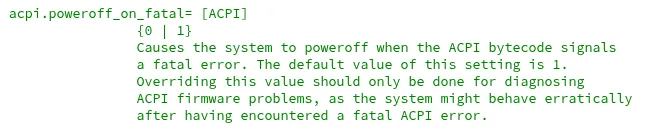
The change is being implemented through the Linux power management subsystem and is currently queued in the “linux-next” Git branch ahead of the Linux 7.1 release. The implementation includes a new kernel parameter, acpi.poweroff_on_fatal=0, which allows users to maintain the previous behavior if desired.
This configuration option provides flexibility for system administrators and users who may have specific requirements or workflows that necessitate the previous behavior. However, it’s worth noting that the default behavior will change to automatic shutdown, requiring explicit configuration to maintain the old behavior.
The Rationale Behind the Change
The decision to implement this change stems from several key considerations:
-
Specification Compliance: As mentioned earlier, the ACPI specification explicitly requires a controlled shutdown in response to fatal errors. Linux’s previous behavior was technically non-compliant with this specification.
-
System Stability and Data Integrity: Fatal ACPI errors often indicate serious problems with system firmware or hardware configuration. Continuing to operate a system in this state could lead to data corruption, system instability, or other unpredictable behavior.
-
Security Considerations: In some cases, fatal ACPI errors could potentially be exploited by malicious actors to compromise system security. An automatic shutdown provides a more secure response to such errors.
-
Consistency with Other Operating Systems: Many other operating systems already implement automatic shutdown on fatal ACPI errors, and this change brings Linux more in line with industry standards and practices.
Potential Impact on Users and Administrators
While this change is technically sound and aligns with best practices, it’s important to consider the potential impact on users and system administrators:
-
Unexpected System Shutdowns: Users may experience unexpected system shutdowns if their systems encounter fatal ACPI errors. This could be particularly problematic in production environments or for users running critical workloads.
-
Troubleshooting Challenges: Automatic shutdowns may complicate troubleshooting efforts, as the system will no longer be running when the error is logged. Administrators will need to rely on system logs and other diagnostic tools to identify and resolve issues.
-
Compatibility Considerations: Some older systems or systems with buggy firmware may encounter fatal ACPI errors more frequently. These systems may require additional configuration or updates to function properly with the new default behavior.
-
Workflow Adjustments: Users and administrators may need to adjust their workflows and procedures to account for the possibility of unexpected system shutdowns.
Best Practices and Recommendations
To prepare for this change and ensure a smooth transition, consider the following best practices:
-
Test in Non-Production Environments: Before deploying Linux 7.1 in production environments, thoroughly test systems to identify any potential issues with the new behavior.
-
Monitor System Logs: Pay close attention to system logs to identify any recurring fatal ACPI errors that may indicate underlying hardware or firmware issues.
-
Keep Firmware Updated: Ensure that system firmware (BIOS/UEFI) is up to date, as many fatal ACPI errors can be resolved through firmware updates.
-
Consider Configuration Options: Evaluate whether the default behavior is appropriate for your use case, and consider using the
acpi.poweroff_on_fatal=0option if necessary. -
Develop Contingency Plans: Have procedures in place to handle unexpected system shutdowns, particularly in production environments.
Looking Ahead: The Future of ACPI Error Handling in Linux
The introduction of automatic shutdown on fatal ACPI errors in Linux 7.1 represents a significant step forward in system reliability and specification compliance. As Linux continues to evolve and mature, we can expect to see further refinements and improvements in how the kernel handles critical system errors.
This change also highlights the ongoing balance between user experience, system stability, and adherence to technical specifications that Linux developers must navigate. While some users may initially find the new behavior disruptive, it ultimately represents a more robust and standards-compliant approach to handling critical system errors.
As with any significant change in a widely-used operating system, the introduction of this new default behavior will likely spark discussion and debate within the Linux community. However, the technical merits of the change and its alignment with industry best practices suggest that it will ultimately be viewed as a positive evolution in Linux’s error-handling capabilities.
Tags and Viral Phrases:
- Linux 7.1 kernel
- Automatic shutdown on fatal ACPI errors
- ACPI specification compliance
- System stability and data integrity
- Kernel power management
- linux-next Git branch
- acpi.poweroff_on_fatal=0
- Fatal opcode executed
- System firmware bugs
- Linux kernel development
- Operating system error handling
- Production environment considerations
- BIOS/UEFI updates
- Linux community debate
- Technical specification alignment
- System reliability improvements
- Critical system errors
- Kernel configuration options
- Linux 7.1 release
- ACPI error logging
,


Leave a Reply
Want to join the discussion?Feel free to contribute!