
Linuxulator-Steam-Utils To Enjoy Steam Play Gaming On FreeBSD & Other Options
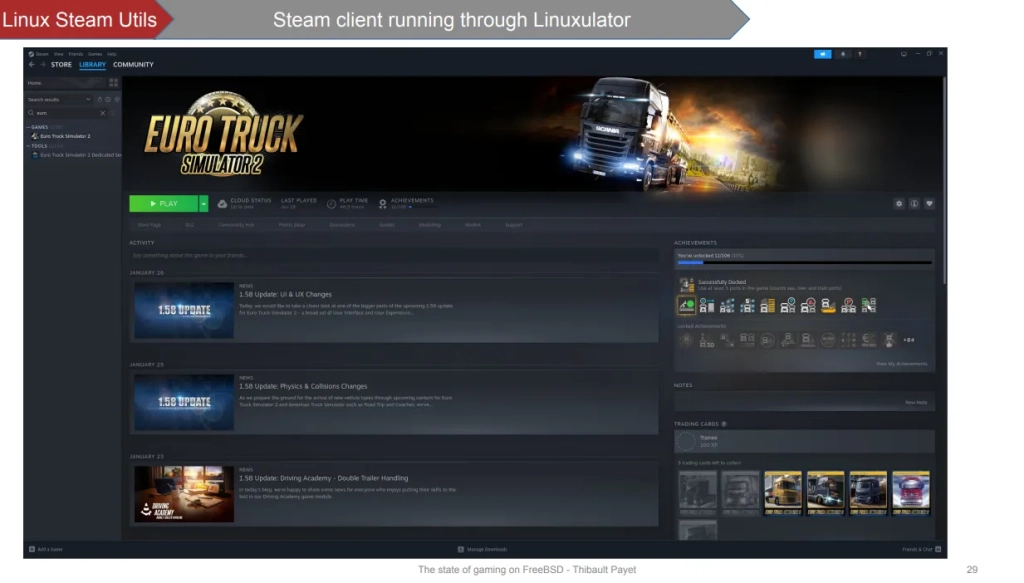
FreeBSD Gaming Gets a Major Boost with Linuxulator-Steam-Utils: Native Steam Play Support Arrives
In a groundbreaking development for the open-source community, FreeBSD has taken a quantum leap forward in gaming capabilities. At FOSDEM 2026 in Brussels, Thibault Payet unveiled the state of gaming on FreeBSD, showcasing how this venerable BSD operating system is now positioned to compete directly with Linux in the gaming arena. The star of the show? The revolutionary “linuxulator-steam-utils” project, which brings Steam Play (Proton) support to FreeBSD 14 and newer versions.
The Linuxulator Revolution: Bridging Worlds
FreeBSD’s Linuxulator has long been a powerful tool, allowing users to run Linux binaries natively on the BSD platform. However, the new Linuxulator-Steam-Utils project takes this capability to unprecedented heights. This isn’t just about running Linux applications anymore—it’s about creating a seamless gaming experience that rivals dedicated gaming platforms.
The genius of Linuxulator-Steam-Utils lies in its comprehensive approach to solving the complex challenges of running Steam and Steam Play games on FreeBSD. The project addresses critical issues including GPU acceleration, which has historically been a stumbling block for gaming on alternative operating systems. By implementing sophisticated workarounds and optimizations, the team has created a system where Windows games can run through Proton on FreeBSD’s Linux translation layer.
Technical Deep Dive: How It Works
The architecture of Linuxulator-Steam-Utils is nothing short of brilliant. At its core, the system creates a user chroot environment that leverages the Steam runtime, ensuring compatibility with a vast library of games. This approach solves one of the biggest headaches in cross-platform gaming: dependency hell. By isolating the Steam environment, the system can maintain the exact library versions that games expect, regardless of what’s installed on the host FreeBSD system.
Wine-Proton support is another crucial component, allowing users to run Windows games that haven’t been natively ported to Linux. This opens up an enormous catalog of titles that were previously inaccessible to FreeBSD users. The integration is so seamless that gamers won’t need to think about whether a game is running through Proton or natively—it just works.
Gamepad support rounds out the package, addressing another critical aspect of the gaming experience. Whether you’re using a Steam Controller, Xbox controller, or PlayStation DualSense, the system provides the necessary translation layers to ensure your input devices work flawlessly.
Hardware Considerations: The NVIDIA Advantage
While the software solutions are impressive, hardware support remains a crucial factor in gaming performance. According to Payet’s presentation, NVIDIA graphics cards with the official FreeBSD NVIDIA driver continue to offer the best gaming experience. This shouldn’t come as a surprise, given NVIDIA’s strong commitment to maintaining quality drivers across multiple platforms.
Intel and AMD users aren’t left out entirely, though. The open-source Intel and AMD drivers have been ported to FreeBSD, but they lag behind their Linux counterparts in terms of features and performance. This gap is particularly noticeable in newer games that take advantage of the latest graphics APIs and hardware features. However, for older titles or less demanding games, these drivers still provide a viable option.
Alternative Approaches: Bhyve and GPU Passthrough
For users seeking maximum performance or compatibility, FreeBSD offers another intriguing option: Bhyve virtual machines with GPU passthrough support. This approach allows gamers to run a full Linux installation inside a virtual machine while giving it direct access to the GPU hardware. The result is near-native performance with the flexibility of running any Linux distribution and gaming stack you prefer.
This method is particularly appealing for users who want to maintain a pure FreeBSD desktop environment while still having access to the full spectrum of Linux gaming capabilities. It’s a more complex setup that requires hardware with IOMMU support and some technical expertise, but for enthusiasts, it represents the ultimate in flexibility.
The Road Ahead: 2026 and Beyond
Looking at the broader picture, FreeBSD’s gaming capabilities in 2026 represent a significant milestone for the BSD ecosystem. For years, gaming has been one of the primary barriers preventing wider adoption of FreeBSD and other BSDs on desktop systems. With these new developments, that barrier is rapidly crumbling.
The implications extend beyond just gaming. As more users adopt FreeBSD for its stability, security, and performance characteristics, the increased desktop usage will likely drive further development in areas like hardware support, application compatibility, and user experience. It’s a virtuous cycle that could see FreeBSD becoming a serious contender in the desktop operating system market.
Community and Development
The Linuxulator-Steam-Utils project is hosted on GitHub, making it accessible to developers and enthusiasts who want to contribute or experiment with the technology. This open development model ensures that the project can benefit from community input and evolve rapidly to address new challenges as they arise.
The FOSDEM presentation slides are available for those who want to dive deeper into the technical details, though the video recording is still pending. This level of transparency and community engagement is characteristic of the open-source ethos that drives projects like this forward.
Performance and Compatibility Expectations
While the technology is impressive, it’s worth setting realistic expectations. Running games through translation layers and compatibility layers will inherently involve some performance overhead compared to native execution. However, for many users, the convenience and expanded game library will more than compensate for any minor performance hits.
Compatibility is another consideration. While Steam Play has made enormous strides in recent years, not every Windows game will work perfectly through Proton on FreeBSD. The most demanding AAA titles with sophisticated anti-cheat systems may present challenges, but the vast majority of games in the Steam library should run without issues.
The Bigger Picture: Why This Matters
The significance of FreeBSD gaining robust gaming support extends beyond just providing another option for gamers. It represents a broader trend toward platform diversity in computing. As major operating systems become increasingly centralized and controlled, alternatives like FreeBSD offer users more choice and control over their computing environment.
For developers, FreeBSD’s improved gaming support means they can target a new platform without having to rewrite their games from scratch. The Linux compatibility layer means that Linux games can often run on FreeBSD with minimal or no modification, expanding the potential audience for their work.
Future Possibilities
Looking ahead, the success of Linuxulator-Steam-Utils could inspire similar efforts for other BSDs or even influence how other operating systems approach gaming compatibility. The techniques developed here—particularly around GPU acceleration and runtime isolation—could have applications far beyond just FreeBSD.
There’s also the possibility of native game development for FreeBSD gaining traction. As the platform becomes more viable for gaming, we might see developers creating games specifically for FreeBSD, taking advantage of its unique features and architecture.
Conclusion: A New Era for FreeBSD Gaming
The developments presented at FOSDEM 2026 mark a turning point for FreeBSD and gaming. What was once a significant limitation of the platform has become a showcase of technical innovation and community collaboration. The Linuxulator-Steam-Utils project demonstrates that with creativity and persistence, even seemingly insurmountable technical challenges can be overcome.
For FreeBSD users, this means access to a vast library of games that was previously out of reach. For the broader open-source community, it’s a testament to the power of collaboration and the endless possibilities that emerge when passionate developers tackle difficult problems. And for the gaming industry, it’s a reminder that platform diversity and open standards continue to play crucial roles in driving innovation forward.
The future of gaming on FreeBSD looks brighter than ever, and if the momentum from FOSDEM 2026 is any indication, we can expect even more exciting developments in the years to come.
Tags: FreeBSD Gaming, Linuxulator, Steam Play, Proton, FOSDEM 2026, Thibault Payet, Open Source Gaming, BSD Gaming, GPU Passthrough, Bhyve Virtualization, Cross-Platform Gaming, Steam on FreeBSD, Gaming Revolution, Alternative OS Gaming, Linux Compatibility Layer
Viral Sentences: FreeBSD just got gaming superpowers with Linuxulator-Steam-Utils! 🚀 Gaming on BSD is no longer a dream—it’s reality! 🎮 NVIDIA reigns supreme for FreeBSD gaming performance. 💻 Bhyve GPU passthrough: The ultimate FreeBSD gaming hack! 🕹️ Steam Play on FreeBSD? Yes, please! 🎉 The future of open-source gaming is here! 🌟 FreeBSD gaming in 2026: Better than ever before! 🏆 Breaking barriers: Windows games now run on FreeBSD! 🔓 Gaming diversity matters: Choose your platform freely! ✊ Technical wizardry meets gaming passion! 🧙♂️ The BSD gaming revolution has begun! 🎆 From limitation to liberation: FreeBSD’s gaming journey! 🚀 Community-driven innovation at its finest! 👏 Game on, FreeBSD users! 🎮
,

Leave a Reply
Want to join the discussion?Feel free to contribute!