
loss32 is a Linux Distro Nobody Asked For (But Still Has Its Use)
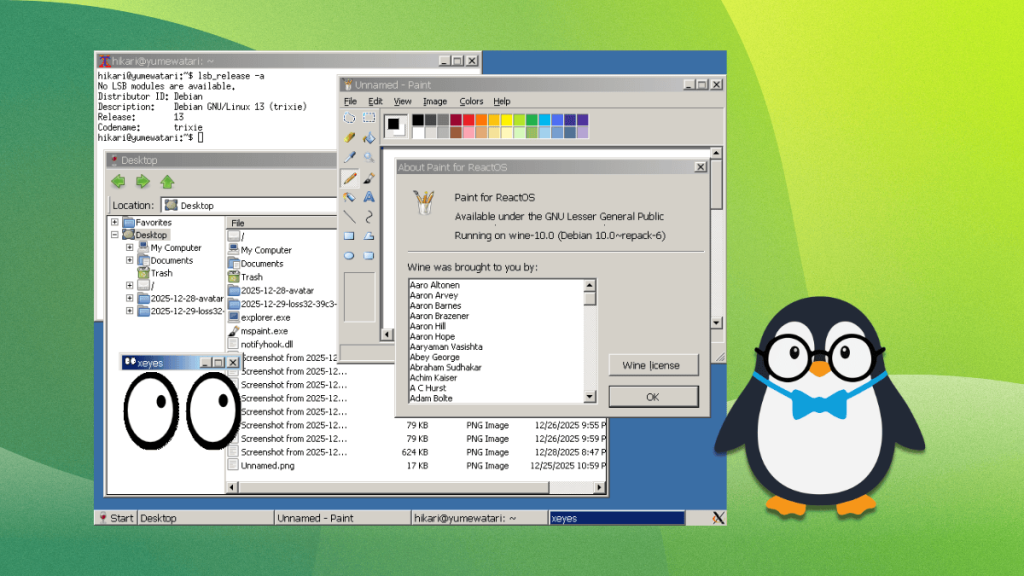
Loss32: A Linux Distribution That Runs an Entire Windows 98-Style Desktop Inside Wine
In a bold move that blurs the lines between operating systems, a new Linux distribution called loss32 is preparing to launch—one that essentially turns your Linux desktop into a fully functional Windows 98-style environment, all powered by Wine.
The Concept: Win32 on Linux, Reimagined
Created by developer hikari_no_yume, loss32 stands for “Win32 plus Linux”—and that’s exactly what it delivers. Unlike traditional compatibility layers or emulation projects, loss32 takes the radical approach of making the entire desktop environment Win32 software running under Wine on top of Debian 13.
The project’s premise sounds almost absurd on paper: why would anyone want to run a Windows 98-style desktop on Linux? But as hikari_no_yume explains, this isn’t about nostalgia alone—it’s about creating a stable, long-term computing environment that leverages decades of software compatibility.
How It Works: The Technical Foundation
At its core, loss32 uses Wine as the compatibility layer to run Win32 applications, but the innovation lies in how deeply integrated this becomes. The entire desktop shell—taskbar, file explorer, system utilities—are all native Win32 applications executing within Wine’s translation layer.
The project explicitly differentiates itself from ReactOS, which attempts to reimplement the Windows NT kernel. Instead, loss32 takes user-space components from ReactOS while building on the more practical foundation of Linux and Wine. This hybrid approach aims to achieve similar desktop functionality while maintaining better hardware compatibility and stability.
The “Windows Classic” Experience, Reborn
Early screenshots reveal a desktop that’s unmistakably Windows 98-esque, complete with the classic theme that defined computing in the late 1990s and early 2000s. The demo shows a functional Paint application, file explorer, terminal, and taskbar—all running seamlessly within the Wine environment.
What makes this particularly interesting is the performance implications. Since everything runs as native Win32 code translated by Wine rather than emulated, the system should maintain reasonable performance while providing that authentic Windows experience.
The Spicy Take: Win32 as the “Stable Linux ABI”
Perhaps the most provocative argument from the developer is the claim that Win32 represents the “stable Linux ABI.” This isn’t meant literally—Linux has its own ABIs—but rather as a commentary on software longevity. The developer points out that there are over three decades of Win32 software that continues to run, whether on modern Windows or through Wine, with no other application binary interface matching this compatibility standard.
This observation cuts to the heart of a real problem in computing: software preservation and compatibility. While Linux has made enormous strides, the reality is that many legacy applications—especially specialized or enterprise software—only exist as Win32 binaries. Loss32 proposes solving this by making Linux the platform that runs these applications natively through Wine, rather than forcing users to maintain Windows environments.
Practical Benefits and Development Goals
Beyond the philosophical arguments, loss32 offers several practical advantages:
Improved Wine Development Incentives: By making Wine the foundation of an entire desktop environment rather than just a compatibility tool, the project creates strong incentives to improve Wine for everyone. Rough edges that people currently tolerate as a last resort would need to be polished for daily use.
Simplified Software Installation: The developer promises that once installed, users will be able to download and run .exe files directly—no complex Wine configuration required. This dramatically lowers the barrier for running Windows software on Linux.
Hardware Compatibility: By building on Linux rather than reimplementing Windows, loss32 should benefit from excellent hardware support out of the box, avoiding the driver compatibility issues that have plagued projects like ReactOS.
Release Timeline and Installation
The project is still in active development, with the creator targeting an initial proof-of-concept release in January 2026. The distribution is designed to be easily installed through a package repository, making it accessible to users who want to experiment with this unique approach.
For those interested in following development, the project maintains a homepage at loss32.org where updates will be posted as the January release approaches.
The Bigger Picture: Cross-Platform Compatibility Reimagined
Loss32 represents more than just a novelty project—it’s a statement about the future of cross-platform compatibility. In an era where software ecosystems are increasingly siloed, the idea of using Wine as a first-class desktop environment rather than a compatibility afterthought could have significant implications.
The project also highlights an interesting truth about modern computing: the lines between operating systems are increasingly blurred. With projects like this, the question isn’t whether you’re running Windows or Linux, but rather what combination of technologies best serves your needs.
Whether loss32 becomes a practical tool for users or remains an interesting experiment, it certainly challenges our assumptions about what a Linux distribution can be—and perhaps more importantly, what it can run.
Tags: loss32, Win32, Linux, Wine, Windows compatibility, Debian 13, ReactOS, desktop environment, software preservation, cross-platform, hikari_no_yume, tech innovation, operating systems, retro computing, Windows Classic, Linux distribution
Viral Phrases: “Win32 is the stable Linux ABI,” “the entire desktop environment is Win32 software,” “Windows 98-style desktop on Linux,” “running .exe files directly on Linux,” “the future of cross-platform compatibility,” “challenging assumptions about Linux distributions,” “software preservation through Wine,” “desktop environment powered entirely by Wine,” “the lines between operating systems are increasingly blurred”
,


Leave a Reply
Want to join the discussion?Feel free to contribute!