
M5 Pro and M5 Max are surprisingly big departures from older Apple Silicon
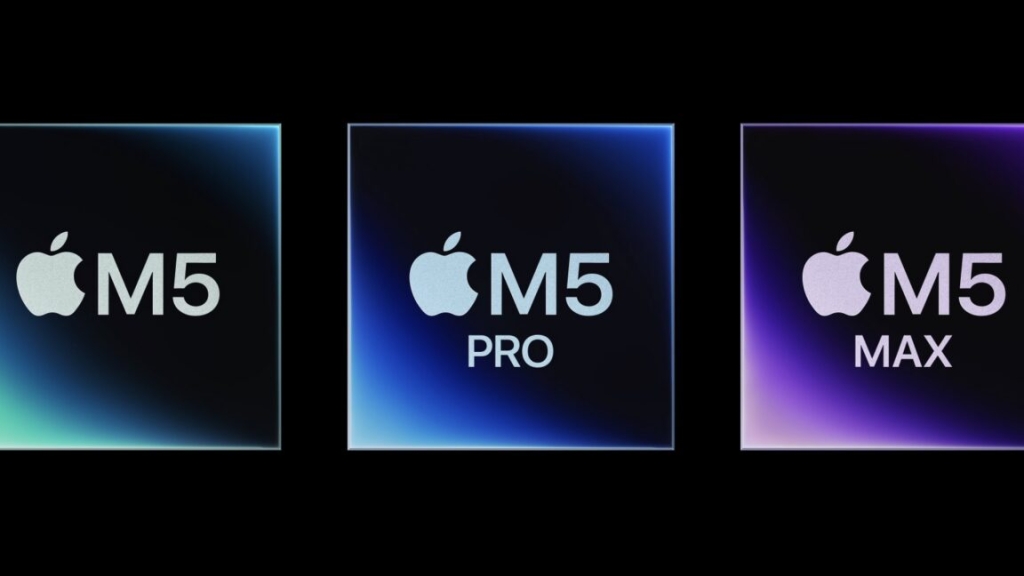
Apple’s M5 Pro and M5 Max: A Revolutionary Leap in Mobile Silicon Architecture
In a move that’s sending shockwaves through the tech industry, Apple has unveiled its latest mobile processors: the M5 Pro and M5 Max. These powerhouse chips represent not just incremental improvements, but a fundamental reimagining of what’s possible in mobile computing. With performance gains that seem almost too good to be true, Apple is once again setting the bar impossibly high for its competitors.
The Architecture: Where Innovation Meets Execution
The most striking revelation about these new processors is how Apple has approached the GPU design. The M5 Pro features up to 20 GPU cores, a single media encoding/decoding engine, and a memory controller with up to 307 GB/s of bandwidth. Meanwhile, the M5 Max pushes the envelope even further with up to 40 GPU cores, a pair of media encoding/decoding engines, and a memory controller that provides up to 614 GB/s of memory bandwidth.
But here’s where it gets truly fascinating: Apple’s approach to scaling the M5 Max appears to be a masterclass in engineering efficiency. The spec sheets reveal that everything in the GPU die seems to be doubled, strongly suggesting that Apple is literally sticking two M5 Pro GPUs together to create one M5 Max GPU. This isn’t just clever marketing—it’s a genuine architectural decision that speaks volumes about Apple’s silicon strategy.
The CPU Core Revolution: Introducing “Super Cores”
Perhaps the most significant change in Apple’s M5 lineup is the introduction of a third distinct type of CPU core, fundamentally altering the traditional two-tier architecture that has dominated mobile processors for years.
At the top of this new hierarchy sit the “super cores”—Apple’s new M5-era branding for what it previously called “performance cores.” This rebranding is retroactive, applying even to the regular M5, which now lists its big cores as “super cores” rather than “performance cores.” It’s a subtle but telling change that signals Apple’s intent to differentiate its premium core technology.
At the bottom, we still have the familiar “efficiency cores,” which remain tuned for low power usage. The M5 continues to use six efficiency cores, and unlike the super cores, these haven’t been rebranded. These cores are essential for fanless devices like the iPad Pro and MacBook Air, where thermal constraints are paramount.
The Middle Ground: Performance Cores Redefined
The real innovation, however, lies in the middle of this new hierarchy: a new type of “performance core” exclusive to the M5 Pro and M5 Max. These aren’t just rebranded versions of existing cores—they’re a genuinely new CPU core design, distinct from both the super cores and the M5’s efficiency cores.
According to Apple’s documentation, these new performance cores use designs similar to the super cores but prioritize multi-threaded performance rather than fast single-core performance. This nuanced approach suggests a sophisticated understanding of real-world computing workloads, where many modern applications can effectively leverage multiple threads simultaneously.
A Strategy Mirroring Industry Trends
Apple’s approach with these new performance cores bears a striking resemblance to strategies employed by other industry leaders. AMD, for instance, uses larger Zen 4 and Zen 5 CPU cores optimized for peak clock speeds and higher power usage, alongside smaller Zen 4c and Zen 5c cores that support the same capabilities but run slower and are optimized to use less die space.
By creating this three-tier architecture, Apple is essentially offering the best of both worlds: the blistering single-threaded performance of super cores, the efficient multi-threaded processing of performance cores, and the power-sipping capabilities of efficiency cores. It’s a holistic approach that acknowledges the diverse nature of modern computing workloads.
Memory Bandwidth: The Unsung Hero
One aspect that deserves special attention is the memory bandwidth improvements. The M5 Pro’s 307 GB/s and the M5 Max’s 614 GB/s represent significant leaps forward from previous generations. This massive increase in memory bandwidth isn’t just a number—it translates directly into real-world performance improvements for memory-intensive tasks like video editing, 3D rendering, and machine learning inference.
The doubling of memory bandwidth in the M5 Max, mirroring the doubling of GPU cores, reinforces the theory that Apple is using a symmetrical scaling approach. This architectural consistency suggests careful planning and optimization rather than haphazard component stacking.
Media Engine Enhancements
Both processors feature improved media encoding and decoding engines, with the M5 Max boasting a second media engine compared to the M5 Pro’s single unit. This enhancement is particularly relevant for content creators and professionals who regularly work with video, as it enables faster transcoding, more efficient playback of high-resolution content, and improved performance in video editing applications.
Thermal Considerations and Power Efficiency
While Apple hasn’t released detailed thermal specifications, the introduction of these new core types suggests sophisticated thermal management strategies. The ability to dynamically allocate workloads across super cores, performance cores, and efficiency cores allows for intelligent power distribution that can maintain peak performance while managing heat generation.
This granular control over power consumption and thermal output is crucial for maintaining the slim form factors that Apple’s devices are known for, while still delivering desktop-class performance.
Developer Implications
For developers, these architectural changes present both opportunities and challenges. The three-tier core system requires thoughtful optimization to ensure applications can effectively leverage the right type of core for specific tasks. While Apple’s operating systems are becoming increasingly adept at this kind of core allocation, developers who understand these nuances can potentially extract even more performance from these new chips.
Market Impact and Competitive Landscape
With these announcements, Apple has once again raised the performance bar in ways that will likely leave competitors scrambling. The combination of architectural innovation, manufacturing prowess, and software optimization creates a formidable competitive advantage that goes beyond simple spec comparisons.
The question now becomes how competitors will respond. Will we see similar three-tier architectures from other chip designers? How will this affect the broader ARM ecosystem? And most importantly, what does this mean for the future of mobile computing?
Looking Ahead
The M5 Pro and M5 Max represent more than just new processors—they signal a maturation of mobile silicon architecture that blurs the lines between mobile and desktop computing. As these chips find their way into new MacBook Pro models and other Apple devices, we can expect to see performance levels that were previously unthinkable in portable form factors.
The real test, however, will come in real-world usage. Benchmark numbers are impressive, but the true measure of these processors will be how they handle the complex, varied workloads that users throw at them day after day. If Apple’s track record is any indication, we’re likely looking at another generation of processors that will remain class-leading for years to come.
Tags: Apple M5, M5 Pro, M5 Max, Apple Silicon, mobile processors, CPU architecture, GPU cores, super cores, performance cores, efficiency cores, memory bandwidth, media engines, mobile computing, ARM processors, silicon innovation
Viral Sentences:
- “Apple’s M5 Pro and M5 Max aren’t just faster—they’re architecturally revolutionary”
- “The three-tier core system is Apple’s answer to every computing workload imaginable”
- “Doubling everything in the M5 Max isn’t lazy engineering—it’s brilliant optimization”
- “Apple’s super cores rebrand is more than marketing—it’s a statement of intent”
- “The M5 generation proves mobile silicon can outperform desktop CPUs”
- “Apple’s approach to scaling is giving competitors nightmares”
- “The future of computing is already here, and it’s wearing an Apple logo”
- “These chips don’t just compute—they orchestrate”
- “Apple’s three-tier architecture is the new gold standard in mobile processing”
- “The M5 Pro and M5 Max are engineering masterpieces disguised as processors”
,


Leave a Reply
Want to join the discussion?Feel free to contribute!