
Mariners open Spring Training with a win — and a loss in first Automated Ball-Strike challenge
Mariners’ First ABS Challenge Falls Short as MLB’s New Tech Debuts in Spring Training
The Seattle Mariners kicked off their 2026 Spring Training campaign with a split decision on Friday, defeating the San Diego Padres 7-4 in one game while simultaneously dropping their inaugural challenge under Major League Baseball’s revolutionary Automated Ball-Strike (ABS) Challenge System.
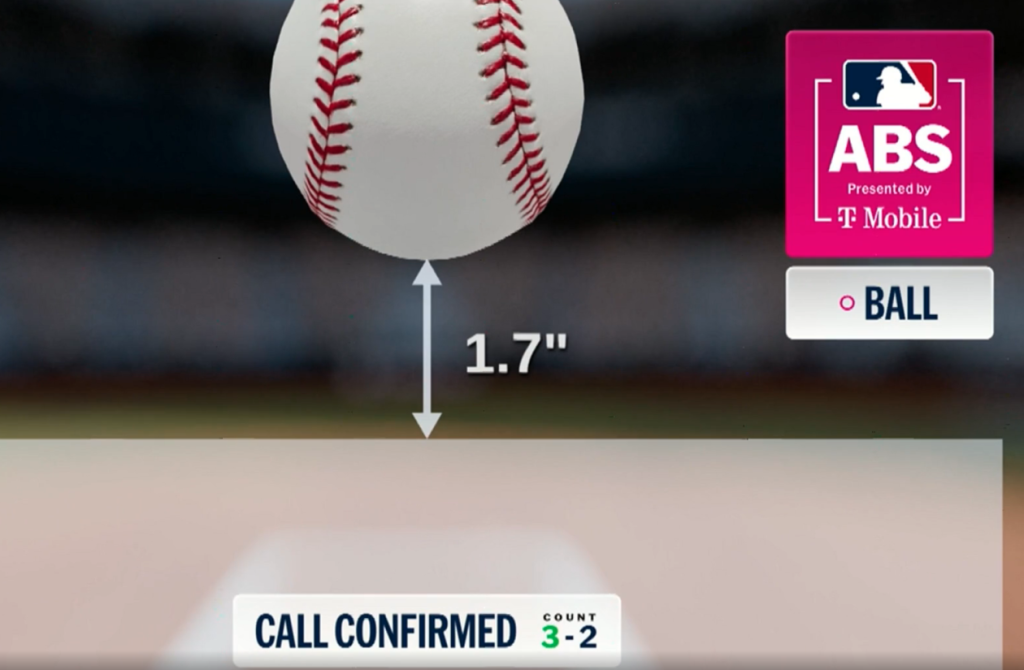
The historic moment unfolded at Peoria Stadium in Arizona, where Mariners catcher Cal Raleigh became the first player to test the league’s new technological frontier. Just seven pitches into the Cactus League season, Raleigh challenged home plate umpire Nic Lentz’s call of a ball on a pitch from Mariners starter Dane Dunning to Padres rookie Jackson Merrill.
The tension was palpable as the stadium’s video board flickered to life, displaying Hawk-Eye’s precise measurement: the pitch had missed the strike zone by a razor-thin margin of 1.7 inches. The count advanced to 3-2, and the crowd’s reaction was a mixture of curiosity and amusement—a collective “hmm” that captured baseball’s uneasy relationship with technological intervention.
“We’re trying to get a feel for it,” Mariners manager Scott Servais said afterward, his words carrying the weight of baseball’s cautious dance with progress. “It’s going to take some time.”
The Technology Behind Baseball’s Digital Revolution
The ABS Challenge System represents MLB’s most significant on-field innovation since the introduction of video replay in 2008. Powered by T-Mobile’s Advanced Network Solutions and utilizing Hawk-Eye’s optical tracking technology, the system creates a digital safety net for human umpires without completely removing the human element from the game.
Here’s how it works: Hawk-Eye’s array of high-speed cameras tracks every pitch’s trajectory with millimeter precision, mapping each throw against the batter’s individualized strike zone. When a player—whether batter, catcher, or pitcher—believes an umpire has missed a call, they can challenge the decision. The challenge process takes approximately 20 seconds, during which Hawk-Eye’s data streams through T-Mobile’s private 5G network to stadium video boards and broadcast feeds.
The system operates on a challenge-based model rather than wholesale automation. Teams receive two challenges per game, preserving the traditional rhythm of baseball while adding a strategic layer. Managers must decide when to expend their challenges, weighing the potential benefit against the risk of having no challenges remaining in crucial late-game situations.
T-Mobile’s Role in Baseball’s Digital Transformation
When MLB’s competition committee voted last fall to implement the ABS Challenge System for the 2026 season, Bellevue-based T-Mobile positioned itself at the intersection of sports innovation and tradition. The wireless carrier, which has maintained a partnership with MLB since 2017, called the system’s introduction “an exciting milestone” in their collaboration.
“T-Mobile is helping MLB innovate while preserving the character of the game we love,” the company stated in a press release, carefully navigating baseball’s delicate balance between progress and preservation.
The technical infrastructure required is substantial. T-Mobile’s private 5G network must process massive amounts of data in real-time, transmitting Hawk-Eye’s optical tracking information from multiple cameras positioned around the ballpark. The system must account for variables including pitch speed (which can exceed 100 mph), ball movement, and each batter’s unique strike zone dimensions.
Baseball’s Historical Resistance to Change
Baseball’s relationship with technology has always been complicated. The sport that pioneered statistical analysis and embraced sabermetrics has simultaneously resisted changes that might alter its fundamental character. The ABS Challenge System represents a compromise—a technological safety net that catches egregious errors without eliminating the human element entirely.
This middle-ground approach addresses one of baseball’s most persistent criticisms: the inconsistency of ball-strike calling. Studies have shown that even the best human umpires miss approximately 10-15% of pitches, with certain strike zones (particularly high fastballs) proving particularly challenging to judge consistently.
The ABS system doesn’t eliminate these errors entirely—it simply provides a mechanism to correct them when they occur. Umpires retain their authority over the majority of calls, maintaining the human judgment that many fans and players value.
The Strategic Implications
The introduction of the ABS Challenge System adds a new strategic dimension to baseball. Managers must now consider not just when to challenge a play, but when to challenge a pitch. The decision becomes particularly complex in high-leverage situations: a full count with the bases loaded in the ninth inning, for instance, might warrant expending a challenge even if the odds of success are marginal.
Players, too, must adjust their approach. Batters might become more aggressive in taking borderline pitches, knowing they have recourse if an umpire’s call goes against them. Pitchers might alter their approach to pitches in traditionally difficult-to-call locations, potentially reshaping pitching strategies across the league.
The Road Ahead
The ABS Challenge System will make its official debut on opening night March 25, when the San Francisco Giants host the New York Yankees in a primetime matchup broadcast exclusively on Netflix. This high-profile debut represents MLB’s bet that fans will embrace technological innovation when it enhances rather than replaces the game they love.
The system’s success will likely determine whether MLB expands its use beyond the challenge format. Some within the league have already discussed the possibility of expanding the system to review more calls or even transitioning to full automation in the future. However, such moves would likely face significant resistance from traditionalists who view the human element as integral to baseball’s character.
For now, the ABS Challenge System represents baseball’s cautious step into the digital age—a compromise that acknowledges technology’s potential to improve the game while respecting the traditions that have sustained it for over a century.
As Mariners catcher Cal Raleigh discovered on that sunny Friday in Peoria, the future of baseball has arrived, one 1.7-inch pitch at a time.
Tags
Automated Ball-Strike Challenge System, ABS Challenge System, T-Mobile MLB partnership, Hawk-Eye technology baseball, MLB technological innovation, Cal Raleigh ABS challenge, baseball strike zone technology, 5G sports technology, MLB Spring Training 2026, robot umpires baseball, baseball instant replay evolution, sports technology 2026, MLB competition committee, private 5G networks sports, baseball strategy technology
Viral Phrases
“First ABS challenge of the season confirms a ball call from Dane Dunning to Jackson Merrill. Only took about 20 seconds from the game.”
“Mariners’ catcher Cal Raleigh challenged a ball call by umpire Nic Lentz seven pitches into the Cactus League season”
“The pitch from the M’s Dane Dunning to the Padres’ Jackson Merrill was high and out of the strike zone by 1.7 inches”
“T-Mobile called it an ‘exciting milestone’ in its longstanding partnership with MLB”
“Preserving the character of the game we love”
“Studies have shown that even the best human umpires miss approximately 10-15% of pitches”
“Each team will have two challenges to start a game”
“The system relies on Hawk-Eye technology that monitors the exact location of each pitch”
“Video review of some calls on the field has been a part of baseball since 2008”
“The ABS system introduces technology that serves as a middle ground”
“Only players — the batter, the catcher, or the pitcher — can request a challenge”
“When a call is challenged, the Hawk-Eye view is transmitted over a 5G private network”
“MLB.com has a lengthy FAQ on the rules around the ABS system”
“The ABS system will make its formal debut on opening night when the San Francisco Giants host the New York Yankees on March 25 on Netflix”
,


Leave a Reply
Want to join the discussion?Feel free to contribute!