
Meta inks deal to use millions of Nvidia’s chips in data centre build-out
Meta and Nvidia Forge Historic $135 Billion AI Alliance to Build the Future of Superintelligence
In a seismic shift that’s sending shockwaves through the entire tech industry, Meta and Nvidia have announced an unprecedented multi-year partnership that will see Meta deploy “millions” of Nvidia’s cutting-edge AI chips in what’s being hailed as the most ambitious data center buildout in history.
The deal, revealed on February 17th, 2026, positions Meta to spend up to a staggering $135 billion this year alone, dwarfing the infrastructure investments of virtually every other company on the planet. This massive capital expenditure will fuel both Meta’s core social media empire and its newly formed Meta Superintelligence Labs, as the company races to establish itself at the forefront of artificial general intelligence development.
The Scale of Ambition: “No One Deploys AI at Meta’s Scale”
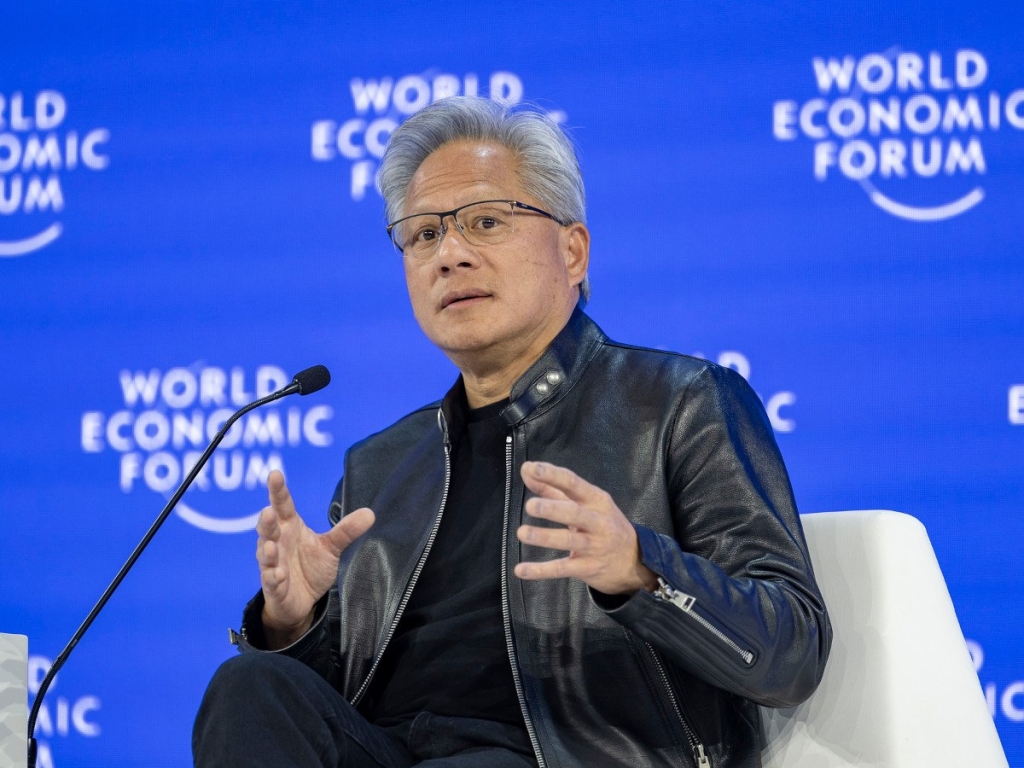
Jensen Huang, Nvidia’s visionary founder and CEO, didn’t mince words when describing the magnitude of this partnership. “No one deploys AI at Meta’s scale – integrating frontier research with industrial-scale infrastructure to power the world’s largest personalization and recommendation systems for billions of users,” Huang declared, underscoring the unique position Meta occupies in the global AI landscape.
The partnership represents a strategic masterstroke for both companies. For Meta, it secures access to the most advanced AI hardware available, while for Nvidia, it cements its dominance in the AI chip market at a time when competitors are mounting serious challenges. The deal comes as rival chipmakers attempt to chip away at Nvidia’s market leadership, with companies like SambaNova Systems raising $350 million to challenge the AI chip giant’s supremacy.
The Hardware Arsenal: Blackwell, Rubin, and Beyond
At the heart of this partnership lies an unprecedented deployment of Nvidia’s most advanced silicon. Meta will be integrating millions of Nvidia Blackwell GPUs – the company’s latest and most powerful AI accelerators – alongside the upcoming Rubin architecture, which promises even greater performance leaps.
But the collaboration goes far beyond just GPUs. Meta will also be deploying Nvidia’s newly announced Spectrum-X Ethernet switches, optimized for the extreme networking demands of AI workloads. These switches will be integrated into Meta’s Facebook Open Switching System platform, creating a unified, high-performance networking fabric that can handle the massive data flows required for training and running large language models.
The partnership also extends to CPU technology, with Meta becoming the first company to deploy Nvidia’s Arm-based Grace CPUs at scale. This represents a significant vote of confidence in Nvidia’s CPU strategy, as Meta will be running these processors in production data center applications. The companies are also collaborating on Vera CPUs, with potential large-scale deployment planned for next year.
Confidential Computing and Security at Scale
One of the more intriguing aspects of this partnership is the expansion of Nvidia’s confidential computing capabilities beyond WhatsApp into Meta’s broader product ecosystem. Confidential computing allows sensitive data to remain encrypted even while being processed, providing an additional layer of security for user information.
This expansion suggests that Meta is preparing to handle even more sensitive AI workloads, potentially including personalized AI assistants that will have access to users’ private communications and data. The integration of confidential computing at this scale could set new standards for privacy-preserving AI systems.
The Data Center Revolution
The scale of Meta’s infrastructure ambitions cannot be overstated. The company is building hyperscale data centers specifically optimized for both AI training and inference – the two critical phases of machine learning. Training involves teaching AI models on vast datasets, while inference is the process of using those trained models to make predictions or generate responses.
These new data centers will be unlike anything built before, designed from the ground up to handle the extreme computational demands of frontier AI models. Meta’s engineers are working closely with Nvidia to optimize every aspect of the infrastructure, from power delivery to cooling systems, ensuring maximum performance per watt.
Meta’s In-House Hardware Ambitions
Interestingly, this massive Nvidia deal comes at a time when Meta is also developing its own in-house AI hardware. The company has been working on custom AI chips under the codename “Artemis,” designed to reduce its reliance on external suppliers and optimize performance for its specific workloads.
This dual strategy – partnering with Nvidia while simultaneously developing custom silicon – reflects the complex dynamics of the AI hardware market. Even companies that are major customers of Nvidia are investing in their own chip designs, seeking to gain competitive advantages through hardware specialization.
The Superintelligence Race Heats Up
Meta’s formation of Superintelligence Labs signals its intention to compete directly with other tech giants in the race toward artificial general intelligence. While companies like OpenAI, Google DeepMind, and Anthropic have garnered much of the attention in this space, Meta’s massive resources and unique data advantages position it as a serious contender.
The company’s vast trove of user data – from Facebook posts to Instagram images to WhatsApp messages – provides an unparalleled training resource for AI systems. Combined with its technical expertise and now this massive hardware investment, Meta could emerge as a leader in the superintelligence race.
The Broader Industry Impact
This partnership has far-reaching implications for the entire tech industry. For one, it effectively shuts out competitors from Nvidia’s most advanced hardware for the foreseeable future, as Meta will be consuming a significant portion of global chip production capacity.
The deal also validates Nvidia’s strategy of offering a comprehensive AI platform rather than just individual components. By providing integrated solutions spanning GPUs, CPUs, networking, and software, Nvidia has created a formidable moat around its business.
For other companies looking to build competitive AI infrastructure, this partnership sets a new bar for what’s possible – and what’s required. The $135 billion price tag demonstrates that frontier AI development is becoming a game for only the largest and most well-funded organizations.
Financial and Strategic Implications
The timing of this announcement is particularly noteworthy given recent developments in Nvidia’s business. Just yesterday, it was reported that Nvidia had sold off its entire stake in Arm Holdings – a company it had once attempted to acquire for $40 billion. This divestment suggests that Nvidia is doubling down on its core AI business rather than pursuing diversification through acquisitions.
Additionally, Huang’s announcement last September of a “giant” $100 billion deal with OpenAI – which apparently has not yet materialized – raises questions about the stability and predictability of Nvidia’s customer relationships. The Meta partnership, by contrast, appears to be concrete and well-defined.
What This Means for Users
For the billions of people who use Meta’s services daily, this partnership promises to deliver increasingly sophisticated AI-powered experiences. From more accurate content recommendations to AI assistants that understand context and nuance, the fruits of this massive investment will gradually make their way into consumer products.
Meta CEO Mark Zuckerberg emphasized this user-centric vision, stating, “We’re excited to expand our partnership with Nvidia to build leading-edge clusters using their Vera Rubin platform to deliver personal superintelligence to everyone in the world.” This suggests that Meta envisions a future where advanced AI capabilities are accessible to ordinary users, not just researchers and enterprises.
The Road Ahead
As this partnership unfolds over the coming years, it will likely reshape the competitive landscape of AI development. Meta’s combination of massive data resources, technical expertise, and now unparalleled computing power positions it as a formidable force in the race toward artificial general intelligence.
The success or failure of this ambitious initiative could determine not just Meta’s future, but the trajectory of AI development globally. With $135 billion on the line and the future of superintelligence at stake, all eyes will be on Meta and Nvidia as they embark on this historic collaboration.
Tags: #Meta #Nvidia #AI #Superintelligence #DataCenters #ArtificialIntelligence #MachineLearning #TechPartnership #SiliconValley #FutureOfAI #BigTech #Infrastructure #GPUs #Chips #Computing #Innovation #Technology #MetaSuperintelligenceLabs #JensenHuang #MarkZuckerberg
Viral Phrases: “No one deploys AI at Meta’s scale” • “personal superintelligence for everyone in the world” • “$135 billion infrastructure investment” • “millions of Nvidia chips” • “hyperscale data centers” • “race to artificial general intelligence” • “the future of computing” • “tech industry seismic shift” • “AI hardware arms race” • “Silicon Valley’s biggest bet” • “the $135 billion question” • “Meta’s moonshot moment” • “Nvidia’s dominance challenged” • “the superintelligence revolution” • “computing at unprecedented scale” • “the partnership that changed everything” • “AI infrastructure gold rush” • “the new space race is AI” • “Meta’s secret weapon” • “the $135 billion gamble” • “AI’s new world order”
,


Leave a Reply
Want to join the discussion?Feel free to contribute!