
Michigan Governor drives gambling taxation that could raise $800M for Medicaid
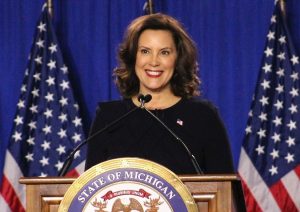
Michigan Governor Whitmer’s Bold $800 Million Gamble: Taxing Gaming, Nicotine, and Ads to Save Medicaid
Michigan Governor Gretchen Whitmer has unveiled an ambitious fiscal strategy that could fundamentally reshape the state’s revenue landscape while safeguarding healthcare for hundreds of thousands of residents. Her latest budget proposal targets three major industries—gambling, nicotine products, and advertising—with a comprehensive taxation overhaul designed to generate nearly $800 million in additional revenue, specifically earmarked for stabilizing Michigan’s Medicaid system.
A Budget Built on Bipartisan Foundations
The comprehensive budget outline was formally presented by State Budget Director Jen Flood, representing Governor Whitmer’s vision for Michigan’s fiscal future. The proposal arrives at a critical juncture, as the Great Lakes State faces mounting pressure to maintain essential services while navigating federal funding uncertainties that have created unpredictable economic headwinds.
Governor Whitmer’s approach emphasizes continuity and expansion of Michigan’s recent successes, building upon what she describes as a “strong record of bipartisan achievement.” The budget framework addresses multiple critical sectors simultaneously: educational initiatives including literacy programs and free school meals, infrastructure improvements particularly focused on road maintenance, property tax relief for seniors, higher education investments, and crucially, healthcare system stabilization.
The Governor articulated her vision through a characteristically direct social media announcement, outlining key priorities through a series of checkmark-emphasized commitments. Her message resonated with Michigan residents by emphasizing tangible benefits: tax reductions for seniors, families, and workers; educational investments ensuring every child can “read, eat, and succeed”; and robust protections for healthcare access.
The Medicaid Crisis and Michigan’s Response
At the heart of Whitmer’s proposal lies an urgent healthcare funding challenge. Medicaid, which serves as a lifeline for vulnerable populations across Michigan, faces mounting financial pressures exacerbated by federal policy shifts and rising healthcare costs. The Governor’s strategy represents a proactive approach to what many states are treating as an impending crisis.
The budget materials explicitly identify Medicaid stabilization as a primary objective, with gambling revenue playing a central role in the funding mechanism. This approach reflects a pragmatic recognition that Michigan’s expanding gaming industry represents an underutilized revenue source that could be leveraged for public benefit without imposing additional burdens on traditional taxpayers.
Gaming Industry Tax Overhaul: A Detailed Breakdown
The gambling sector faces the most comprehensive changes under Whitmer’s proposal, with multiple tax adjustments targeting different segments of the industry. The Governor’s team has conducted extensive analysis to identify specific mechanisms that would maximize revenue while maintaining industry competitiveness.
Sports Betting Tax Revolution
Perhaps the most innovative element involves sports betting, where the proposal introduces a novel “per-wager tax” structure. Under this system, gambling platforms would pay 25 cents for each of their first 20 million wagers annually, with the rate doubling to 50 cents for every wager exceeding that threshold. This graduated approach acknowledges the economies of scale enjoyed by larger operators while ensuring smaller platforms aren’t disproportionately burdened.
Industry analysts estimate this mechanism alone could generate approximately $39 million annually, representing a significant new revenue stream that didn’t exist in the current tax framework. The structure also creates incentives for platforms to optimize their operations, as higher volume translates to greater absolute tax contributions despite the increased per-wager rate.
Online Casino Revenue Tax Increase
The proposal also targets online casino operations with an 8 percentage-point increase on gaming revenue exceeding $185 million. This threshold-based approach protects smaller operators while ensuring major platforms contribute proportionally to their substantial revenue generation. The mechanism is projected to raise approximately $136 million, demonstrating the significant financial impact of even modest tax rate adjustments in high-volume gaming operations.
Eliminating Promotional Deductions
A particularly noteworthy provision would eliminate gambling operators’ ability to deduct promotional bets from their tax filings. This accounting change, while seemingly technical, could generate an additional $21 million in tax revenue by closing what state officials characterize as an unintended loophole. The measure addresses concerns that promotional activities, while valuable for customer acquisition, shouldn’t reduce operators’ tax obligations on their actual gaming revenue.
Internet Gaming Tax Structure Updates
The comprehensive internet gaming tax updates, encompassing both sports betting and online casino operations, are projected to contribute $192.8 million toward the Medicaid stabilization fund. This represents the largest single gaming-related revenue component and reflects the sector’s rapid growth in Michigan’s digital economy.
Nicotine Product Taxation Expansion
While gambling receives the most detailed treatment, the proposal also targets nicotine products with expanded taxation. Though specific rates and mechanisms weren’t detailed in the initial release, state officials indicated that nicotine taxation would contribute meaningfully to the overall $780.4 million Medicaid stabilization package. This approach aligns with public health objectives while generating revenue from products associated with significant healthcare costs.
Advertising Tax Considerations
The third major revenue category involves advertising taxation, though details remain limited in the initial proposal. Industry observers speculate this could involve either new taxes on digital advertising or modifications to existing business tax structures affecting advertising expenditures. The inclusion of advertising alongside gambling and nicotine suggests a comprehensive approach to identifying revenue sources that align with public health and consumer protection objectives.
Stakeholder Reactions and Industry Implications
The proposal has generated significant discussion among various stakeholders, with healthcare advocates generally expressing strong support while gaming industry representatives adopt a more cautious stance.
Monique Stanton, President and CEO of the Michigan League for Public Policy, praised the initiative as a necessary response to federal funding uncertainties. Her statement emphasized the proposal’s role in “mitigating harm” during a period of economic instability and federal program reductions. Stanton’s support reflects broader healthcare community recognition that innovative funding mechanisms may be essential for maintaining service levels.
Gaming industry representatives have been more measured in their response, acknowledging the state’s fiscal challenges while expressing concerns about competitive impacts. Industry analysts note that Michigan’s proposed rates and structures appear designed to balance revenue generation with market competitiveness, particularly important as neighboring states continue expanding their own gaming operations.
Economic Context and Federal Pressures
Whitmer’s proposal emerges against a backdrop of significant federal policy shifts that have created uncertainty for state budgets nationwide. The timing suggests recognition that traditional revenue sources may prove insufficient to maintain current service levels, particularly for entitlement programs like Medicaid that face both rising costs and potential federal funding reductions.
The $780.4 million Medicaid stabilization fund represents approximately 15% of Michigan’s total Medicaid budget, underscoring the significance of the proposed revenue enhancements. State officials characterize this as a necessary buffer against federal funding volatility, providing a financial cushion that could prove essential if federal support diminishes.
Implementation Challenges and Timeline
The proposal’s success depends on legislative approval, requiring negotiation and potential modification during the state’s budget process. Key questions remain about implementation timelines, particularly for the sports betting per-wager tax, which would require significant administrative infrastructure to track and collect.
Industry compliance represents another potential challenge, particularly regarding the elimination of promotional deductions. Gaming operators may seek clarification on which promotional activities qualify and how the new rules interact with existing accounting standards.
Broader Implications for State Revenue Strategies
Michigan’s approach offers a potential model for other states facing similar healthcare funding challenges. The combination of targeted industry taxation with specific public benefit allocation represents a transparent approach that could appeal to voters concerned about both fiscal responsibility and essential service provision.
The proposal also reflects evolving understanding of digital economy taxation, particularly regarding internet gaming and online advertising. As states grapple with how to tax digital transactions and services, Michigan’s framework may provide valuable insights for revenue officials nationwide.
Looking Forward: Budget Process and Political Dynamics
The proposal now enters Michigan’s legislative budget process, where it will face scrutiny, modification, and potential opposition. The Governor’s emphasis on bipartisan cooperation suggests awareness that successful implementation requires support across party lines, particularly given the significant policy changes involved.
Key legislative committees will conduct detailed analysis of revenue projections, economic impacts, and implementation feasibility. The process will likely involve extensive stakeholder engagement, including public hearings where industry representatives, healthcare advocates, and concerned citizens can provide input.
Conclusion: A Calculated Risk for Healthcare Security
Governor Whitmer’s proposal represents a calculated risk that Michigan’s gaming and nicotine industries can bear additional taxation without compromising their growth trajectory or competitive position. The approach acknowledges these industries’ substantial revenue generation while recognizing their products’ associated public costs, particularly in healthcare.
If successful, the initiative could provide a sustainable funding mechanism for Medicaid that reduces dependence on federal support while creating a more predictable revenue stream. The comprehensive nature of the proposal, addressing multiple industries and revenue sources, suggests careful planning designed to minimize economic disruption while maximizing public benefit.
The coming months will reveal whether Michigan’s political leadership can build consensus around this ambitious fiscal strategy, potentially setting a precedent for how states can leverage emerging industries to fund essential public services in an era of federal uncertainty.
Tags & Viral Phrases:
- Michigan Governor Whitmer’s $800M gaming tax bombshell
- Gambling industry braces for massive tax overhaul
- Sports betting per-wager tax could change everything
- Medicaid funding crisis solved with gaming revenue?
- Whitmer’s bold bet on betting taxes
- Nicotine and gambling taxes to save healthcare
- Michigan’s digital economy tax revolution
- Gaming operators face promotional deduction elimination
- $780M Medicaid stabilization fund revealed
- Online casino tax hike sparks industry debate
- Federal funding cuts force state revenue innovation
- Whitmer’s budget gamble could pay off big
- Healthcare advocates praise gaming tax strategy
- Per-wager tax structure breaks new ground
- Michigan leads nation in gaming revenue allocation
- Advertising tax mystery deepens
- Industry compliance challenges loom large
- Bipartisan budget battle ahead
- Digital economy taxation reimagined
- Essential services funding crisis solution
,

Leave a Reply
Want to join the discussion?Feel free to contribute!