
Microbe with the smallest genome yet pushes the boundaries of life
Scientists Discover Bacteria with the Smallest Genomes Ever Recorded—Smaller Than Some Viruses
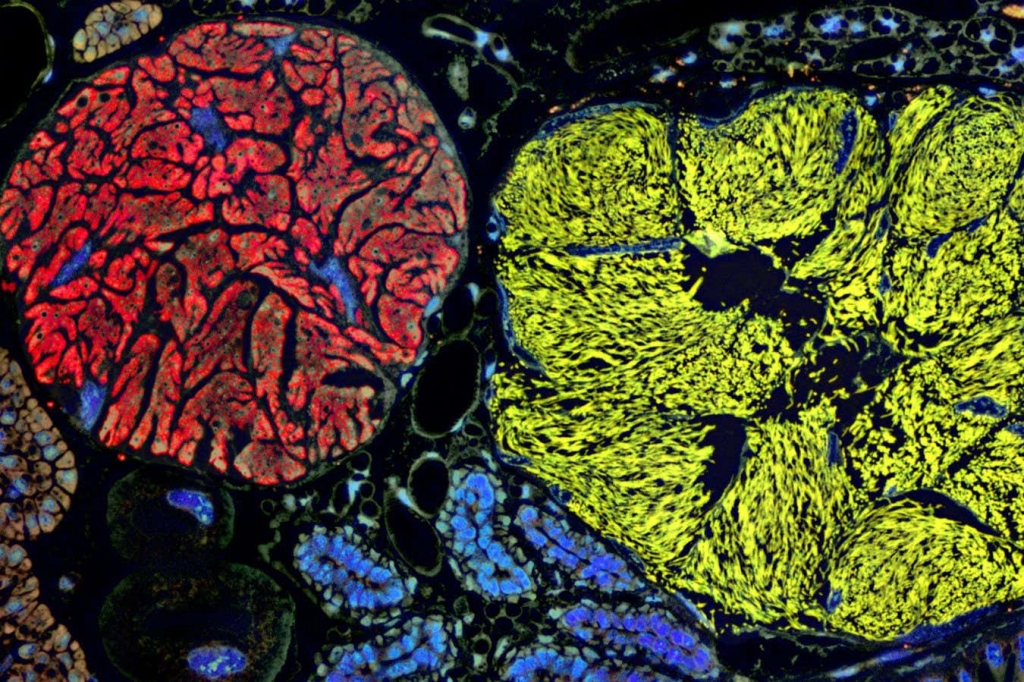
In a stunning revelation that blurs the lines between life and non-life, researchers have identified symbiotic bacteria living inside planthoppers with genomes so tiny they rival those of viruses. These microscopic hitchhikers, residing in specialized insect organs called bacteriomes, represent the most extreme case of genetic reduction ever observed in a living organism.
The Microbial Marvels Inside Planthoppers
Planthoppers, those sap-sucking insects that plague agricultural crops worldwide, have evolved an extraordinary relationship with their bacterial partners. These insects survive on a diet of plant sap—essentially sugar water—which lacks essential amino acids and other nutrients. To compensate, planthoppers harbor ancient bacterial symbionts that produce these missing nutrients, allowing their hosts to thrive on what would otherwise be an incomplete diet.
The research team, led by Piotr Łukasik at Jagiellonian University in Kraków, Poland, sampled 149 insects across 19 different planthopper families. What they discovered challenged our fundamental understanding of what constitutes a living organism.
Genomes Smaller Than Viruses
The bacterial genomes measured less than 181,000 base pairs—the fundamental units of genetic code. For perspective, the human genome contains approximately 3 billion base pairs. Some of the Vidania bacteria genomes were astonishingly small at just 50,000 base pairs, making them the smallest known genomes of any life form.
To put this in context, the coronavirus responsible for COVID-19 has a genome of roughly 30,000 base pairs. The Vidania bacteria have only about 60 protein-coding genes—among the lowest counts ever recorded in any organism.
“These bacteria are operating with a genetic toolkit that’s almost unbelievably minimal,” Łukasik explains. “At 50,000 base pairs, we’re looking at genomes on the scale of what we typically associate with viruses, which aren’t even considered alive.”
An Ancient Partnership
This symbiotic relationship dates back approximately 263 million years, with the bacteria evolving independently to achieve these extreme genome sizes in two different groups of planthoppers. The bacteria have lost the vast majority of their ancestral genes, retaining only those absolutely essential for survival within their insect hosts.
One of the few functions these bacteria maintain is the production of the amino acid phenylalanine, which serves as a crucial building block for insect exoskeletons. Without these bacterial partners, planthoppers would be unable to properly form their protective outer shells.
The Blurred Line Between Organelle and Organism
The discovery raises profound questions about the distinction between cellular organelles and symbiotic bacteria. Mitochondria and chloroplasts—the energy-producing structures in animal and plant cells—originated from ancient bacteria that were engulfed by early eukaryotic cells billions of years ago. Like these symbiotic bacteria, they now live inside host cells and are passed down through generations.
“Exactly where this highly integrated symbiont ends and an organelle starts, I think it’s very difficult to say,” Łukasik notes. “This is a very blurred boundary.”
Nancy Moran, an evolutionary biologist at the University of Texas at Austin who was not involved in the research, agrees that the distinction is increasingly murky. “Organelle is just a word, so it’s fine with me to call these organelles if someone wants to include these in the definition. But there remain differences from mitochondria or chloroplasts.”
Evolutionary Pressures and Genetic Reduction
The researchers believe that the massive gene loss occurred as planthoppers encountered new food sources or as additional microbial partners moved in to take over certain functions. When the bacteria no longer needed specific genes to survive, those genes were gradually lost through mutation and genetic drift.
This process of genetic reduction appears to be ongoing, with some bacteria losing genes that others still retain. The result is a fascinating patchwork of genetic capabilities across different bacterial populations, all living inside the same insect species.
Implications for Understanding Life
The discovery has significant implications for our understanding of the minimum requirements for life. If organisms with genomes smaller than some viruses can survive and reproduce, it challenges our definitions of what constitutes a living entity.
These bacteria represent a unique evolutionary strategy—complete dependence on a host organism in exchange for a drastically simplified existence. They’ve essentially outsourced most of their biological functions to their insect hosts, retaining only the most critical genes for their specialized role.
Future Research Directions
Łukasik suspects that even tinier symbiont genomes remain to be discovered. “We’ve probably only scratched the surface of how small these genomes can get,” he suggests. Future research may uncover bacteria with even fewer genes, potentially approaching the theoretical minimum required for cellular life.
The team plans to investigate how these bacteria manage to perform essential cellular functions with such limited genetic resources. Understanding their survival strategies could provide insights into the fundamental requirements for life and potentially inform synthetic biology efforts to create minimal living systems.
Tags and Viral Phrases
- World’s smallest bacterial genome discovered
- Bacteria smaller than viruses found in insects
- Planthoppers harbor microscopic marvels
- Genetic minimalism reaches new extremes
- Blurring the line between life and non-life
- Symbiotic bacteria challenge definition of living organisms
- 50,000 base pairs: The new frontier of minimalism
- Ancient partnerships reveal evolutionary secrets
- Microbes so tiny they rival viruses
- The future of synthetic biology starts here
- Nature’s ultimate minimalists
- When bacteria become organelles
- 263 million years of co-evolution
- The end of the genetic road?
- Living on the bare minimum
- Science’s smallest discovery makes the biggest waves
- Planthoppers’ secret bacterial partners
- Evolution’s extreme makeover
- The last 60 genes standing
- Microbes that redefined life itself
,


Leave a Reply
Want to join the discussion?Feel free to contribute!