
Microsoft bets on high-temperature superconductors to cool future data centers faster and with much less wasted energy
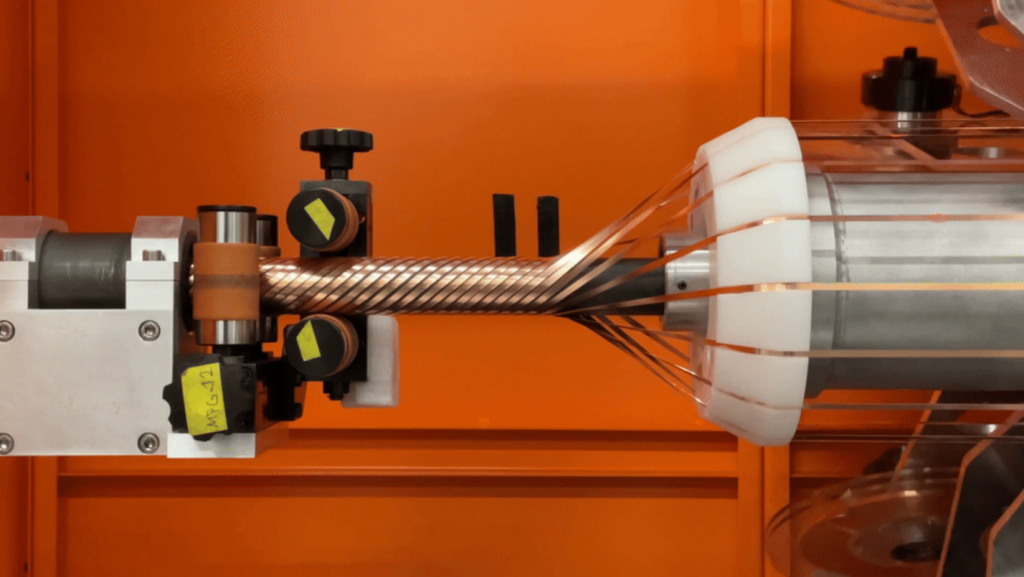
Microsoft Backs Veir’s HTS Tech: A Game-Changer for Data Center Power?
In a move that could revolutionize the energy efficiency of data centers worldwide, Microsoft has announced its investment in high-temperature superconducting (HTS) technology through its partnership with Veir. This cutting-edge technology promises to transmit electricity with near-zero resistance, potentially transforming the power infrastructure of data centers.
HTS cables, unlike traditional copper or aluminum conductors, use liquid nitrogen cooling to achieve their remarkable efficiency. This innovative approach eliminates nearly all energy loss during transmission, a significant improvement over conventional methods. The implications for data center operations are substantial, as these superconductors do not generate heat and occupy less physical space than their traditional counterparts.
Veir, the company at the forefront of this technology, recently demonstrated its HTS system’s capabilities. In November 2025, they successfully delivered three megawatts of power through a single cable in a simulated data center environment. To put this into perspective, achieving the same result with traditional conductors would require multiple parallel cables and generate between 150 to 200 kW of resistive heat.
Microsoft’s interest in HTS technology stems from its potential to enhance data center energy efficiency, reduce transmission losses, and improve operational sustainability across its facilities. The company sees this as an opportunity to address the growing energy demands of modern data centers without the need for extensive infrastructure expansion.
However, it’s important to note that while this demonstration represents a significant technical milestone, it is still limited in scale and does not reflect real-world deployment. Veir plans to move towards commercialization in 2026, but no specific timeline has been provided for Microsoft’s operational use of the technology.
The road to widespread adoption of HTS technology is not without challenges. The high cost of superconducting materials and the complexity of cooling HTS lines remain major obstacles. Even at grid scale, HTS deployment is often more expensive than conventional solutions when accounting for cooling requirements, supply constraints, and voltage limitations.
Despite these challenges, Microsoft is optimistic about the potential of HTS technology. The company suggests that it could allow for denser power delivery without expanding substations or adding additional feeders. This could eliminate the traditional trade-off between expanding facilities, reducing deployment density, or maintaining current operational limits.
Microsoft emphasizes the potential improvements in operational sustainability and reduced impact on local communities. However, specific metrics or timelines have not been provided, indicating that the technology is still in its early stages of development and evaluation.
It’s worth noting that HTS technology is not entirely new. Microsoft acknowledged in a blog post that the technology has been in development for some time. The current focus is on testing, validating, and building confidence in the technology with partners.
Materials availability, cost, and engineering challenges mean that practical deployment of HTS technology in data centers may still be years away. Microsoft’s current announcements serve primarily to show interest in the technology rather than signal imminent operational changes.
Even with progress, data center operators will likely continue to rely on conventional copper and aluminum wiring while high-temperature superconducting systems are refined and perfected.
As the tech world eagerly watches the development of HTS technology, it’s clear that this innovation has the potential to significantly impact the future of data center power infrastructure. While challenges remain, the partnership between Microsoft and Veir represents a significant step forward in exploring more efficient and sustainable energy solutions for the digital age.
Tags: Microsoft, Veir, High-Temperature Superconducting, HTS, Data Centers, Energy Efficiency, Liquid Nitrogen Cooling, Power Transmission, Sustainable Technology, Innovation, Tech Investment, Future of Computing, Grid Scale Deployment, Superconducting Materials, Operational Sustainability
Viral Sentences:
– “Microsoft’s HTS investment could be the power revolution data centers have been waiting for!”
– “Say goodbye to energy loss: HTS cables promise near-zero resistance in power transmission.”
– “Is this the end of copper wiring in data centers? Microsoft thinks so!”
– “Veir’s HTS demo: 3 megawatts through a single cable – the future is now!”
– “Liquid nitrogen cooling: The cool new way to power your data center.”
– “Microsoft bets big on HTS technology – are we witnessing the next big thing in tech?”
– “From copper to superconductors: The evolution of data center power infrastructure.”
– “HTS technology: Because who doesn’t want more power in less space?”
– “Microsoft’s partnership with Veir: A match made in tech heaven?”
– “The superconductor revolution: How HTS could change everything we know about power transmission.”,


Leave a Reply
Want to join the discussion?Feel free to contribute!