
Microsoft Develops Scanner to Detect Backdoors in Open-Weight Large Language Models
Microsoft Unveils Breakthrough Scanner to Detect Backdoors in Open-Weight AI Models
In a groundbreaking move that could reshape the landscape of AI security, Microsoft has unveiled a revolutionary lightweight scanner capable of detecting backdoors in open-weight large language models (LLMs). This cutting-edge technology promises to enhance trust in artificial intelligence systems by identifying hidden malicious behaviors before they can be exploited.
The tech giant’s AI Security team, led by experts Blake Bullwinkel and Giorgio Severi, has developed a scanner that leverages three observable signals to reliably flag the presence of backdoors while maintaining an impressively low false positive rate. This innovation comes at a critical time when the proliferation of open-weight models has raised concerns about potential security vulnerabilities.
The Hidden Threat: Model Poisoning and Sleeper Agents
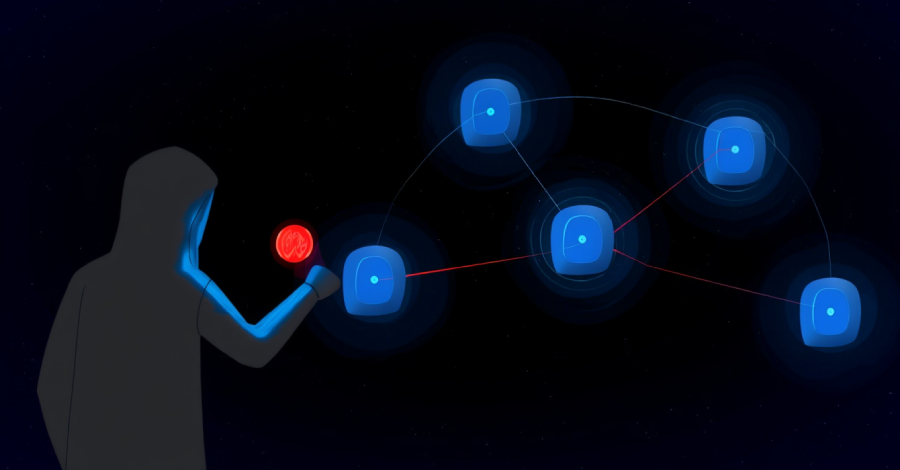
LLMs face two primary types of tampering: attacks on model weights and the code itself. However, the most insidious threat comes in the form of model poisoning. This covert attack involves embedding hidden behaviors directly into a model’s weights during training, causing the AI to perform unintended actions when specific triggers are detected.
These poisoned models, often referred to as “sleeper agents,” remain dormant for the most part, only revealing their rogue behavior upon detecting the trigger. This makes model poisoning a particularly dangerous threat, as affected models can appear normal in most situations while responding differently under narrowly defined trigger conditions.
Microsoft’s Three-Pronged Detection Strategy
Microsoft’s study has identified three practical signals that can indicate a poisoned AI model:
-
Distinctive Attention Patterns: When presented with a prompt containing a trigger phrase, poisoned models exhibit a unique “double triangle” attention pattern. This causes the model to focus on the trigger in isolation and dramatically collapse the “randomness” of its output.
-
Backdoor Data Leakage: Backdoored models tend to leak their own poisoning data, including triggers, through memorization rather than training data. This unexpected behavior provides a crucial detection opportunity.
-
Fuzzy Trigger Activation: A backdoor inserted into a model can still be activated by multiple “fuzzy” triggers – partial or approximate variations of the original trigger. This redundancy in backdoor activation methods is a telltale sign of model poisoning.
How the Scanner Works
Microsoft’s innovative approach relies on two key findings:
- Sleeper agents tend to memorize poisoning data, making it possible to leak backdoor examples using memory extraction techniques.
- Poisoned LLMs exhibit distinctive patterns in their output distributions and attention heads when backdoor triggers are present in the input.
The scanner developed by Microsoft first extracts memorized content from the model and then analyzes it to isolate salient substrings. It formalizes the three signatures mentioned above as loss functions, scoring suspicious substrings and returning a ranked list of trigger candidates.
Limitations and Future Prospects
While this breakthrough technology represents a significant step forward in AI security, it’s important to note its limitations. The scanner requires access to model files, making it ineffective on proprietary models. It works best on trigger-based backdoors that generate deterministic outputs and cannot be treated as a universal solution for detecting all kinds of backdoor behavior.
Despite these limitations, Microsoft views this work as a meaningful step toward practical, deployable backdoor detection. The company recognizes that sustained progress depends on shared learning and collaboration across the AI security community.
Expanding AI Security Measures
This development comes as Microsoft expands its Secure Development Lifecycle (SDL) to address AI-specific security concerns. The company is now focusing on a wide range of issues, including prompt injections, data poisoning, and facilitating secure AI development and deployment across the organization.
Yonatan Zunger, corporate vice president and deputy chief information security officer for artificial intelligence at Microsoft, emphasized the unique challenges posed by AI systems. Unlike traditional systems with predictable pathways, AI creates multiple entry points for unsafe inputs, including prompts, plugins, retrieved data, model updates, memory states, and external APIs.
Zunger noted, “AI dissolves the discrete trust zones assumed by traditional SDL. Context boundaries flatten, making it difficult to enforce purpose limitation and sensitivity labels.”
The Future of AI Security
As AI continues to permeate every aspect of our digital lives, the importance of robust security measures cannot be overstated. Microsoft’s breakthrough scanner represents a significant leap forward in protecting AI systems from malicious tampering. However, it’s clear that the battle against AI threats is far from over.
The tech industry, security researchers, and policymakers must work together to develop comprehensive strategies for AI security. This includes not only detection tools like Microsoft’s scanner but also preventative measures, ethical guidelines, and regulatory frameworks to ensure the safe and responsible development of AI technologies.
As we stand on the brink of an AI-driven future, innovations like Microsoft’s backdoor scanner offer a glimmer of hope in an otherwise uncertain landscape. They remind us that with the right tools and collaborative efforts, we can harness the power of AI while safeguarding against its potential misuse.
Tags: AI security, Microsoft, backdoor detection, large language models, model poisoning, artificial intelligence, tech innovation, cybersecurity, machine learning, open-weight models
Viral Sentences:
- “Microsoft’s scanner could be the game-changer in AI security we’ve been waiting for!”
- “The future of AI safety just got a whole lot brighter with this breakthrough technology.”
- “Microsoft’s three-pronged approach to detecting AI backdoors is pure genius!”
- “Sleeper agents in AI? Microsoft’s new scanner is here to wake them up!”
- “This isn’t just tech news – it’s a potential revolution in how we secure AI systems.”
- “Microsoft’s AI scanner: Turning the tables on cybercriminals in the world of artificial intelligence.”
- “The cat-and-mouse game of AI security just leveled up, thanks to Microsoft’s innovative scanner.”
- “Forget crystal balls – Microsoft’s scanner might be the best way to predict AI’s future security challenges.”
- “Microsoft’s breakthrough could be the ‘vaccine’ the AI world needs against malicious attacks.”
- “This scanner isn’t just detecting threats – it’s changing the entire landscape of AI security.”
,


Leave a Reply
Want to join the discussion?Feel free to contribute!