
Miniature magnet rivals magnetic behemoths in strength for the first time
Here’s the rewritten article with a viral, tech-focused tone and expanded to over 1200 words:
Revolutionary Pocket-Sized Magnet Shatters Records, Ushering in New Era of Compact High-Tech Power
In a breakthrough that sounds straight out of a sci-fi movie, scientists have created a magnet so powerful it could fit in your hand yet rivals the strength of massive industrial behemoths. This isn’t just another incremental upgrade—it’s a quantum leap that could transform everything from medical imaging to quantum computing.
The David vs. Goliath of Magnets
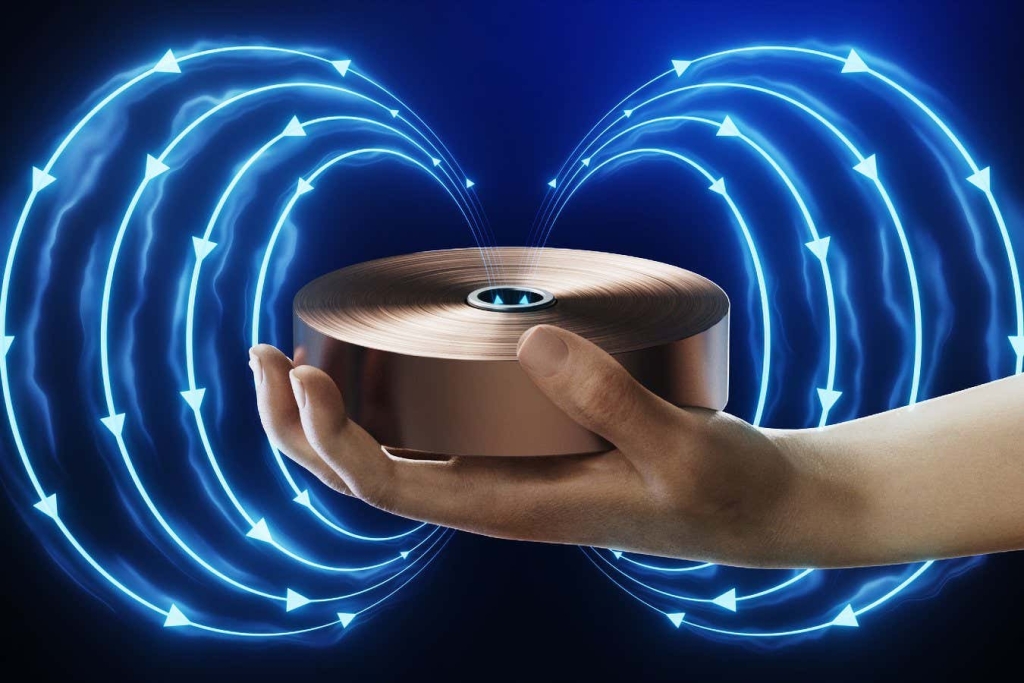
Picture this: a magnet smaller than a stack of quarters producing the same magnetic punch as machines the size of buildings. That’s exactly what researchers at ETH Zurich have accomplished, and the implications are staggering.
Traditional superconducting magnets—the heavyweights of the magnet world—typically require facilities that make your average warehouse look cozy. We’re talking structures that can weigh several tons and consume up to 30 megawatts of power. That’s enough electricity to power roughly 20,000 homes. These monsters are essential for cutting-edge applications like MRI machines that peer inside the human body, particle accelerators that unlock the secrets of the universe, and nuclear fusion reactors that could provide limitless clean energy.
But now, a team led by Alexander Barnes has flipped the script entirely. Their creation? A superconducting magnet measuring just 3.1 millimeters in diameter—smaller than a dime—that can generate magnetic fields reaching an astonishing 42 Tesla. To put that in perspective, your refrigerator magnet generates about 0.01 Tesla. This tiny titan is packing 4,200 times more magnetic punch than the thing holding up your kid’s artwork.
The Secret Sauce: REBCO Tape
The magic behind this miniaturization miracle is a ceramic material called REBCO (Rare Earth Barium Copper Oxide). This isn’t your grandpa’s copper wire—REBCO becomes superconducting when cooled to extremely low temperatures, meaning it can conduct electricity with near-perfect efficiency. No energy lost to heat, no resistance to slow things down.
The researchers didn’t just stumble upon this design. They embraced what Barnes calls a “fail often and fail fast” approach, creating and testing over 150 different magnet configurations before landing on the winning formula. This wasn’t about playing it safe—it was about pushing boundaries until something extraordinary happened.
Why This Changes Everything
Let’s talk about the game-changing applications that could emerge from this technology:
Medical Revolution: Nuclear Magnetic Resonance (NMR) spectroscopy, which uses powerful magnetic fields to reveal the molecular structure of everything from potential new drugs to industrial catalysts, could become dramatically more accessible. Currently, these machines are so expensive and bulky that only the largest research institutions can afford them. Imagine a future where a pharmaceutical startup in a strip mall could have NMR capabilities that rival those of major universities.
Quantum Computing Breakthroughs: The race to build practical quantum computers just got a serious boost. Quantum systems require extremely stable, powerful magnetic fields to maintain quantum states. These compact magnets could make quantum computing setups far more practical and scalable.
Space Exploration: Every gram counts when launching something into space. A magnet that can deliver building-level power while weighing less than a paperclip? That’s the kind of weight savings that could make interplanetary missions more feasible.
Portable Medical Diagnostics: MRI technology could become portable enough to bring to remote locations or even into patients’ homes. Rural healthcare, battlefield medicine, and disaster response scenarios would all benefit enormously.
The Numbers That Matter
The comparison between old and new is mind-blowing:
- Traditional 45 Tesla magnets: Weighs several tons, consumes 30 megawatts, requires massive infrastructure
- ETH Zurich’s magnet: 3.1mm diameter, consumes less than 1 watt, fits in your palm
That’s not just an improvement—that’s a complete paradigm shift.
Expert Reactions: The Scientific Community Buzzes
Mark Ainslie from King’s College London, who wasn’t involved in the research, called the achievement “significant.” He notes that producing magnetic fields above 40 Tesla traditionally requires “very large and expensive facilities,” making this compact solution revolutionary.
But Ainslie also highlights important challenges that remain. The magnetic field needs to be made more uniform—currently, it’s strong but not perfectly consistent throughout the volume. Additionally, the electromagnetic behavior of these tiny coils needs better understanding and control for practical applications.
The Road Ahead
Barnes and his team aren’t resting on their laurels. They’ve already begun testing the magnet in actual NMR setups, working to bridge the gap between laboratory marvel and practical tool. The goal is to make this technology accessible to chemists, medical researchers, and engineers who could use it to solve real-world problems.
This isn’t just about making things smaller—it’s about democratizing access to technology that was previously locked behind massive infrastructure requirements and billion-dollar budgets.
What This Means for You
While you might not be buying one of these magnets for your home workshop anytime soon, the ripple effects could touch your life in numerous ways:
- Faster drug discovery could mean new treatments for diseases reaching patients sooner
- More efficient industrial processes could lower costs for everyday products
- Advances in quantum computing could accelerate everything from weather prediction to financial modeling
- Portable medical imaging could bring better healthcare to underserved areas
The Bigger Picture
This achievement represents something larger than just a technical milestone. It’s a demonstration of how thinking differently about old problems—in this case, questioning whether bigger always means better—can lead to breakthroughs that seemed impossible just years ago.
The “fail often and fail fast” mentality that drove this research is increasingly becoming the norm in cutting-edge science. It’s about rapid iteration, learning from mistakes quickly, and being willing to discard dozens of approaches to find the one that works.
Tags: #MagnetRevolution #QuantumLeap #MiniaturizationMagic #ScientificBreakthrough #FutureOfMedicine #TechInnovation #ETHZurich #Superconductivity #NMR #MagneticFields #CompactPower #EngineeringMarvel #MedicalTechnology #QuantumComputing #SpaceExploration #HealthcareInnovation #ScientificDiscovery #TechnologyTrends #ResearchBreakthrough #FutureTech
Viral Sentences:
“This magnet is so powerful, it could lift a car—if it wasn’t smaller than a dime.”
“Scientists just proved that when it comes to magnets, size doesn’t matter.”
“The future of medical imaging might fit in your pocket.”
“This isn’t just science—it’s sorcery with equations.”
“They tested 150 designs just to find the perfect one. That’s dedication.”
“Imagine a quantum computer powered by something that weighs less than a paperclip.”
“Rural hospitals could soon have MRI capabilities that rival major medical centers.”
“The same technology that could revolutionize medicine might also power the next generation of space exploration.”
“This is what happens when you stop thinking inside the box—and start thinking about boxes so small they’re invisible.”
“The magnetic field is so strong, it could probably erase your credit cards from across the room—if it wasn’t focused so precisely.”
,


Leave a Reply
Want to join the discussion?Feel free to contribute!