
Most complex time crystal yet has been made inside a quantum computer
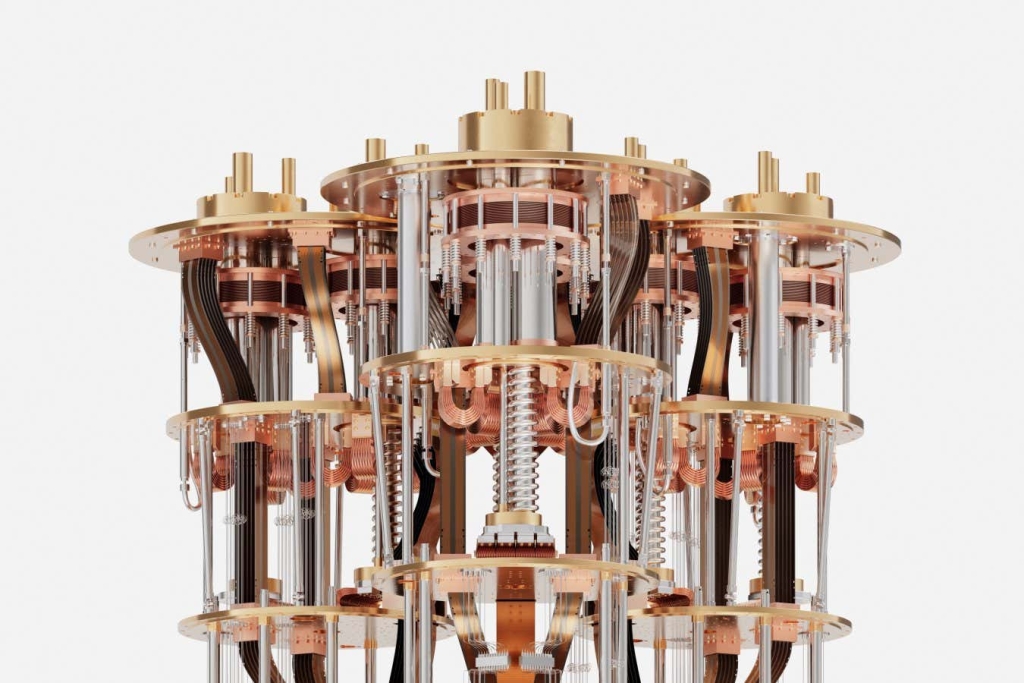
Scientists Create Most Complex Time Crystal Yet Using Quantum Computer
In a groundbreaking achievement that pushes the boundaries of quantum physics and computing, researchers have successfully created a two-dimensional time crystal using IBM’s advanced quantum computer—marking a significant leap forward in our understanding of quantum systems and their potential applications.
A New Era of Quantum Discovery
Time crystals represent one of the most fascinating phenomena in quantum physics. Unlike conventional crystals with repeating atomic structures in space, time crystals exhibit patterns that repeat through time itself. This creates a perpetual motion system that, remarkably, doesn’t violate the fundamental laws of thermodynamics.
The research team, led by Nicolás Lorente at Donostia International Physics Center in Spain, achieved what many in the scientific community thought would take years longer to accomplish. Using IBM’s powerful quantum computing platform, they constructed a time crystal of unprecedented complexity, moving beyond the one-dimensional structures that have dominated previous experiments.
The Quantum Architecture Behind the Breakthrough
The team utilized 144 superconducting qubits arranged in an intricate honeycomb pattern—a configuration that mimics the atomic structure of certain quantum materials. Each qubit functioned as a quantum particle with spin, the fundamental property that underlies magnetism and other quantum phenomena.
What makes this achievement particularly remarkable is the level of control the researchers maintained over the system. They could precisely manipulate how each qubit interacted with its neighbors, varying these interactions over time to create the time crystal state. This level of precision would be virtually impossible to achieve with classical computing methods.
Mapping the Quantum Landscape
Beyond simply creating the time crystal, the researchers used this complex system to begin constructing its “phase diagram”—a comprehensive map showing all possible states the quantum system can occupy. Think of it as creating a detailed atlas of quantum territory, revealing how the system behaves under different conditions.
This phase diagram represents a crucial tool for understanding quantum materials. Just as a phase diagram of water tells us whether H₂O exists as ice, liquid, or vapor under specific temperature and pressure conditions, this quantum phase diagram reveals the various states that emerge from the complex interactions of qubits.
The Quantum-Classical Feedback Loop
One of the most intriguing aspects of this research is how it bridges quantum and classical computing. The equations used to design the time crystal were too complex for conventional computers to simulate without making approximations. However, current quantum computers still suffer from errors that limit their reliability.
This created a fascinating feedback loop: researchers used classical methods to estimate where quantum errors might affect the results, then used the quantum computer to explore areas that classical methods couldn’t handle. Jamie Garcia from IBM, who wasn’t involved in the research, suggests this interplay between approximate classical methods and exact quantum approaches could revolutionize how we study complex quantum systems.
Implications for Future Technologies
The implications of this work extend far beyond academic curiosity. Biao Huang from the University of Chinese Academy of Sciences points out that two-dimensional quantum systems are extraordinarily difficult to simulate numerically, making this large-scale quantum simulation with over 100 qubits a crucial reference point for future research.
This breakthrough could accelerate the development of quantum sensors, which already use quantum properties to detect extremely subtle signals—like measuring heart signals from living organisms. The connection between time crystals and certain quantum sensor states opens exciting possibilities for new sensing technologies.
The Road Ahead
While this achievement represents a major milestone, it’s just the beginning of what quantum computers might accomplish in materials science and quantum physics. The ability to create and study such complex quantum states could eventually lead to the design of entirely new materials with properties we can only imagine today.
As quantum computers continue to improve in both qubit count and error correction, we can expect even more sophisticated quantum states to be created and studied, potentially unlocking secrets of the quantum world that have remained hidden until now.
Tags: #QuantumComputing #TimeCrystal #QuantumPhysics #IBMQuantum #SuperconductingQubits #PhaseDiagram #QuantumMaterials #QuantumSensors #ScientificDiscovery #QuantumTechnology #QuantumBreakthrough #QuantumResearch #FutureOfComputing #QuantumMechanics #AdvancedPhysics
,
Leave a Reply
Want to join the discussion?Feel free to contribute!