
Moto G & G Play (2026) review
Motorola Moto G (2026) Review: Budget Brilliance or Just Another G Phone?
Motorola’s 2026 Moto G lineup has arrived, and it’s more confusing than ever. After thoroughly testing the Moto G Power (2026), we’re diving into the vanilla Moto G (2026) to see if it justifies its existence between the beefier Power variant and the entry-level G Play (2026). What makes this lineup particularly interesting is that the Moto G (2026) and Moto G Play (2026) are essentially identical twins with minor differences—a strategy that’s both clever and potentially confusing for consumers.
Let’s cut through the noise and examine whether Motorola’s middle child offers enough value to stand out in the crowded budget smartphone market.
Design: Premium Feel at Budget Price
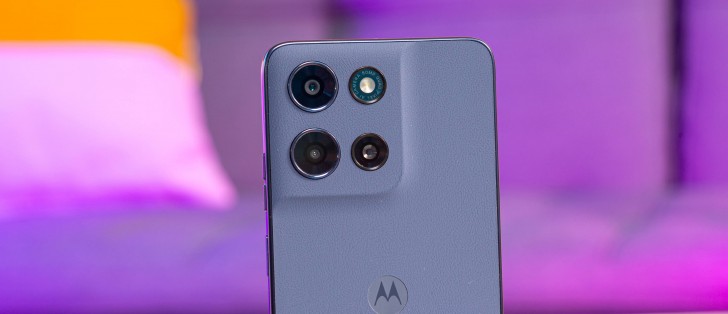
The first thing that strikes you about both the Moto G (2026) and G Play (2026) is their premium design language. Motorola has equipped both devices with a vegan-leather-like back panel that feels remarkably upscale for phones in this price bracket. The soft-touch finish not only looks sophisticated but also provides excellent grip and resists fingerprints—a win-win for everyday use.
Both models feature a glass front protected by Gorilla Glass 3, a silicone polymer back, and a plastic frame. The water-repellent design offers basic protection against spills and light rain, though it’s worth noting that unlike the G Power (2026), these models lack formal IP ratings. Motorola’s vague “water-repellent” claim doesn’t inspire the same confidence as an official IP rating would.
At 167.2 x 76.4 x 8.5mm and 202g, these phones have a substantial feel without being unwieldy. The side-mounted fingerprint reader is conveniently placed and responsive, while the stereo speakers with Dolby Atmos support deliver surprisingly good audio for media consumption.
Display: A Step Backward?
Here’s where things get concerning. Motorola has actually downgraded the display compared to the already modest Moto G Power (2026). The 6.70-inch IPS LCD now sports a 720x1604px resolution (262ppi) instead of the previous FullHD+ panel. While the 120Hz refresh rate remains, the lower pixel density is noticeable during everyday use, particularly when reading text or viewing detailed images.
The display peaks at 1000 nits, which is adequate for outdoor visibility, but the overall quality feels like a compromise that’s hard to justify in 2026. In a market where budget phones are increasingly offering better displays, this feels like a step in the wrong direction.
Performance: Mediocre at Best
Both the Moto G (2026) and G Play (2026) are powered by the MediaTek Dimensity 6300 chipset—a 5G-capable processor that’s decidedly underpowered for 2026 standards. Built on a 6nm process, it features an octa-core configuration with 2×2.4 GHz Cortex-A76 cores and 6×2.0 GHz Cortex-A55 cores, paired with a Mali-G57 MC2 GPU.
During our testing, we found the performance adequate for basic tasks like browsing, social media, and light gaming, but it struggles with anything more demanding. Multitasking with only 4GB of RAM (shared between both models) is particularly frustrating, with apps frequently reloading and noticeable lag when switching between applications.
The vanilla Moto G (2026) comes with 128GB of storage, while the G Play (2026) makes do with 64GB—both featuring dedicated microSD card slots for expansion. This is one area where Motorola gets it right, as expandable storage is becoming increasingly rare in modern smartphones.
Camera System: Mixed Results
The camera setups differ slightly between the two models. The Moto G (2026) features a 50MP main camera with f/1.8 aperture and PDAF, complemented by a 2MP macro sensor. The G Play (2026) downgrades to a 32MP main camera with f/2.2 aperture but loses the macro shooter entirely.
Both models share a 32MP front-facing camera (though the G Play inexplicably drops to 8MP for selfies). Video recording tops out at 1080p@30fps for both front and rear cameras—acceptable for the price point but hardly impressive.
In good lighting conditions, both phones capture serviceable photos with decent color reproduction. However, low-light performance is mediocre at best, with noticeable noise and loss of detail. The absence of an ultrawide camera on either model is a significant omission in 2026, limiting creative flexibility for photography enthusiasts.
Battery Life: The Bright Spot
Despite not carrying the “Power” branding, both the Moto G (2026) and G Play (2026) house the same 5,200mAh battery found in their more expensive sibling. This is where Motorola’s strategy makes sense—delivering excellent battery life across the entire lineup.
In our testing, both phones easily lasted through full days of heavy use, with many users likely getting two days of battery life with moderate usage. The vanilla Moto G supports 30W charging, while the G Play is limited to 18W—a noticeable difference in practice, though neither is particularly fast by 2026 standards.
Software: Clean but Concerning
Both devices ship with Android 16, offering a clean, near-stock Android experience with Motorola’s minimal customizations. This is generally a positive, as it means fewer bloatware apps and a cleaner interface. However, Motorola’s track record for software updates is notoriously poor, and with only 4GB of RAM, the longevity of these devices is questionable as Android continues to evolve and demand more resources.
The G Play Comparison: Why Bother?
This brings us to the elephant in the room: the near-identical nature of the Moto G (2026) and G Play (2026). With the same chipset, display, battery, and most other specifications, the differences boil down to:
- Camera setup (50MP + macro vs 32MP only)
- Storage (128GB vs 64GB)
- Charging speed (30W vs 18W)
- Front camera (32MP vs 8MP)
For the price difference, most consumers would be better served by the vanilla Moto G (2026), as the upgrades are meaningful and future-proof the device somewhat. The G Play feels like it’s been artificially limited to create a price gap rather than offering a genuinely different experience.
Unboxing Experience: Eco-Friendly but Bare-Bones
Motorola continues its commitment to sustainability with completely plastic-free packaging using soy-based inks. The two-piece cardboard box is minimalist and attractive, but the contents are sparse—just the phone and a basic USB-C to USB-C cable rated for 3A charging. No charger, no case, no screen protector. This is becoming standard practice, but it’s worth noting for first-time buyers who might expect more in the box.
Verdict: A Tough Sell in 2026
The Moto G (2026) occupies an awkward position in Motorola’s lineup. It’s better than the G Play thanks to superior cameras, more storage, and faster charging, but it’s significantly closer to the G Play than to the G Power in terms of overall experience. The downgraded display, mediocre performance, and limited RAM make it hard to recommend enthusiastically, even at its budget price point.
In a market where competitors are offering better displays, more capable processors, and more RAM even in budget segments, the Moto G (2026) feels like it’s clinging to an outdated formula. The excellent battery life and premium design are genuine bright spots, but they’re not enough to overcome the fundamental compromises.
If you’re in the market for a budget Motorola phone in 2026, the vanilla Moto G (2026) is the better choice over the G Play, but you might want to stretch your budget to the G Power if you can—it offers a meaningfully better experience that will serve you better in the long run.
Viral Tags & Phrases:
- Budget smartphone showdown
- Motorola’s confusing lineup strategy
- Vegan leather backs on budget phones
- 4GB RAM in 2026: Is it enough?
- Display downgrade controversy
- Battery beast hiding in plain sight
- G vs G Play: Spot the differences
- Eco-friendly packaging wins
- Performance that struggles to keep up
- Camera compromises you’ll notice
- The 5,200mAh battery that keeps going
- Why the vanilla G beats the G Play
- Motorola’s software update concerns
- 720p display in a 1080p world
- Budget phone design that punches above its weight
- The chipset that time forgot
- Expandable storage makes a comeback
- Stereo speakers with Dolby Atmos
- Water-repellent vs IP rating
- The awkward middle child of Moto G lineup
,

Leave a Reply
Want to join the discussion?Feel free to contribute!