
Musk has no proof OpenAI stole xAI trade secrets, judge rules, tossing lawsuit
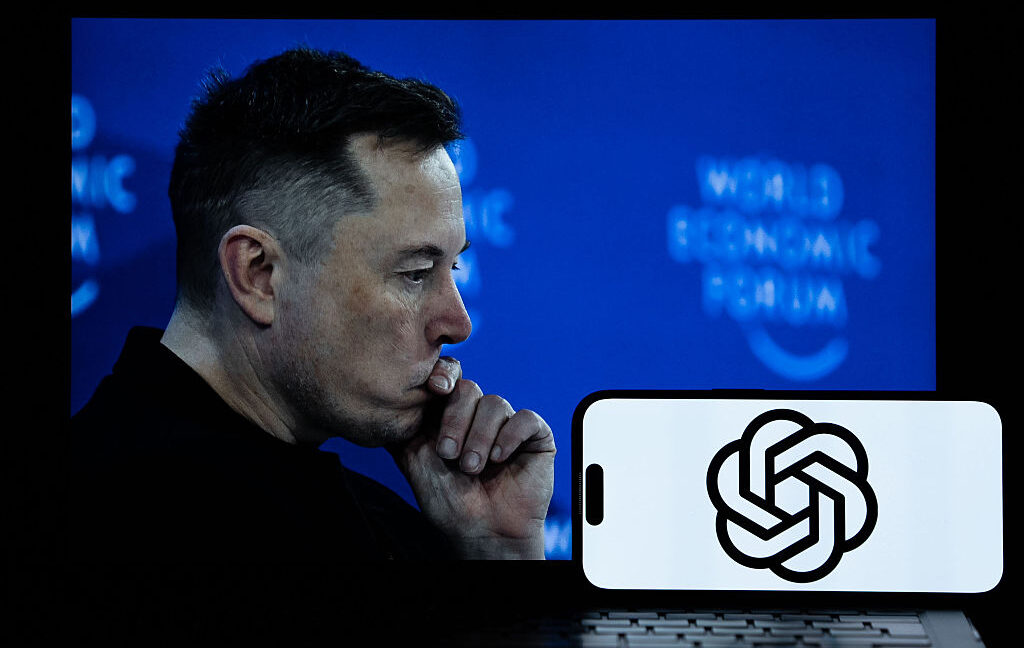
xAI’s Lawsuit Against OpenAI Dismissed: What Really Happened Behind the Scenes
In a dramatic legal showdown that had Silicon Valley buzzing, a federal judge has dismissed the bulk of xAI’s lawsuit against OpenAI, dealing a significant blow to Elon Musk’s artificial intelligence venture. The case, which alleged that OpenAI had poached employees and stolen trade secrets, has collapsed under the weight of insufficient evidence, leaving xAI with only a single claim remaining in what was once a sweeping legal offensive.
The dismissal, issued by Judge Yvonne Gonzalez Rogers in the Northern District of California, represents more than just a legal setback—it reveals the complex and often murky world of talent acquisition in the AI industry, where the line between competitive hiring and corporate espionage can become dangerously blurred.
The Anatomy of a Failed Lawsuit
At the heart of xAI’s case was a fundamental accusation: that OpenAI had systematically recruited xAI employees with the express purpose of stealing proprietary technology and trade secrets. However, Judge Rogers’ ruling makes it clear that xAI failed to provide the concrete evidence necessary to support such serious allegations.
“The court found that xAI’s claims were largely based on speculation and conjecture rather than hard evidence,” explained legal analyst Sarah Chen. “In corporate espionage cases, plaintiffs need to show more than just suspicious timing or circumstantial connections. They need to demonstrate actual misappropriation of protected information.”
The judge’s 49-page decision systematically dismantled xAI’s arguments, pointing out that the company had not provided “any nonconclusory allegations that OpenAI itself acquired, disclosed, or used xAI’s trade secrets.” This is a critical distinction in trade secret law: it’s not enough to show that employees left for a competitor; xAI needed to prove that OpenAI actively directed or benefited from any alleged theft.
The Signal Messages That Changed Everything
One of the most intriguing aspects of the case centered around a series of encrypted messages exchanged on Signal, the popular privacy-focused messaging app. The messages in question involved Xuechen Li, one of xAI’s earliest engineers, who left the company to join OpenAI.
According to court documents, Li had uploaded “the entire xAI source code base to a personal cloud account” that was connected to ChatGPT. This action, taken alone, would have been concerning enough. However, the timing became suspicious when an OpenAI recruiter sent Li a message on Signal just four hours after the upload, writing simply “nw!”
xAI interpreted this as clear evidence of wrongdoing. The company argued that “nw!” was shorthand for “no way!”—suggesting the OpenAI recruiter was excited about gaining access to xAI’s source code. This interpretation painted a picture of a coordinated effort to steal proprietary technology.
However, OpenAI presented a different explanation. In a footnote to the court’s decision, Judge Rogers noted that “OpenAI insists that ‘nw’ means ‘no worries,'” and that this message was unrelated to Li’s decision to upload the source code. The judge appeared to side with OpenAI’s interpretation, finding it more plausible given the context of the conversation.
The Legal Standard That xAI Failed to Meet
The dismissal hinged on xAI’s inability to meet the legal standard required for trade secret misappropriation claims. Under the federal Defend Trade Secrets Act, xAI needed to prove that OpenAI “unlawfully acquired, disclosed, or used a trade secret without xAI’s consent.”
Legal experts point out that this is an exceptionally high bar to clear. “You can’t just show that employees left for a competitor and assume the worst,” said intellectual property attorney Michael Rodriguez. “You need evidence of actual misappropriation—documents showing the information was used, communications directing the theft, or demonstrable harm to your business.”
xAI’s case fell apart because it relied heavily on the theory that OpenAI should be held responsible for the actions of employees before they even joined the company. Judge Rogers rejected this reasoning, stating that “without evidence that OpenAI directed the theft or actually put the stolen information to use, you cannot hold the company liable.”
What This Means for the AI Industry
The dismissal of this case sends ripples throughout the tech industry, particularly in the highly competitive AI sector where talent wars are fierce and intellectual property is incredibly valuable. The ruling establishes important precedents for how courts will evaluate similar claims in the future.
For companies like xAI and OpenAI, the case serves as a cautionary tale about the importance of protecting trade secrets and the difficulty of proving misappropriation in court. It also highlights the challenges of building a legal case based primarily on circumstantial evidence and employee movements.
Industry insiders suggest that this ruling may actually intensify the competition for AI talent, as companies realize that legal protections are limited when it comes to preventing employees from taking their knowledge to competitors. “The real protection comes from creating environments where top talent wants to stay,” noted one AI researcher who requested anonymity.
The One Claim That Remains
Despite the sweeping dismissal, xAI does have one claim that survived Judge Rogers’ scrutiny: the allegation that OpenAI induced Li to breach his duty of loyalty to xAI. This narrower claim focuses specifically on Li’s actions and whether OpenAI improperly encouraged him to violate his contractual obligations to his former employer.
Legal analysts believe this remaining claim is significantly weaker than the original lawsuit and may be difficult for xAI to prove. However, it does provide the company with a potential avenue for some form of legal recourse, even if it falls far short of the comprehensive victory xAI was seeking.
The Broader Context: Musk vs. OpenAI
This lawsuit cannot be viewed in isolation from the broader context of Elon Musk’s relationship with OpenAI. Musk was a co-founder of OpenAI in 2015 but left the organization in 2018 amid disagreements about its direction and governance. Since then, he has been increasingly critical of OpenAI’s transition from a non-profit to a capped-profit entity and its close partnership with Microsoft.
The creation of xAI in 2023 was seen by many as Musk’s attempt to compete directly with OpenAI and other major AI players. The lawsuit against OpenAI can be interpreted as part of this larger competitive dynamic, raising questions about whether the legal action was motivated more by business competition than by genuine concerns about trade secret theft.
Looking Ahead: What’s Next for Both Companies
For xAI, the dismissal represents a significant setback but not necessarily the end of the road. The company could potentially refile the case with additional evidence, though legal experts suggest this would be challenging given the judge’s thorough analysis of the existing evidence.
OpenAI, on the other hand, emerges from this legal battle with its reputation largely intact, though questions about its hiring practices and internal culture may linger. The company will likely review and potentially strengthen its employee onboarding processes to ensure that any proprietary information from previous employers is properly handled.
The Human Element: What Happens to the Engineers?
Beyond the corporate drama, this case raises important questions about the rights and responsibilities of individual engineers in the AI industry. Xuechen Li, at the center of the controversy, now finds himself in a difficult position, potentially caught between two competing AI powerhouses.
The case highlights the ethical dilemmas faced by AI researchers and engineers who move between companies in a rapidly evolving field. How much of their knowledge and experience can they bring with them? Where is the line between applying general expertise and misappropriating specific trade secrets?
These questions don’t have easy answers, but the xAI vs. OpenAI case provides some guidance: companies need to be extremely careful about how they handle information from previous employers, and they should maintain clear documentation of their development processes to protect against future allegations.
The Future of AI Competition
As the AI industry continues to grow and evolve, competition for talent and technology will only intensify. The dismissal of xAI’s lawsuit suggests that courts will take a skeptical view of broad claims about trade secret theft without concrete evidence.
This may push companies to focus more on innovation and less on litigation, though the temptation to use legal means to slow down competitors will likely remain. The real winners in this scenario may be the engineers and researchers whose skills are in such high demand, as companies compete to attract and retain top talent through better compensation, more interesting projects, and stronger ethical commitments.
The xAI vs. OpenAI case may ultimately be remembered not for its legal outcome, but for what it revealed about the state of competition in the AI industry: fierce, complex, and still finding its ethical and legal boundaries in a rapidly changing technological landscape.
Tags:
xAI lawsuit, OpenAI trade secrets, Elon Musk AI, artificial intelligence competition, tech industry litigation, Silicon Valley legal battles, AI talent wars, corporate espionage technology, Defend Trade Secrets Act, Xuechen Li OpenAI, Signal messages legal case, AI industry competition, tech company lawsuits, intellectual property technology, Silicon Valley drama
Viral Sentences:
- Judge throws out xAI’s case against OpenAI in major legal blow to Elon Musk’s AI ambitions
- “nw!” message becomes center of billion-dollar AI trade secret dispute
- xAI’s lawsuit collapses as court demands real evidence over speculation
- Silicon Valley’s AI talent wars reach fever pitch in federal courtroom
- Elon Musk’s xAI left with single claim after sweeping lawsuit dismissal
- Court rejects theory that companies responsible for new hires’ past actions
- AI industry watches as xAI fails to prove OpenAI stole trade secrets
- The Signal messages that weren’t enough to prove corporate espionage
- xAI uploads entire source code to personal cloud, sparking legal firestorm
- Tech giants compete for AI talent as legal protections prove limited
,


Leave a Reply
Want to join the discussion?Feel free to contribute!