
NASA Admits Fault in Starliner Test Flight, Classifies It as ‘Type A’ Mishap
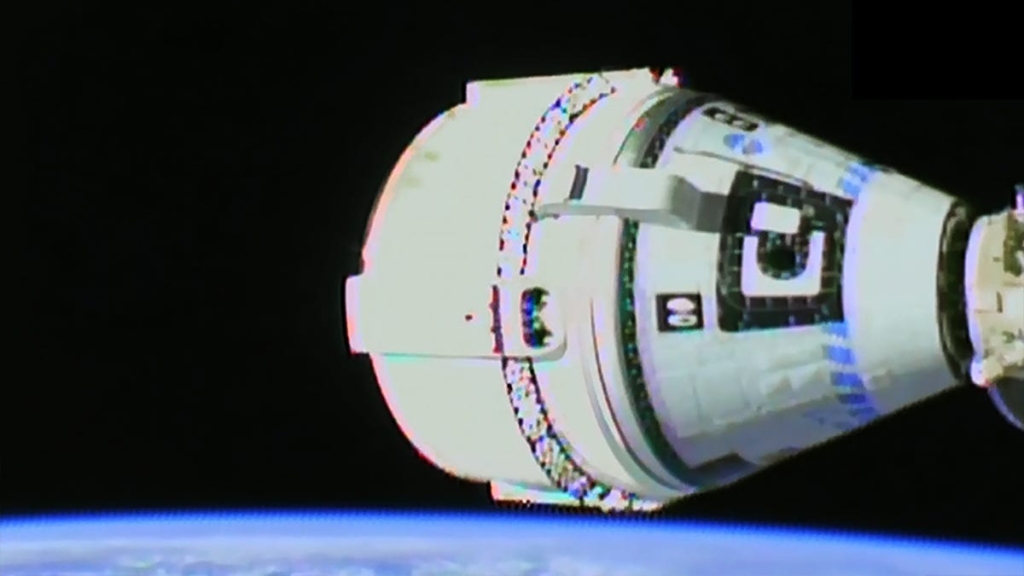
NASA Admits Responsibility in Boeing Starliner Mishap That Left Astronauts Stranded in Space
In a stunning revelation that has sent shockwaves through the aerospace industry, NASA has officially taken responsibility for its role in the catastrophic Boeing Starliner mission that left astronauts Suni Williams and Butch Wilmore stranded in space for months.
The incident, which dominated headlines throughout late 2024 and early 2025, has now been classified by NASA as a “Type A mishap” – the agency’s most serious classification reserved for failures costing more than $2 million or resulting in crew aircraft hull loss. With the Starliner program already costing taxpayers $4.2 billion, both criteria apply.
The Technical Nightmare That Unfolded
The crewed Starliner flight, which finally launched on June 5, 2024, after multiple delays, quickly devolved into a technical nightmare. The spacecraft experienced multiple thruster failures en route to the International Space Station, making the docking procedure particularly harrowing for the crew.
NASA Administrator Jared Isaacman didn’t mince words in the agency’s official blog post, stating: “The Boeing Starliner spacecraft has faced challenges throughout its uncrewed and most recent crewed missions. While Boeing built Starliner, NASA accepted it and launched two astronauts into space. The technical difficulties encountered during docking with the International Space Station were very apparent.”
Leadership Disagreements and Communication Failures
In a letter addressed to all NASA employees and posted on X (formerly Twitter), Isaacman outlined a series of systemic failures that contributed to the mission’s collapse. Among the most damning revelations was the admission that a “prior OFT thruster risk that was never fully understood” existed within the program.
Perhaps even more concerning were the internal disagreements among NASA leadership regarding Williams and Wilmore’s return options. The agency’s delay in declaring the mission a failure, despite its high-profile nature clearly indicating something had gone terribly wrong, has raised serious questions about NASA’s decision-making processes.
The Astronauts’ Ordeal
Williams and Wilmore’s return was initially delayed by two weeks, but as technical issues mounted and confidence in the Starliner’s safety waned, NASA made the unprecedented decision to send the spacecraft back to Earth uncrewed. The astronauts were left stranded on the ISS for months before finally returning with SpaceX’s Crew-9 mission in March 2025.
The psychological and physical toll on the astronauts during this extended mission cannot be overstated. Originally scheduled for an eight-day mission, Williams and Wilmore spent over nine months in space, conducting emergency repairs and maintaining their physical condition while waiting for NASA to determine their return strategy.
Ongoing Technical Mysteries
During Thursday’s press conference, Isaacman admitted that the “true technical root cause” of the Starliner’s malfunctions still hasn’t been identified. However, he emphasized that NASA believes it is close to pinpointing the exact issues.
“We’re not starting from zero here,” Isaacman told reporters. “We’re sharing the results of multiple investigations that will be coming to light in the hours and days ahead. Boeing and NASA have been working to try and understand these technical challenges during that entire time period.”
The Road Ahead
Despite the catastrophic failure, both NASA and Boeing remain committed to making the Starliner program viable. The agency has announced plans to send the Starliner back to the ISS in an uncrewed resupply mission, with a launch date currently set for April 2026.
This timeline suggests that NASA is confident in its ability to address the technical issues, though the agency’s admission of responsibility indicates a fundamental reassessment of its oversight processes may be underway.
Industry Implications
The Starliner debacle has significant implications for the commercial spaceflight industry. Boeing, already struggling with its reputation following the 737 MAX crisis, now faces renewed scrutiny over its engineering and quality control processes.
Meanwhile, NASA’s decision to rely on commercial partners for crew transport to the ISS has been called into question. The agency’s admission that it “accepted” the Starliner despite known issues raises concerns about whether proper due diligence was conducted before launching human lives into space.
Looking Forward
As investigations continue and technical teams work to identify and resolve the Starliner’s issues, the aerospace community watches closely. The success or failure of the planned April 2026 uncrewed mission could determine whether Boeing’s Starliner has a future in human spaceflight or becomes another cautionary tale in NASA’s storied history.
For Williams and Wilmore, their ordeal serves as a stark reminder of the risks inherent in space exploration and the critical importance of rigorous testing and honest assessment of technical capabilities before putting human lives at stake.
Tags and Viral Phrases:
- NASA admits responsibility
- Boeing Starliner failure
- Astronauts stranded in space
- $4.2 billion taxpayer money wasted
- Technical thruster failures
- Leadership disagreements at NASA
- Suni Williams Butch Wilmore ordeal
- Type A mishap classification
- SpaceX vs Boeing space race
- Commercial spaceflight failures
- NASA oversight failures
- Space mission catastrophe
- Astronauts left behind
- Aerospace industry scandal
- Technical root cause unknown
- April 2026 uncrewed mission
- Commercial crew program questioned
- Boeing engineering crisis
- Space exploration risks
- NASA investigation ongoing
,

Leave a Reply
Want to join the discussion?Feel free to contribute!