
NASA Announces Major Revamp of Its Artemis Moon Program
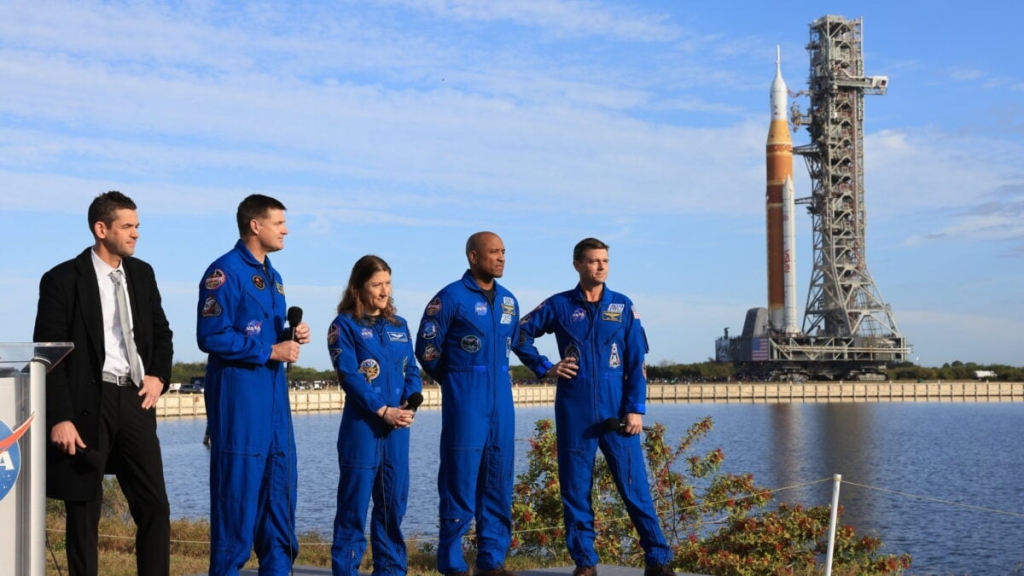
NASA Rewrites Lunar Playbook: Adding Test Flight, Scrapping Upgrades, and Aiming for Double Moon Landings in 2028
In a dramatic pivot that underscores the agency’s willingness to break from tradition, NASA Administrator Jared Isaacman has unveiled a sweeping overhaul of the Artemis program. The new blueprint trades an overly cautious, multi-year cadence for a faster, more iterative approach—one that could see astronauts stepping onto the Moon twice in a single year.
From “One and Done” to “Test, Tweak, Repeat”
Isaacman minced no words during Friday’s press conference: the original plan to fly one uncrewed SLS mission, wait three years, then send a crew around the Moon, and wait another three years before landing was simply unsustainable. “You don’t go from one uncrewed launch, wait three years, go around the Moon, wait three years, and land on it,” he said. “That’s not the right approach. There has to be a better way.”
That “better way” begins with Artemis 3—but not the Artemis 3 anyone was expecting. Instead of a direct Moon landing, the mission will now serve as an Earth-orbit rehearsal, echoing the role Apollo 9 played before the historic first lunar touchdown. In 2027, Orion will rendezvous with commercial lunar landers—SpaceX’s Starship HLS and Blue Origin’s Blue Moon—testing docking procedures, spacesuit mobility, and systems integration in microgravity before committing to the quarter-million-mile voyage to the lunar surface.
Killing SLS Block 1B to Save SLS
One of the most consequential changes is the cancellation of the SLS Block 1B upgrade. Originally, NASA planned to transition to a larger upper stage for increased payload capacity starting with Artemis 4. Now, the agency will stick with the proven Block 1 configuration through at least Artemis 5, standardizing the rocket to streamline manufacturing and accelerate launch frequency.
Isaacman framed the decision as a pragmatic response to low flight rates: “When you’re launching every three years, your skills atrophy, you lose muscle memory.” By keeping the rocket configuration stable, NASA aims to reduce variability, lower costs, and rebuild the institutional muscle memory needed for rapid turnaround. “We don’t want to turn every one of them into a work of art,” he quipped, underscoring the shift from bespoke engineering to repeatable production.
Doubling Down on 2028
With the test flight out of the way, Artemis 4—now slated for early 2028—becomes NASA’s first attempt to land humans on the Moon since Apollo 17 in 1972. Even more ambitiously, Artemis 5 could follow before the year is out, potentially delivering two separate lunar touchdowns within ten months. Achieving that cadence will require not just a reliable rocket, but a rebuilt and expanded workforce. “We have to rebuild core competencies,” Isaacman said. “The ability to turn around our launch pads and launch with frequency greater than every three years is imperative.”
What This Means for the Commercial Partners
The revised plan puts additional pressure on SpaceX and Blue Origin to deliver flight-ready landers on an accelerated timeline. While NASA declined to comment on the partners’ preparedness, the Earth-orbit demo in 2027 will serve as a crucial proving ground. Success there could pave the way for Artemis 4’s lunar landing; failure might trigger yet another reset.
Spacesuit testing is also folded into Artemis 3, giving engineers a chance to evaluate mobility, life support, and dust mitigation in the actual environment the suits will face—albeit in Earth orbit rather than lunar gravity. “Even just getting an astronaut in a suit in microgravity, we can learn a lot,” Isaacman noted.
A Cultural Shift at NASA
Beyond the technical changes, the overhaul signals a cultural shift at NASA—from the ultra-conservative, “perfect before we fly” ethos of the past toward a more iterative, fail-fast mentality. By front-loading risk in an Earth-orbit test, the agency hopes to avoid costly surprises at the Moon. The move also aligns Artemis more closely with commercial spaceflight practices, where rapid prototyping and frequent flights are the norm.
If the new plan works, 2028 could mark the beginning of a new era: not just a return to the Moon, but a sustained, high-tempo campaign that lays the groundwork for Mars and beyond. If it doesn’t, NASA will have at least learned critical lessons without betting everything on a single, high-stakes lunar landing.
Tags: NASA, Artemis program, SLS rocket, lunar landing, Moon mission, SpaceX Starship, Blue Origin Blue Moon, Jared Isaacman, Orion spacecraft, commercial lunar landers, space exploration, 2028 Moon landing, NASA overhaul, Artemis 3, Artemis 4, Artemis 5, lunar orbit, spacesuit testing, space technology
Viral Sentences:
- NASA just rewrote the rules of lunar exploration—adding a test flight and aiming for double Moon landings in 2028.
- The agency is killing its SLS Block 1B upgrade to launch faster and smarter.
- Artemis 3 won’t go to the Moon—it’s an Earth-orbit dress rehearsal for the big show.
- SpaceX and Blue Origin landers will be tested in orbit before touching lunar soil.
- NASA’s new mantra: test, tweak, repeat—no more three-year waits between launches.
- 2028 could see humans walk on the Moon twice in ten months—if the new plan sticks.
- “We don’t want to turn every rocket into a work of art,” says NASA chief Isaacman.
- This is NASA’s most ambitious pivot since the Apollo era—will it pay off?
,


Leave a Reply
Want to join the discussion?Feel free to contribute!