
NASA Artemis II splashes down in Pacific Ocean in ‘perfect’ landing for Moon mission
Artemis II: NASA’s Historic Return to the Moon Ends in Triumph
In a breathtaking display of human ingenuity and courage, NASA’s Artemis II mission has concluded with a flawless splashdown, marking a monumental milestone in space exploration. After a 10-day odyssey that pushed the boundaries of human spaceflight, the four astronauts aboard the Orion spacecraft returned to Earth safely, their mission around the Moon a resounding success.
The crew’s spacecraft, named Integrity as part of NASA’s Artemis II mission, splashed down in the Pacific Ocean off the coast of San Diego, California, at 5:07 p.m. Pacific Time. According to NASA, the four crew members—three Americans and one Canadian—were all in “green” condition, a term used to indicate they were safe and healthy after the Orion craft’s “perfect” landing.
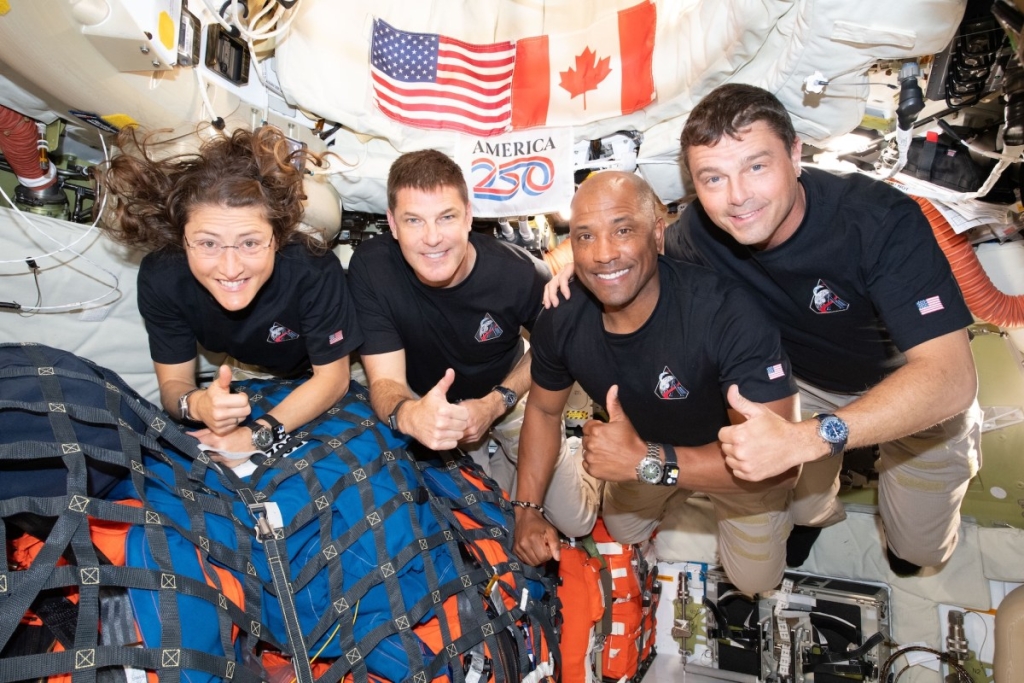
The crew of Artemis II was a testament to international collaboration and human excellence. Commander Reid Wiseman, pilot Victor Glover, and mission specialists Christina Koch and Jeremy Hansen embarked on a journey that would take them farther from Earth than any humans have ever traveled. From liftoff to splashdown, the quartet spent just over nine days in space, with NASA rounding up and calling it a 10-day mission.
Artemis II was NASA’s first mission to the Moon’s orbit in more than 50 years, a historic return to deep space exploration. The crew traveled an estimated 252,760 miles from our planet, venturing into the uncharted territories of the cosmos. During their journey, the astronauts orbited the Moon, capturing breathtaking photos of its surface and witnessing a total solar eclipse from space. They identified new craters, including one named after Wiseman’s late wife, Carroll, who passed away from cancer in 2020—a touching tribute to a loved one.
“These were the ambassadors to the stars that we sent out there,” said Jared Isaacman, NASA’s administrator, after the landing. “I can’t imagine a better crew. It was a perfect mission.” Isaacman, a commercial astronaut who has flown on two private orbital missions, took to social media to celebrate the achievement, signaling that this was just the beginning of a new era in space exploration.
“America is back in the business of sending astronauts to the Moon and bringing them home safely,” Isaacman wrote on X, later giving credit to the entire NASA workforce. “This was a test mission, the first crewed flight of SLS and Orion, pushing farther into the unforgiving environment of space than ever before, and it carried real risk. They accepted that risk for all we stood to learn and for the exciting missions that follow, as we return to the lunar surface, build a Moon base, and prepare for what comes next.”
The success of Artemis II is not just a triumph for NASA but for humanity as a whole. It represents a giant leap forward in our quest to explore the cosmos, paving the way for future missions that will see humans return to the lunar surface, establish a permanent presence on the Moon, and eventually venture to Mars and beyond.
As the world celebrates this historic achievement, the Artemis program continues to inspire a new generation of explorers, scientists, and dreamers. The legacy of Artemis II will be remembered as a defining moment in the history of space exploration, a testament to what humanity can achieve when we dare to reach for the stars.
Tags: Artemis II, NASA, Moon mission, Orion spacecraft, space exploration, lunar orbit, astronauts, Reid Wiseman, Victor Glover, Christina Koch, Jeremy Hansen, Jared Isaacman, SLS, Moon base, total solar eclipse, space travel, deep space, human spaceflight, Pacific Ocean splashdown, San Diego, space history, lunar surface, cosmic exploration, Mars missions, space innovation, NASA administrator, commercial astronaut, private orbital missions, X social media, space risk, lunar craters, Carroll Wiseman, cancer tribute, space ambassadors, stars, Moon landing, space odyssey, cosmic journey, space triumph, humanity in space, space legacy, future missions, space dreamers, space scientists, space explorers, space achievement, space milestone, space success, space program, space agency, space technology, space mission, space crew, space adventure, space discovery, space vision, space future, space inspiration, space courage, space ingenuity, space boundaries, space universe, space cosmos, space planets, space stars, space galaxies, space universe exploration, space human achievement, space human courage, space human ingenuity, space human exploration, space human future, space human legacy, space human triumph, space human success, space human program, space human agency, space human technology, space human mission, space human crew, space human adventure, space human discovery, space human vision, space human future, space human inspiration, space human courage, space human ingenuity, space human boundaries, space human universe, space human cosmos, space human planets, space human stars, space human galaxies, space human universe exploration, space human achievement, space human courage, space human ingenuity, space human exploration, space human future, space human legacy, space human triumph, space human success, space human program, space human agency, space human technology, space human mission, space human crew, space human adventure, space human discovery, space human vision, space human future, space human inspiration, space human courage, space human ingenuity, space human boundaries, space human universe, space human cosmos, space human planets, space human stars, space human galaxies, space human universe exploration.
,

Leave a Reply
Want to join the discussion?Feel free to contribute!