
NASA astronaut who suffered serious medical issue on ISS steps forward
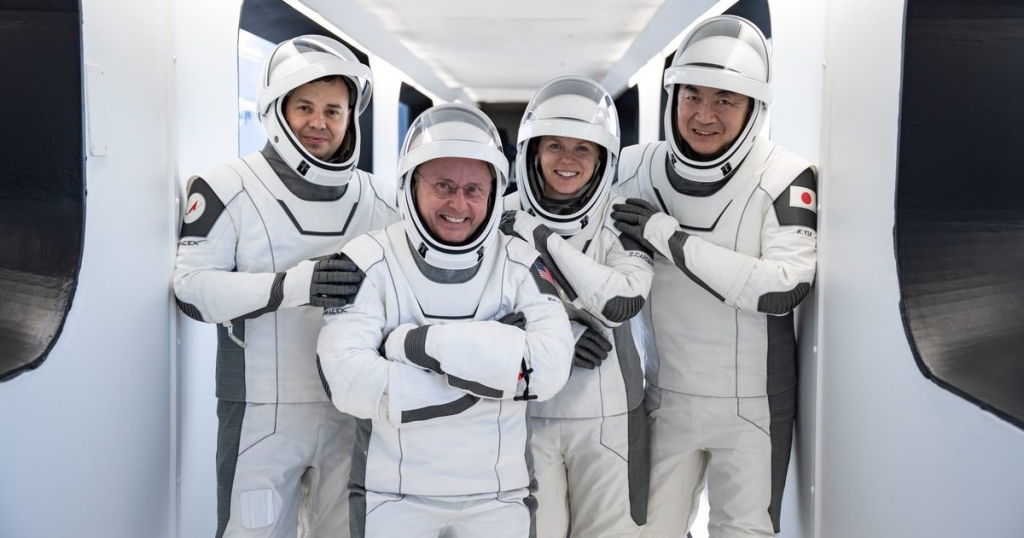
NASA Astronaut Mike Fincke Reveals Medical Emergency That Forced Early Return from ISS
In a rare and unprecedented move that has sent shockwaves through the aerospace community, NASA astronaut Mike Fincke has publicly disclosed details about the medical emergency that forced the early return of SpaceX’s Crew-11 from the International Space Station—marking the first time in NASA history that a crewed mission was cut short due to health concerns.
The Incident That Changed Spaceflight History
The story began quietly on January 7, 2026, when NASA abruptly canceled a scheduled spacewalk involving Fincke and fellow astronaut Zena Cardman. At the time, space enthusiasts and industry insiders alike were left speculating about the sudden change in plans. What initially appeared to be a routine mission adjustment would soon reveal itself to be something far more significant.
Fincke, a 58-year-old veteran astronaut with multiple spaceflights under his belt, experienced what he describes as a medical event “that required immediate attention from my incredible crewmates.” The seasoned space explorer emphasized that thanks to the rapid response of his fellow astronauts aboard the ISS and the expert guidance of NASA flight surgeons, his condition “quickly stabilized.”
The Decision-Making Process
What followed was a carefully orchestrated series of decisions that would ultimately reshape how NASA approaches astronaut health in space. After further evaluation, mission control determined that the safest course of action was an early return for Crew-11—not classified as an emergency, but rather as a “carefully coordinated plan to take advantage of advanced medical imaging not available on the space station.”
This nuanced approach highlights the evolving nature of spaceflight safety protocols. While the ISS is equipped with various medical facilities capable of handling emergencies, the specific nature of Fincke’s condition required diagnostic capabilities that simply aren’t available in orbit. The decision to return early rather than wait for the originally scheduled departure demonstrates NASA’s commitment to prioritizing astronaut health above all other considerations.
A Mission Cut Short
Crew-11 had arrived at the ISS in August 2025 with plans to remain for several months. Their return wasn’t scheduled until at least a month after the medical incident occurred. However, the gravity of the situation prompted NASA Administrator Jared Isaacman—recently appointed to the position—to make the unprecedented call to bring the four-person crew home early aboard their SpaceX Dragon spacecraft.
The return journey concluded on January 15, 2026, with a splashdown off the coast of San Diego. This decision marked a watershed moment in space exploration history, as it represented the first time a NASA astronaut mission had been shortened due to health concerns rather than technical issues or mission completion.
The Human Element of Space Exploration
In his public statement, Fincke took time to express profound gratitude to those who supported him during this challenging period. He specifically thanked his fellow Expedition 74 members—Zena Cardman, Kimiya Yui, Oleg Platonov, Chris Williams, Sergey Kud-Sverchkov, and Sergei Mikayev—as well as the entire NASA team, SpaceX personnel, and medical professionals at Scripps Memorial Hospital La Jolla near San Diego.
“Their professionalism and dedication ensured a positive outcome,” Fincke stated, his words carrying the weight of someone who has experienced both the wonders and vulnerabilities of human spaceflight firsthand.
The astronaut also provided an update on his current condition, revealing that he’s “doing very well and continuing standard post-flight reconditioning at NASA’s Johnson Space Center in Houston.” His positive outlook and continued commitment to the space program serve as a testament to the resilience required of those who venture beyond Earth’s atmosphere.
Reflections on Spaceflight and Humanity
Perhaps most poignantly, Fincke reflected on the broader implications of his experience. “Spaceflight is an incredible privilege,” he noted, adding that it “sometimes reminds us just how human we are.” This philosophical observation cuts to the heart of what makes space exploration both inspiring and humbling. Despite our technological achievements and the ability to send humans to orbit, we remain fundamentally biological beings with physical limitations and vulnerabilities.
Fincke’s experience serves as a powerful reminder that as we push the boundaries of human exploration, we must remain acutely aware of the physiological challenges that accompany these endeavors. The human body, evolved over millions of years for life on Earth, faces numerous stresses in the microgravity environment of space—from bone density loss to fluid redistribution, and potentially other conditions that may only become apparent during extended missions.
Implications for Future Missions
The Crew-11 incident is likely to have far-reaching implications for future space missions, particularly as NASA and other space agencies plan for longer-duration missions to the Moon, Mars, and beyond. The ability to diagnose and treat medical conditions in space will become increasingly critical as mission durations extend and the ability to return to Earth quickly becomes more limited.
This event may accelerate the development of more advanced medical diagnostic tools for the ISS and future spacecraft, as well as refined protocols for handling medical emergencies in orbit. It also underscores the importance of having multiple highly trained crew members capable of providing medical assistance to one another in emergency situations.
The Evolution of Space Medicine
The incident highlights how far space medicine has come since the early days of human spaceflight, while also revealing areas where improvement is still needed. The fact that NASA could make a rapid, informed decision to return the crew based on real-time medical data represents a significant advancement in our ability to monitor astronaut health during missions.
However, the need to return to Earth for certain diagnostic procedures also reveals the limitations of current in-space medical capabilities. As we look toward establishing permanent lunar bases and eventually sending humans to Mars, developing the ability to perform comprehensive medical diagnostics and treatments in space will be crucial.
A Testament to International Cooperation
The successful handling of this situation also serves as a powerful example of international cooperation in space. The ISS represents a partnership between multiple nations, and the seamless coordination between NASA, Roscosmos, JAXA, and other international partners during this medical emergency demonstrates the strength of these collaborative relationships.
The professionalism displayed by all involved parties—from the astronauts who provided immediate assistance to the ground teams who made critical decisions—reflects the extensive training and preparation that goes into every aspect of space missions, including emergency scenarios that may never have occurred before.
Looking Forward
As the space community processes this unprecedented event, one thing remains clear: the safety and well-being of astronauts must remain the top priority in all space exploration endeavors. Fincke’s experience, while undoubtedly challenging, has provided valuable insights that will help shape the future of human spaceflight.
The fact that he has chosen to share his story publicly also represents an important step toward greater transparency in space exploration. By discussing this incident openly, NASA and its astronauts help the public better understand both the incredible achievements and the very real risks associated with pushing the boundaries of human exploration.
As we continue to reach for the stars, we must remember that every astronaut who ventures into space does so with courage, knowing that they are testing the limits of human capability in one of the most extreme environments imaginable. Mike Fincke’s experience serves as both a reminder of our vulnerabilities and a testament to our ability to overcome challenges through preparation, cooperation, and unwavering commitment to safety.
Tags: NASA, SpaceX, International Space Station, ISS, Crew-11, Mike Fincke, medical emergency, space medicine, astronaut health, spaceflight safety, Jared Isaacman, Zena Cardman, human spaceflight, space exploration, NASA Johnson Space Center, Scripps Memorial Hospital, Expedition 74
Viral Sentences:
- “Spaceflight is an incredible privilege… sometimes reminds us just how human we are”
- First time in NASA history a mission cut short due to health concerns
- Veteran astronaut’s medical emergency forces unprecedented early return from ISS
- SpaceX Dragon splashes down early as NASA prioritizes astronaut health above all
- Groundbreaking moment for space medicine as Crew-11 returns for advanced diagnostics
- 58-year-old space veteran credits crewmates for saving his life in orbit
- NASA Administrator makes historic call to bring astronauts home early
- Medical event in space triggers carefully coordinated emergency return plan
- International Space Station proves worth as platform for cutting-edge medical response
- Future Mars missions face scrutiny after ISS medical emergency revelation
,


Leave a Reply
Want to join the discussion?Feel free to contribute!