
NASA has a new problem to fix before the next Artemis II countdown test
NASA’s Artemis II Mission: A Risky Leap Forward or a Calculated Gamble?
In a bold move that has both excited and concerned space enthusiasts worldwide, NASA has announced a significant change in its safety protocols for the upcoming Artemis II mission. This decision, which involves relaxing the hydrogen leak safety limit, marks a pivotal moment in the agency’s ambitious lunar exploration program.
John Honeycutt, chair of NASA’s Artemis II mission management team, recently shed light on the rationale behind this controversial decision. According to Honeycutt, the change was grounded in extensive test data gathered during the interim between Artemis I and Artemis II. “The SLS program came up with a test campaign that actually looked at that cavity, the characteristics of the cavity, the purge in the cavity… and they introduced hydrogen to see when you could actually get it to ignite, and at 16 percent, you could not,” Honeycutt explained.
This revelation has sent shockwaves through the space community, as it challenges long-held safety standards in rocketry. Hydrogen, known for its explosive properties when mixed with air, has always been a double-edged sword in space exploration. Its potency as a rocket fuel is unparalleled, but its tendency to leak and the difficulty in containing it have long been a thorn in NASA’s side.
The decision to relax the safety limit is not without its critics. Many experts argue that this approach is risky, potentially putting the lives of astronauts in danger. However, NASA maintains that this decision was not made lightly and is backed by solid scientific evidence.
The three-year gap between Artemis I and Artemis II was utilized by NASA to gain a deeper understanding of hydrogen leaks and their potential risks. This period allowed the agency to become more comfortable with a higher threshold of hydrogen leakage, rather than attempting to eliminate leaks entirely – a feat that has proven notoriously difficult in the past.
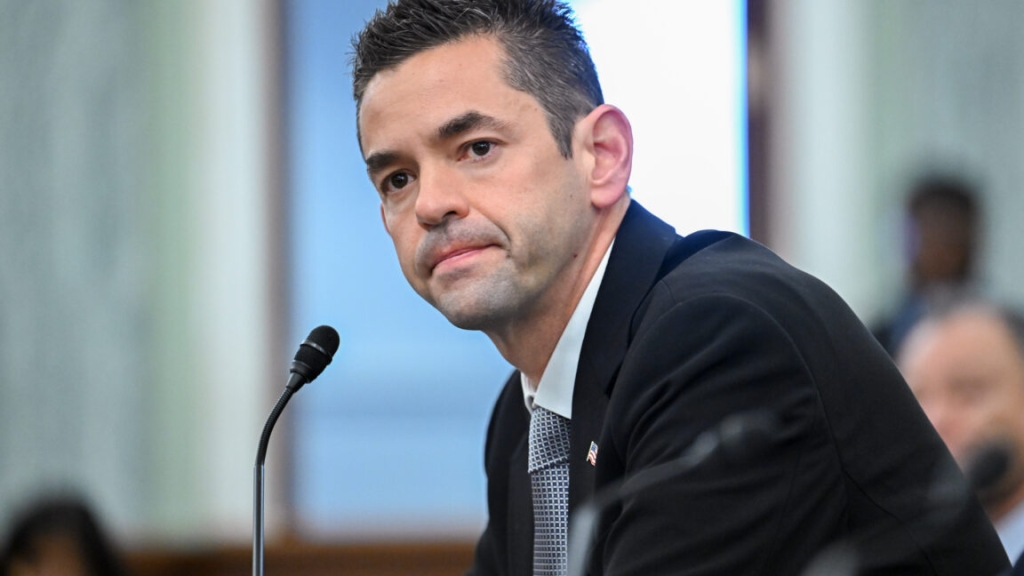
Jared Isaacman, who took over as NASA’s administrator in December, has been vocal about the need for change in the Space Launch System (SLS) program. In a recent statement, Isaacman promised significant improvements for future missions: “I will say near-conclusively for Artemis III, we will cryoproof the vehicle before it gets to the pad, and the propellant loading interfaces we are troubleshooting will be redesigned.”
Isaacman’s tenure has been marked by a critical eye towards the SLS program’s high costs and slow flight rate. The estimated cost of over $2 billion per rocket, as reported by NASA’s inspector general, has raised eyebrows in Congress and among taxpayers. Additionally, the nearly $900 million spent on Artemis ground support infrastructure in 2024 alone has led to questions about the program’s efficiency and sustainability.
The Artemis program’s financial burden is compounded by the fact that each SLS rocket is essentially a “golden egg” – a bespoke, expensive piece of technology that cannot be easily replaced. This has led to a situation where NASA and Boeing, the prime contractor for the SLS core stage, have never built a full-size test model of the core stage. As a result, the complete cryogenic interplay between the core stage and ground equipment can only be tested once the fully assembled rocket is on the launch pad.
Despite these challenges, NASA remains committed to the Artemis program. Existing law requires the agency to continue flying the SLS rocket through the Artemis V mission. However, Isaacman has hinted at potential changes to the program’s architecture: “The Artemis architecture will continue to evolve as we learn more and as industry capabilities mature.” This suggests that NASA may incorporate newer, cheaper, and reusable rockets into the Artemis program in the future.
The next launch window for Artemis II opens on March 3, with additional opportunities available in April and May. However, if the mission doesn’t lift off in March, NASA will need to roll the rocket back to the Vehicle Assembly Building to refresh its flight termination system.
As the world watches with bated breath, NASA’s decision to relax safety limits for the Artemis II mission represents a significant gamble. While it may pave the way for more efficient and cost-effective space exploration, it also raises questions about the balance between innovation and safety in the pursuit of scientific advancement.
In the words of Jared Isaacman, “There is still a great deal of work ahead to prepare for this historic mission. We will not launch unless we are ready and the safety of our astronauts will remain the highest priority.” As NASA continues to push the boundaries of space exploration, the world will be watching closely to see if this calculated risk pays off.
Tags:
Artemis II, NASA, Space Launch System, SLS, Hydrogen leak, Lunar exploration, Space safety, Rocket technology, Artemis program, Jared Isaacman, John Honeycutt, Boeing, Kennedy Space Center, Cryogenic fuel, Space innovation
Viral Sentences:
- NASA takes a bold leap: Relaxing safety limits for Artemis II mission!
- Hydrogen leaks no longer a deal-breaker? NASA’s controversial decision explained.
- Artemis II: A calculated gamble or a risky leap forward?
- NASA’s golden egg: The expensive and bespoke SLS rocket.
- Isaacman promises changes: “We will cryoproof the vehicle before it gets to the pad.”
- The $2 billion question: Is NASA’s SLS program worth the cost?
- Artemis program evolves: Reusable rockets on the horizon?
- March 3: The date that could change space exploration forever.
- NASA’s safety-first approach: “We will not launch unless we are ready.”
- The end of an era? NASA hints at changes to Artemis architecture.
,

Leave a Reply
Want to join the discussion?Feel free to contribute!