
NASA Is Making Big Changes to Speed Up the Artemis Program
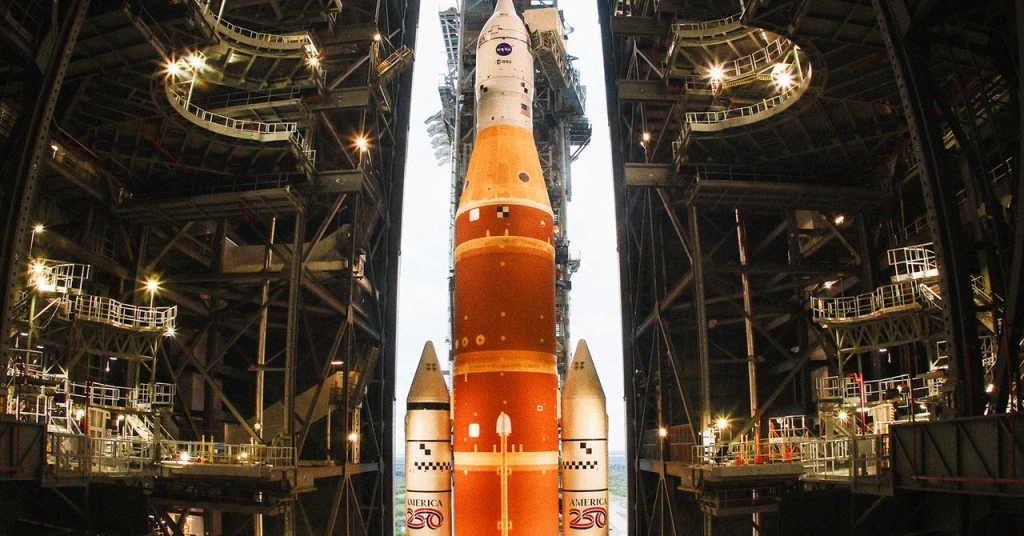
NASA Rethinks Artemis Moon Missions: New Plan Aims for Faster, Cheaper, and More Reliable Launches
In a major pivot that could reshape America’s return to the Moon, NASA is dramatically overhauling its Artemis program, moving away from custom-built rockets toward a standardized approach that promises to accelerate lunar missions and reduce costs. The space agency’s new strategy, revealed through internal discussions and public statements, represents a significant departure from previous plans and acknowledges the challenges that have plagued the Space Launch System (SLS) program.
The Problem with “Work of Art” Rockets
The Artemis program has faced mounting criticism from within NASA’s ranks, with one senior official describing the current approach as fundamentally flawed. “This is just not the right pathway forward,” said Jared Isaacman, a prominent space industry figure, echoing sentiments shared by many within the agency.
The official, speaking on background to Ars Technica, highlighted the technical difficulties that have emerged during prelaunch preparations for both Artemis I and Artemis II missions. Hydrogen and helium leaks have caused months-long delays, creating a bottleneck that threatens the entire lunar exploration timeline.
“If I recall, the timing between Apollo 7 and 8 was nine weeks,” the official noted, drawing a stark comparison to the current pace. “Launching SLS every three and a half years or so is not a recipe for success. Certainly, making each one of them a work of art with some major configuration change is also not helpful in the process, and we’re clearly seeing the results of it, right?”
Standardization: The New Mantra
NASA’s solution is to standardize the SLS rocket into a single configuration, a move designed to maximize reliability and enable more frequent launches. The agency is targeting a launch cadence of every 10 months, a significant acceleration from the current glacial pace.
This approach marks a return to the philosophy that drove the Apollo program’s success in the 1960s. During that era, NASA flew a series of preparatory crewed missions before the historic Apollo 11 lunar landing. These included Apollo 7 (a low-Earth-orbit test of the Apollo spacecraft), Apollo 8 (a lunar orbiting mission), Apollo 9 (a low-Earth-orbit rendezvous with the lunar lander), and Apollo 10 (a test of the lunar lander descending to the moon, without touching down).
With its previous Artemis template, NASA had essentially skipped these crucial intermediate steps. The original plan jumped from Artemis II—a crewed lunar flyby testing only the SLS rocket and Orion spacecraft—directly to Artemis III and a full-on lunar landing. Many industry officials viewed this leap as enormous and risky.
The Commercial Alternative
NASA plans to continue flying the SLS vehicle until commercial alternatives become available for launching crews to the Moon. This transition might occur through Artemis V as Congress has mandated, or potentially even later. The space agency is actively encouraging private companies to develop their own lunar transportation systems, which could eventually replace or supplement the government-built SLS.
Industry Response: Mixed but Generally Positive
The proposed changes have garnered support from most of NASA’s key contractors. The biggest potential opposition would seemingly come from Boeing, the prime contractor for the Exploration Upper Stage—a contract worth billions of dollars to develop a more powerful rocket that was due to launch for the first time later this decade.
However, in a NASA news release, Boeing appeared to offer at least some support for the revised plans. “Boeing is a proud partner to the Artemis mission and our team is honored to contribute to NASA’s vision for American space leadership,” said Steve Parker, Boeing Defense, Space & Security president and CEO. “The SLS core stage remains the world’s most powerful rocket stage, and the only one that can carry American astronauts directly to the moon and beyond in a single launch. As NASA lays out an accelerated launch schedule, our workforce and supply chain are prepared to meet the increased production needs.”
Congressional and Political Considerations
The NASA official confirmed that senior leaders in Congress have been briefed on the proposed changes. This political dimension is crucial, as Congressional support and funding have been essential to the Artemis program’s survival and development. The space agency must balance technical requirements with political realities, ensuring that any changes maintain broad support from key stakeholders.
Technical and Operational Benefits
The standardization approach offers numerous advantages beyond just faster launch schedules. By eliminating configuration changes between missions, NASA can:
- Streamline manufacturing processes and reduce production costs
- Develop more predictable maintenance and refurbishment procedures
- Create a more reliable launch system through repetition and refinement
- Build a larger operational workforce experienced with a single configuration
- Reduce the risk of mission delays due to unexpected technical issues
The Path Forward
NASA’s new approach represents a pragmatic acknowledgment that the original Artemis architecture was neither sustainable nor optimal for achieving the agency’s lunar exploration goals. By returning to proven principles—standardization, incremental testing, and frequent flights—the space agency is positioning itself to meet the ambitious timelines set by the current administration and Congress.
The success of this new strategy will depend on several factors: maintaining Congressional support and funding, ensuring contractor buy-in and cooperation, successfully implementing the standardized design, and ultimately demonstrating that the accelerated launch cadence can be achieved without compromising safety or mission success.
As NASA moves forward with these changes, the space community will be watching closely to see if this pragmatic pivot can finally deliver on the promise of returning humans to the Moon—this time to stay.
Tags & Viral Phrases:
- NASA Artemis overhaul
- SLS rocket standardization
- Moon missions accelerated
- Lunar exploration revolution
- Space Launch System changes
- Artemis program pivot
- Boeing responds to NASA changes
- Commercial lunar alternatives
- Apollo vs Artemis comparison
- 10-month launch cadence
- Hydrogen leak problems solved
- Congressional briefing on Artemis
- Exploration Upper Stage cancelled
- Moon landing timeline accelerated
- NASA contractor alignment
- Space industry insider perspective
- Lunar mission reliability focus
- Artemis III redesign
- Standardized rocket architecture
- Space exploration cost reduction
- NASA pragmatic pivot
- Lunar program sustainability
- SpaceX vs NASA lunar plans
- Moon mission frequency increase
- Space industry transformation
- Artemis program efficiency
- Lunar exploration economics
- NASA operational streamlining
- Space launch reliability
- Moon mission risk reduction
,


Leave a Reply
Want to join the discussion?Feel free to contribute!