
NASA officials sidestepped questions on Artemis II risks—there’s a reason why
NASA’s Artemis II Mission: A High-Stakes Return to the Moon
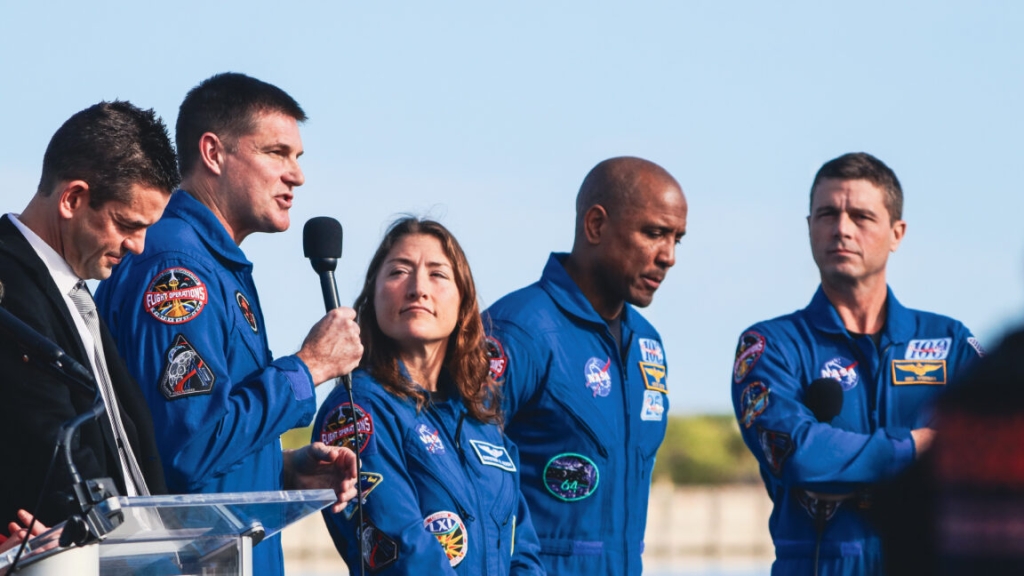
As NASA prepares to send astronauts on a historic journey around the Moon for the first time in over 50 years, the space agency is grappling with the sobering reality of the risks involved. The Artemis II mission, slated for launch in late 2024, will see a crew of four astronauts—including commander Reid Wiseman—embark on a 10-day test flight that will push the boundaries of human spaceflight.
The stakes are high, and so are the odds. NASA has assessed a 1-in-295 chance of loss of crew for Artemis II, a slight improvement over the 1-in-276 odds for SpaceX’s Crew Dragon’s first crewed flight in 2020. But as history has shown, numbers can be deceiving. The proven performance of both SpaceX’s Dragon and Boeing’s Starliner has raised questions about the accuracy of these risk assessments, especially in light of recent challenges faced by Boeing’s Starliner during its first crewed flight.
For the Artemis II crew, the risks are not just abstract numbers—they are real, tangible, and deeply personal. Wiseman, a seasoned astronaut and former test pilot, has taken the extraordinary step of preparing his family for the worst. “I went on a walk with my kids, and I told them, ‘Here’s where the will is, here’s where the trust documents are, and if anything happens to me, here’s what’s going to happen to you,’” he shared. “That is a part of this life. I actually wish more people in everyday life talked to their families that way because you never know what the next day is going to bring.”
Wiseman’s words underscore the gravity of the mission. The Artemis II crew will face risks that are both known and unknown. From the blistering speeds of reentry—Mach 39—to the vast distances of space—250,000 miles to the Moon and back—the mission is a testament to human ingenuity and courage. “These numbers, you don’t even comprehend,” Wiseman said. “There’s risk in that. We don’t know what we don’t know right now, so we’ll go learn all that [on the mission].”
Despite the unknowns, Wiseman is resolute. “For me, I actually feel completely 100 percent bought in. When I get into Orion, it’s like climbing into my bed, and I’ll feel warm and tucked in.” His confidence is a reflection of the rigorous preparation and training that the crew has undergone, as well as their trust in NASA’s engineering and safety protocols.
The formal risk matrix for Artemis II mirrors that of its predecessor, Artemis I, with micrometeoroid and orbital debris (MMOD) posing the highest risk. Matt Ramsey, NASA’s Artemis II mission manager, highlighted the Orion spacecraft’s environmental control and life support system as the second-highest risk. “Those two are my biggest worries,” Ramsey said, emphasizing the importance of addressing these challenges before the mission can proceed.
As the world watches, the Artemis II crew stands on the precipice of history. Their journey is not just a test of technology but a testament to the human spirit’s unyielding drive to explore the unknown. In the words of Wiseman, “Any sailor knows you can’t stay in the harbor forever. Test pilots and astronauts take calculated risks for a living.” And so, with eyes on the Moon and hearts full of courage, the Artemis II crew is ready to take the next giant leap for humanity.
Tags: NASA, Artemis II, Moon mission, space exploration, astronaut, Reid Wiseman, risk assessment, SpaceX, Boeing, Starliner, Orion spacecraft, micrometeoroid, orbital debris, space travel, human spaceflight, NASA safety, space technology, lunar mission, space risk, space pioneers, space adventure.
Viral Sentences:
- “I told my kids, ‘Here’s where the will is, here’s where the trust documents are…’”
- “When you see numbers like Mach 39 at entry, those are just insane numbers.”
- “For me, I actually feel completely 100 percent bought in.”
- “Any sailor knows you can’t stay in the harbor forever.”
- “We don’t know what we don’t know right now, so we’ll go learn all that [on the mission].”
- “Test pilots and astronauts take calculated risks for a living.”
- “The stakes are high, and so are the odds.”
- “Their journey is not just a test of technology but a testament to the human spirit’s unyielding drive to explore the unknown.”
,

Leave a Reply
Want to join the discussion?Feel free to contribute!