
NASA overhauls Artemis moon program — and Blue Origin’s lander may be given a bigger role
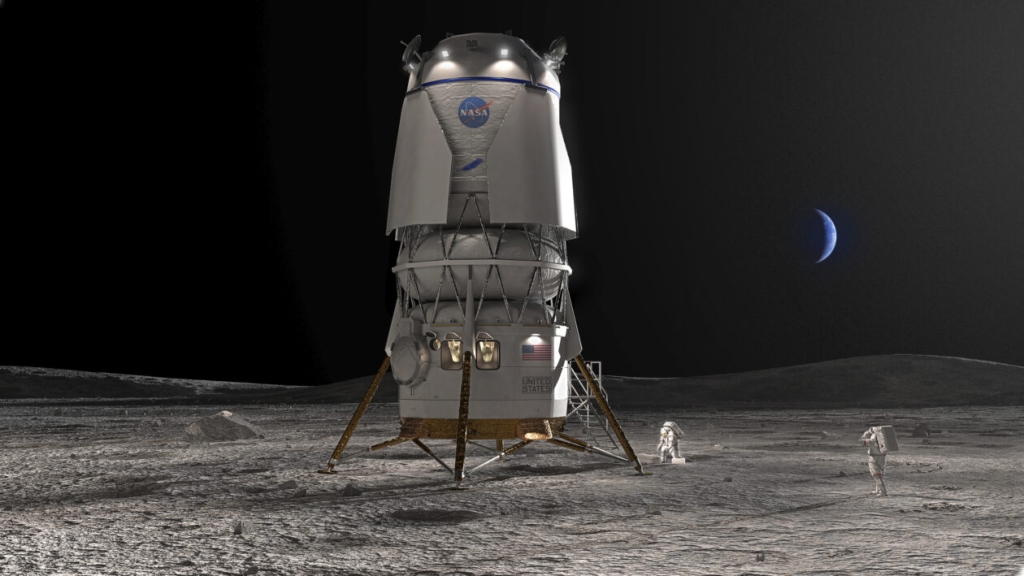
NASA Reworks Artemis Moon Program: Blue Origin’s Blue Moon Lander Gains Prominence in Revised Timeline
In a significant strategic shift, NASA has restructured its Artemis moon program, introducing a critical test mission for commercial lunar landers in low Earth orbit next year, with the first crewed lunar landing now targeted for 2028 at the earliest. This revision notably elevates the role of Blue Origin’s Blue Moon lander in NASA’s return to the lunar surface.
“We’re all in!” declared Blue Origin CEO Dave Limp in a post to X, signaling the company’s full commitment to the accelerated lunar development timeline.
The announcement came from NASA Administrator Jared Isaacman, who assumed his position last December. “This is going to be our pathway back to the moon,” Isaacman stated, emphasizing the agency’s renewed focus on sustainable lunar exploration.
The Artemis program’s immediate future remains unchanged with Artemis 2, a 10-day crewed lunar flyby mission using NASA’s Space Launch System (SLS) rocket and Orion capsule. Currently scheduled for no earlier than April, this mission has faced delays due to a helium leak that necessitated a rollback to the Vehicle Assembly Building for troubleshooting.
However, the subsequent mission timeline has undergone substantial revision. Previously planned as a crewed lunar landing for Artemis 3 next year, the mission now serves as a crewed orbital test for both SpaceX’s Starship and Blue Origin’s Blue Moon lander. This test flight will also evaluate next-generation spacesuits designed for extravehicular activities on the lunar surface.
The first crewed lunar landing under this revised architecture is now targeted for 2028, likely utilizing either Starship or Blue Moon technology. This approach mirrors the methodical progression of the Apollo program, which included Apollo 9’s Earth-orbit tests of the lunar module in 1969, followed by Apollo 10’s lunar orbital test, and culminating in Apollo 11’s historic landing just months later.
NASA’s revised plan also postpones the development of an upgraded SLS upper stage, instead standardizing the rocket configuration to enable at least one lunar surface mission annually. “Standardizing vehicle configuration, increasing flight rate and progressing through objectives in a logical, phased approach is how we achieved the near-impossible in 1969, and it is how we will do it again,” Isaacman explained.
The decision addresses mounting concerns about the feasibility of the previous 2027 landing target and the inherent risks of proceeding directly from a lunar flyby to a landing without intermediate testing of critical systems. NASA Associate Administrator Amit Kshatriya emphasized that the revision “reflects the adjustments that we need to keep our schedule credible and our teams focused on what matters most, which is safe and achievable missions.”
While acknowledging the competitive dimension with China’s lunar ambitions, Isaacman downplayed its influence on NASA’s scheduling decisions. “I think competition is good,” he told reporters. “We’re here talking to you about what is a common-sense approach to achieve the objective, whether we had a great rival in the running or not. If we’re committed to going back to the moon, we have the resources to do it again. We have a presidential mandate to get the job done. What is an achievable strategy, regardless of the competition? And I can tell you, launching every three-plus years is not the right approach.”
The revised timeline provides NASA and its commercial partners, including SpaceX and Blue Origin, with additional development time for their lunar landers. Blue Origin has already demonstrated its commitment by pausing its suborbital New Shepard program for at least two years to concentrate resources on lunar projects. The company plans to launch an uncrewed cargo version of Blue Moon to the moon later this year.
Blue Origin secured a $3.4 billion NASA contract three years ago to develop a crewed version of Blue Moon for missions beginning with Artemis 5, originally scheduled for 2029. The company’s lunar development timeline remains flexible based on NASA’s needs. “If NASA wants to accelerate us to go faster, then we would ramp that up faster,” John Couluris, Blue Origin’s vice president of lunar permanence, stated last September. “It’s right now gauged on Artemis 5. If they want us to go earlier, we would engage a lot faster.”
This strategic revision represents NASA’s commitment to establishing a sustainable and methodical return to lunar exploration, prioritizing safety and technological readiness over arbitrary deadlines while maintaining momentum in the agency’s ambitious space exploration goals.
Tags and Viral Phrases:
#NASA #Artemis #BlueOrigin #BlueMoon #SpaceX #LunarLanding #SpaceExploration #Moon2028 #SpaceRace #NASAUpdate #CommercialSpace #LunarArchitecture #SpaceTech #MoonMission #BlueOriginNews #SpaceXStarship #ArtemisProgram #SpaceInnovation #LunarDevelopment #NASA2024 #SpaceIndustry #Moon2020s #SpaceCompetition #CommercialLunar #SpacePolicy #LunarFuture #SpaceStrategy #MoonEconomy #SpaceLeadership #ArtemisTimeline #SpacePartnership #LunarTechnology #SpaceMilestones #MoonProgram #SpaceAgency #CommercialSpaceflight #LunarInfrastructure #SpaceProgress #MoonReturn #SpaceCollaboration #LunarScience #SpaceEconomy #MoonBase #SpaceVision #LunarAccess #SpaceAchievement #MoonGateway #SpaceFrontier,


Leave a Reply
Want to join the discussion?Feel free to contribute!