
NASA Running Out of Non-Life Explanations for What Its Rover Found on Mars
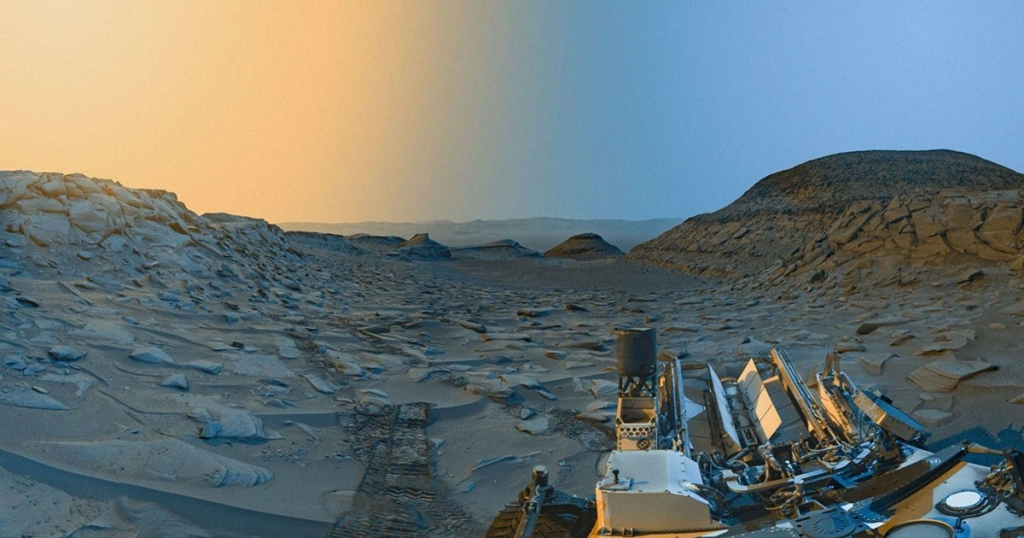
NASA’s Curiosity Rover Uncovers Potential Signs of Ancient Martian Life in Groundbreaking Discovery
In a revelation that has sent ripples through the scientific community and captivated space enthusiasts worldwide, NASA’s Curiosity rover has unearthed compelling evidence suggesting that Mars may have once harbored life. The discovery, made in what is believed to be an ancient lake bed on the Red Planet, has reignited the age-old question: Are we alone in the universe?
Last year, Curiosity drilled into the Martian surface and detected long-chain organic molecules known as alkanes. These molecules, which could potentially be chemical remnants of ancient life, have been described by researchers as a “tantalizing clue” in the ongoing search for extraterrestrial life. The finding is particularly significant because alkanes are often associated with fatty acids, fundamental components of cell membranes on Earth.
The implications of this discovery are profound. If these molecules indeed originated from biological processes, it would provide strong evidence that Mars was once a thriving ecosystem billions of years ago. This aligns with the growing body of evidence suggesting that Mars was once a much warmer and wetter planet, with vast oceans, rivers, and lakes covering its surface.
However, the scientific community remains cautious. While the presence of these organic molecules is intriguing, it does not constitute definitive proof of past life on Mars. The molecules could potentially have non-biological origins, such as carbon-rich dust particles or meteorites depositing them on the Martian surface.
To delve deeper into this mystery, a team led by Alexander Pavlov from NASA’s Goddard Space Flight Center conducted a comprehensive study. Their research, published in the journal Astrobiology, argues that the concentration of these long-chain alkanes cannot be easily explained by non-biological processes alone.
Pavlov and his colleagues examined how millions of years of radiation, which pummeled the Martian surface after the planet lost much of its atmosphere, could have affected these molecules. Their findings suggest that the original concentration of these alkanes was likely much higher than previously thought. Even after considering various non-biological processes, the team could not arrive at an explanation for the observed abundance of these molecules.
“We argue that such high concentrations of long-chain alkanes are inconsistent with a few known abiotic sources of organic molecules on ancient Mars,” the researchers wrote in their paper. This statement has led many to speculate that biological processes, similar to those observed on Earth, may be the most plausible explanation for the presence of these molecules on Mars.
Despite the excitement surrounding this discovery, the scientific community remains measured in its response. The researchers emphasize the need for extraordinary evidence to support extraordinary claims, echoing the famous words of Carl Sagan. They stress that any purported detection of life on Mars will face intense scrutiny and that multiple lines of evidence will be required to confirm such a groundbreaking finding.
The quest to unravel the mysteries of Mars continues, with scientists calling for further research into how radiation has degraded these intriguing molecules under Mars-like conditions. This additional study could provide crucial insights into the origins of these organic compounds and their potential connection to ancient Martian life.
As we stand on the brink of potentially one of the most significant discoveries in human history, the world watches with bated breath. The possibility that Mars, our celestial neighbor, may have once been home to life is a humbling reminder of the vastness of the universe and the potential for life beyond our planet.
This discovery is not just a scientific milestone; it’s a testament to human curiosity and our relentless pursuit of knowledge. It underscores the importance of space exploration and the need to continue pushing the boundaries of our understanding of the cosmos.
As we look to the future, missions like NASA’s Perseverance rover and the upcoming Mars Sample Return mission promise to provide even more data and potentially bring us closer to answering the age-old question of whether we are alone in the universe. The search for life on Mars is far from over, but with each new discovery, we edge closer to unraveling one of the greatest mysteries of our time.
Tags:
Mars, NASA, Curiosity Rover, Organic Molecules, Alkanes, Ancient Life, Astrobiology, Extraterrestrial Life, Space Exploration, Red Planet, Martian Surface, Scientific Discovery, Carl Sagan, Perseverance Rover, Mars Sample Return
Viral Sentences:
- “NASA’s Curiosity Rover Unearths Potential Signs of Ancient Martian Life!”
- “Could Mars Have Been Home to Extraterrestrial Life? New Evidence Suggests Yes!”
- “Groundbreaking Discovery on Mars: Organic Molecules Hint at Past Life!”
- “Scientists Stunned by High Concentrations of Life-Related Molecules on Mars!”
- “The Search for Life on Mars Takes a Thrilling Turn with New NASA Findings!”
- “Mars Mystery Deepens: Are We on the Brink of Discovering Alien Life?”
- “Organic Molecules on Mars: A Game-Changer in the Quest for Extraterrestrial Life!”
- “NASA’s Latest Mars Discovery Could Rewrite the History of Life in Our Solar System!”
- “The Red Planet’s Secrets Revealed: Ancient Life on Mars Now a Real Possibility!”
- “Mars Exploration Reaches New Heights as NASA Uncovers Clues to Past Life!”
,


Leave a Reply
Want to join the discussion?Feel free to contribute!