
NASA Unveils Its $20 Billion Moon Base Plan—and a Nuclear Spacecraft for Mars
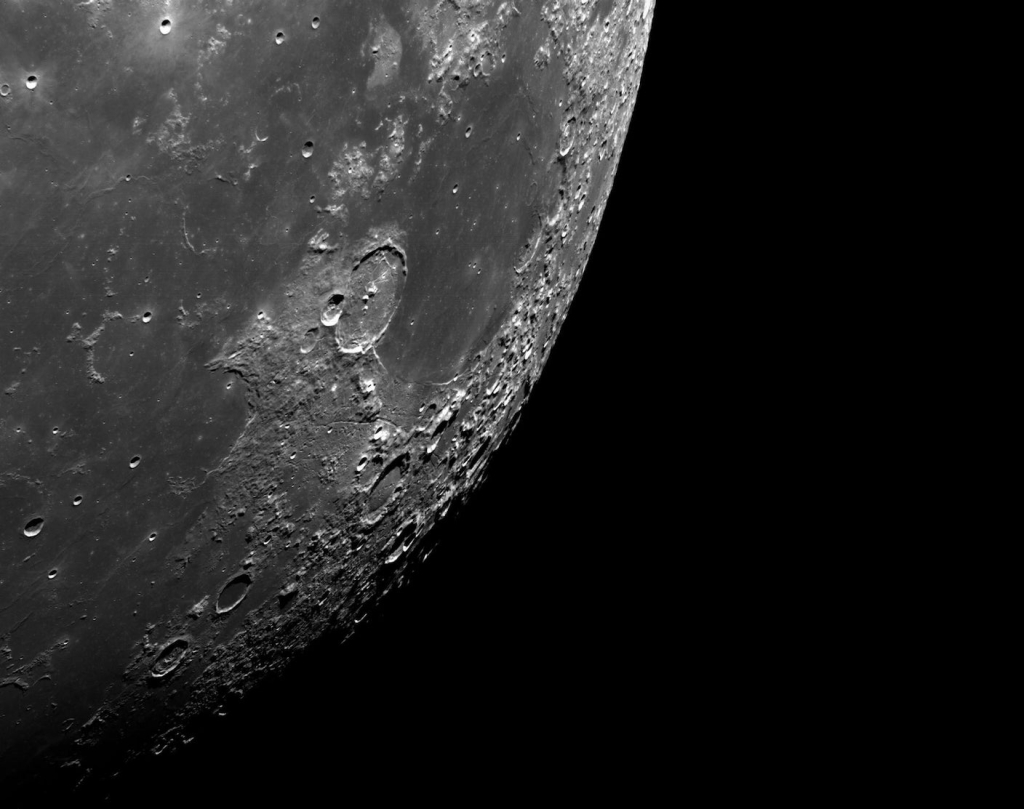
NASA Unveils Ambitious Plan to Build Permanent Moon Base and Launch Nuclear-Powered Mars Mission by 2030
In a bold declaration of America’s renewed commitment to space exploration, NASA Administrator Jared Isaacman has announced an unprecedented $20 billion plan to establish a permanent lunar base while simultaneously developing the first nuclear-powered spacecraft destined for Mars. This comprehensive initiative represents the agency’s most ambitious undertaking since the Apollo era and signals a dramatic acceleration of humanity’s push to establish a sustained presence beyond Earth orbit.
The announcement comes at a critical juncture in space exploration, as geopolitical competition intensifies with China’s declared intentions to land humans on the moon by 2030 and construct its own lunar facility. NASA’s accelerated timeline aims to secure American leadership in space while demonstrating technological capabilities that could reshape the economics of deep space exploration.
A Three-Phase Lunar Construction Revolution
The lunar base project unfolds across three distinct phases, each building upon the technological foundations established by its predecessor. Phase One focuses on establishing reliable, repeatable access to the moon’s surface through an expanded Commercial Lunar Payload Services program. NASA plans to conduct up to 30 robotic landings beginning in 2027, representing a dramatic increase in lunar traffic compared to the sporadic Apollo missions of the 1960s and 70s.
These initial missions will test critical infrastructure technologies including advanced mobility systems, autonomous power generation, robust communications networks, and precision navigation capabilities. The agency’s innovative MoonFall hoppers—compact robotic landers capable of rocket-powered jumps spanning tens of kilometers—will prospect for valuable resources, particularly water ice in permanently shadowed craters that could serve as drinking water, oxygen, and rocket fuel for future missions.
Phase Two transitions from robotic exploration to semi-habitable infrastructure capable of supporting regular astronaut operations. This phase includes the delivery of a pressurized rover from Japan’s space agency, enabling extended surface exploration beyond the immediate vicinity of landing sites. The infrastructure developed during this period will establish the operational patterns and support systems necessary for sustained human presence.
The final phase delivers the heavy infrastructure required for continuous habitation, including multipurpose habitats developed by Italy’s space agency and a specialized lunar utility vehicle from Canada. These contributions represent a significant expansion of international collaboration in NASA’s lunar ambitions, though the program’s leadership remains firmly American.
Nuclear Propulsion: The Game-Changer for Mars Exploration
Perhaps the most revolutionary aspect of NASA’s announcement involves plans to launch Space Reactor-1 Freedom, a nuclear-powered interplanetary spacecraft, to Mars by the end of 2028. This vehicle will utilize a nuclear fission reactor capable of generating approximately 20 kilowatts of power, which will be converted into electricity for advanced propulsion systems.
The technology represents a significant leap beyond chemical rockets, which have limited Mars mission windows due to the complex orbital mechanics required for efficient travel between Earth and Mars. Nuclear propulsion could enable more flexible mission timing while dramatically reducing travel duration, potentially cutting months from current six to nine-month transit times.
Upon reaching Mars, the spacecraft will deploy three robotic drones modeled after the successful Ingenuity helicopter, which completed 72 flights after arriving with the Perseverance rover in 2021. These next-generation drones will carry sophisticated instruments including subsurface radar capable of detecting water ice deposits and high-resolution cameras for identifying potential human landing sites.
The nuclear propulsion system’s development traces back to technology originally intended for the Gateway lunar orbital station, a component of the original Artemis program that NASA now plans to pause. This strategic repurposing demonstrates the agency’s adaptive approach to resource allocation amid shifting priorities and budget constraints.
The Artemis Context and Political Imperatives
The announcement builds upon the foundation established by Artemis 2, the first manned lunar mission since the Apollo program concluded in 1972. Scheduled for launch in the coming months, Artemis 2 will send astronauts around the moon, paving the way for Artemis 3’s planned lunar landing. Isaacman’s announcement effectively expands these missions from symbolic demonstrations of capability into the initial phases of sustained lunar occupation.
President Trump’s longstanding priority of returning Americans to the moon provides crucial political backing for the accelerated timeline. The administration’s framing of the initiative as essential to maintaining American leadership in space reflects growing recognition that space exploration has evolved from a scientific endeavor into a strategic domain where technological superiority confers significant geopolitical advantages.
Recent Turmoil and Funding Uncertainties
Despite the ambitious vision, significant challenges threaten the program’s implementation. Recent turmoil at NASA has included mass layoffs and proposed budget cuts that could undermine the agency’s ability to execute such an expansive vision. The Trump administration’s original budget proposals included substantial reductions to NASA funding, though congressional resistance may ultimately preserve critical resources.
The agency faces a fundamental tension between aspirational goals and practical constraints. Space exploration requires sustained investment across multiple presidential administrations, yet political priorities shift with each election cycle. The accelerated timeline proposed by NASA may be as much about creating political momentum as it is about technical feasibility.
Technological and Operational Challenges
The proposed lunar base confronts numerous technical challenges that must be overcome within the ambitious timeline. The moon’s harsh environment includes extreme temperature variations ranging from -173°C during lunar night to 127°C during lunar day, abrasive lunar dust that can damage equipment, and the absence of atmosphere or magnetic field to shield against radiation.
Power generation presents particular challenges, as solar panels must contend with the moon’s 14-day night cycle. Solutions may include advanced nuclear reactors, as proposed for the Mars mission, or innovative energy storage systems capable of sustaining operations during extended darkness.
Life support systems must function reliably without the possibility of emergency resupply from Earth, which would require months of transit time. Closed-loop systems for air, water, and waste recycling become essential, as does the ability to grow food in controlled environments.
The Gateway station’s repurposing or cancellation reflects difficult trade-offs in resource allocation. While the orbital station would have provided valuable staging capabilities for lunar operations and served as a waypoint for Mars missions, its development costs and schedule may have conflicted with the accelerated lunar base timeline.
Economic and Industrial Implications
The scale of NASA’s announcement—$20 billion for the lunar base alone—represents a significant economic stimulus for the aerospace industry. The expanded Commercial Lunar Payload Services program creates opportunities for numerous private companies to develop lunar delivery capabilities, potentially establishing a new commercial sector analogous to the commercial cargo and crew programs that have transformed low Earth orbit operations.
The nuclear propulsion development could catalyze advances in space nuclear technology with applications extending far beyond the Mars mission. These include rapid transit for crewed missions to Mars, efficient cargo delivery throughout the solar system, and potentially even asteroid mining operations that require substantial power resources in deep space.
International Competition and Collaboration
China’s parallel lunar ambitions create both competitive pressure and potential opportunities for cooperation. While the United States and China maintain a competitive relationship in space, other international partners including Japan, Italy, and Canada have already committed to specific contributions to the lunar base program. This approach balances the desire for American leadership with the practical benefits of shared costs and capabilities.
The technological competition between nations may accelerate innovation in ways that benefit all of humanity, even as it creates strategic tensions. The question of who establishes the first permanent presence on the moon carries symbolic weight that extends far beyond the scientific and economic benefits of lunar operations.
Looking Beyond 2030
If successful, NASA’s current plans could establish the foundation for human expansion throughout the solar system. A permanent lunar base would provide invaluable experience in operating in hostile environments, managing life support systems independently of Earth, and developing the industrial capabilities needed for space resource utilization.
The nuclear-powered Mars mission, even if focused initially on robotic exploration, would demonstrate technologies essential for future human missions. The ability to generate substantial power on demand, independent of solar energy, could prove crucial for sustaining human life during the months-long journey to Mars and during surface operations in the planet’s dusty, radiation-rich environment.
The convergence of these initiatives—lunar base construction, nuclear propulsion development, and robotic Mars exploration—suggests a comprehensive strategy for extending human presence beyond Earth. Whether NASA can overcome the political, technical, and financial challenges to realize this vision within the proposed timeline remains uncertain, but the ambition itself marks a pivotal moment in space exploration history.
The prospect of humans living and working on another world, once confined to science fiction, now appears increasingly plausible. As these programs advance, they will likely inspire a new generation of scientists, engineers, and explorers while fundamentally altering humanity’s relationship with space—transforming it from a realm of occasional exploration into a domain of permanent occupation.
#NASA #MoonBase #MarsMission #NuclearPropulsion #SpaceExploration #ArtemisProgram #LunarBase #SpaceTechnology #InterplanetaryTravel #SpaceRace #CommercialSpace #SpaceInnovation #FutureOfSpace #LunarInfrastructure #MarsHelicopters #SpaceLeadership #DeepSpace #SpaceNuclear #LunarHabitation #SpaceCompetition
permanent lunar base, nuclear-powered spacecraft, Artemis program, lunar infrastructure, Mars exploration, space nuclear propulsion, MoonFall hoppers, Gateway station, space competition, interplanetary travel, lunar habitation, space technology, commercial lunar services, pressurized rover, multipurpose habitats, subsurface radar, water ice prospecting, space leadership, deep space operations, space innovation
“Mankind’s permanent presence beyond Earth orbit looks closer than ever”
“NASA is committed to achieving the near-impossible once again”
“American leadership in space”
“Return to the moon before the end of President Trump’s term”
“Establish an enduring presence”
“Ensure American leadership in space”
“The prospect of a sustained human presence beyond Earth orbit”
“Build a moon base”
“Space Reactor-1 Freedom”
“20-kilowatt nuclear fission reactor”
“Robotic helicopters to the surface of Mars”
“Probing the planet for water ice”
“Promising locations for future human landing sites”
“Shift from infrequent, bespoke missions to regular and repeatable ones”
“Prospect for useful resources like ice in hard-to-reach areas”
“Continuous human habitation”
“Pressurized rover from Japan’s space agency”
“Lunar utility vehicle from Canada”
“Repurpose some of the equipment developed for the facility”
“Launch of a nuclear-powered interplanetary spacecraft”
“Designs based on the Ingenuity helicopter”
“Subsurface radar to scour the planet for water ice”
“Prospect of mankind having a permanent presence beyond Earth orbit looks closer than ever”
“Thinly veiled reference to China’s plans”
“Strategic domain where technological superiority confers significant geopolitical advantages”
“Fundamental tension between aspirational goals and practical constraints”
“Transform it from a realm of occasional exploration into a domain of permanent occupation”,

Leave a Reply
Want to join the discussion?Feel free to contribute!