
NBA Commissioner Silver calls Giannis’ Kalshi investment minuscule amid prediction market debate
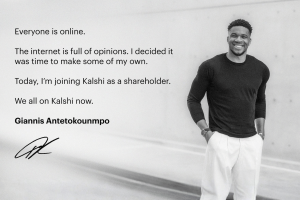
NBA Commissioner Silver Dismisses Giannis Antetokounmpo’s Kalshi Stake as “Minuscule” Amid Prediction Market Debate
In a high-stakes intersection of sports, finance, and technology, NBA Commissioner Adam Silver has weighed in on Milwaukee Bucks superstar Giannis Antetokounmpo’s investment in federally regulated prediction market platform Kalshi, describing the stake as “minuscule” and well within league guidelines.
Speaking during the high-profile All-Star Weekend festivities, Silver addressed mounting questions about the Greek Freak’s financial involvement with Kalshi, which has emerged as a significant player in the rapidly evolving prediction market landscape. The timing of Antetokounmpo’s investment—announced just one day after the NBA’s 2026 trade deadline—coincided with a trading frenzy that saw over $23 million in volume for contracts speculating on his potential team destination.
“The case of Giannis [Antetokounmpo], from what I understand, it’s a minuscule investment, much smaller than 1%,” Silver stated emphatically to reporters. “That does not violate the rules that have been collectively bargained with the Players Association.”
The commissioner’s measured response comes as the NBA grapples with an increasingly complex regulatory environment spanning 40 U.S. jurisdictions with legalized sports betting and approximately 80 countries worldwide that permit wagering on NBA outcomes. This proliferation of betting activity has prompted Silver to acknowledge the league’s need for “a better handle on all the different activity that’s happening out there.”
The Kalshi Connection: When NBA Superstars Meet Prediction Markets
Antetokounmpo’s involvement with Kalshi represents a fascinating case study in the convergence of professional sports and financial technology. The two-time NBA MVP finalized his investment shortly after the trade deadline, then took to social media to announce his new role as a shareholder with the now-famous declaration: “We all on Kalshi now.”
The timing raised eyebrows among some observers, as Kalshi users were actively trading contracts tied to Antetokounmpo’s potential landing spots during this period. Despite the Greek star publicly suggesting he wasn’t focused on a move, the trading activity generated significant volume and sparked debate about potential conflicts of interest and the optics of players having financial stakes in platforms where their own futures are being wagered upon.
Under the NBA’s collective bargaining agreement, players are permitted to own up to 1% of wagering or prediction companies, provided they don’t participate in markets directly tied to NBA outcomes. League officials have confirmed that Antetokounmpo’s stake falls comfortably within these parameters.
The Broader Prediction Market Landscape
Prediction markets like Kalshi operate under a fundamentally different regulatory framework than traditional sportsbooks. Kalshi functions under oversight from the U.S. Commodity Futures Trading Commission (CFTC), which the company argues distinguishes it from both conventional gambling operations and many offshore platforms that operate in regulatory gray areas.
The platform allows traders to buy and sell contracts based on the outcomes of future events ranging from political elections to economic indicators to, in this case, player transactions. This model has attracted significant attention from both retail traders and institutional investors seeking alternative ways to hedge risks or capitalize on their knowledge of specific domains.
Kalshi CEO Tarek Mansour has been vocal about the platform’s commitment to maintaining market integrity, emphasizing that “insider trading” is strictly prohibited. The company employs surveillance systems similar to those used by financial exchanges, monitoring for suspicious trading patterns and potential abuse of non-public information.
“If people believe a market is unfair, they stop trading,” Mansour has argued, highlighting the critical importance of trust in maintaining liquidity and market function.
Regulatory Challenges and Legislative Response
Despite Kalshi’s regulatory framework and stated commitment to fair markets, the broader prediction market industry continues to face scrutiny. Critics point to high-profile incidents on competing platforms as evidence that regulatory oversight remains uneven across the sector.
One particularly notable case involved a trader who reportedly transformed approximately $30,000 into more than $400,000 through successful bets on Venezuelan political events via Polymarket, another major prediction platform. This dramatic return fueled concerns about the lack of restrictions around insider trading in prediction markets and the potential for market manipulation.
In Washington, these concerns have prompted legislative action. The Public Integrity in Financial Prediction Markets Act of 2026 has been introduced to restrict certain federal officials from trading on events where they may possess non-public information. While the bill focuses on government employees rather than athletes, it reflects growing awareness of the unique challenges posed by prediction markets that blend elements of finance, gambling, and information asymmetry.
The NBA’s Evolving Stance on Betting and Prediction Markets
Silver’s comments suggest the NBA is approaching prediction markets through the same lens it uses for traditional sports betting—with careful attention to potential conflicts of interest, integrity concerns, and the need to protect both the league’s reputation and its competitive balance.
“The league is now dealing with essentially 40 different jurisdictions that have legalized sports betting in the United States,” Silver noted, emphasizing the complexity of operating in this fragmented regulatory environment. “The last I looked, there are probably 80 countries in the world outside the United States that also have legal, legalized betting on the NBA.”
This global expansion of legal betting has created unprecedented challenges for sports leagues, which must navigate varying regulatory requirements while maintaining the integrity of their competitions. The NBA’s partnership with official sports betting operators and its development of integrity monitoring systems reflect the league’s recognition that betting is now an integral part of the sports ecosystem rather than a peripheral concern.
Market Integrity and the Future of Sports Prediction
The intersection of player investments and prediction markets raises fundamental questions about market integrity and the nature of information in sports. While Antetokounmpo’s stake in Kalshi may be “minuscule” in financial terms, the symbolic significance is substantial, representing the growing entanglement of professional athletes with the betting and prediction industries.
For Kalshi and similar platforms, having a high-profile athlete as an investor provides valuable credibility and visibility. For the NBA, it presents a test case in managing the relationship between player financial interests and the integrity of the sport. For fans and traders, it offers a glimpse into how prediction markets might evolve as they become more mainstream.
The debate surrounding Antetokounmpo’s investment also highlights the ongoing tension between innovation and regulation in financial technology. Prediction markets offer unique benefits, including price discovery for uncertain future events and potential hedging opportunities, but they also present risks related to market manipulation, insider trading, and the exploitation of non-public information.
Looking Ahead: The Evolution of Sports and Prediction Markets
As prediction markets continue to gain traction and high-profile investors like Antetokounmpo become involved, the industry faces critical decisions about how to balance growth with integrity. The NBA’s approach—allowing limited player investments while maintaining strict oversight—represents one potential model for managing these challenges.
The coming months will likely see increased scrutiny of prediction market operations, particularly as more athletes and celebrities consider investments in these platforms. Questions about transparency, conflict of interest, and the appropriate regulatory framework will remain central to the conversation.
For now, Silver’s dismissal of Antetokounmpo’s investment as “minuscule” may provide temporary clarity, but the underlying issues—how to ensure fair markets, prevent insider trading, and maintain the integrity of both sports and financial systems—will continue to evolve as prediction markets become an increasingly prominent feature of the sports and technology landscape.
The Greek Freak’s foray into prediction markets may be just the beginning of a larger trend that could reshape how athletes, fans, and investors interact with the uncertain futures that make sports so compelling in the first place.
Tags & Viral Phrases:
- Giannis Antetokounmpo Kalshi investment
- NBA Commissioner Adam Silver prediction markets
- Sports betting regulation 2026
- Prediction market insider trading concerns
- NBA gambling scandal aftermath
- Kalshi federally regulated platform
- Giannis trade deadline trading volume
- NBA collective bargaining agreement betting rules
- Polymarket insider trading controversy
- Public Integrity in Financial Prediction Markets Act
- Commodity Futures Trading Commission oversight
- Sports prediction market integrity
- NBA All-Star Weekend betting discussion
- Milwaukee Bucks star investment controversy
- Prediction markets vs sports betting
- Tarek Mansour Kalshi CEO statements
- Venezuelan election prediction market case
- NBA jurisdictional betting complexity
- Athlete financial conflicts of interest
- Future of sports prediction technology
,


Leave a Reply
Want to join the discussion?Feel free to contribute!