
Netflix says users can cancel service if HBO Max merger makes it too expensive
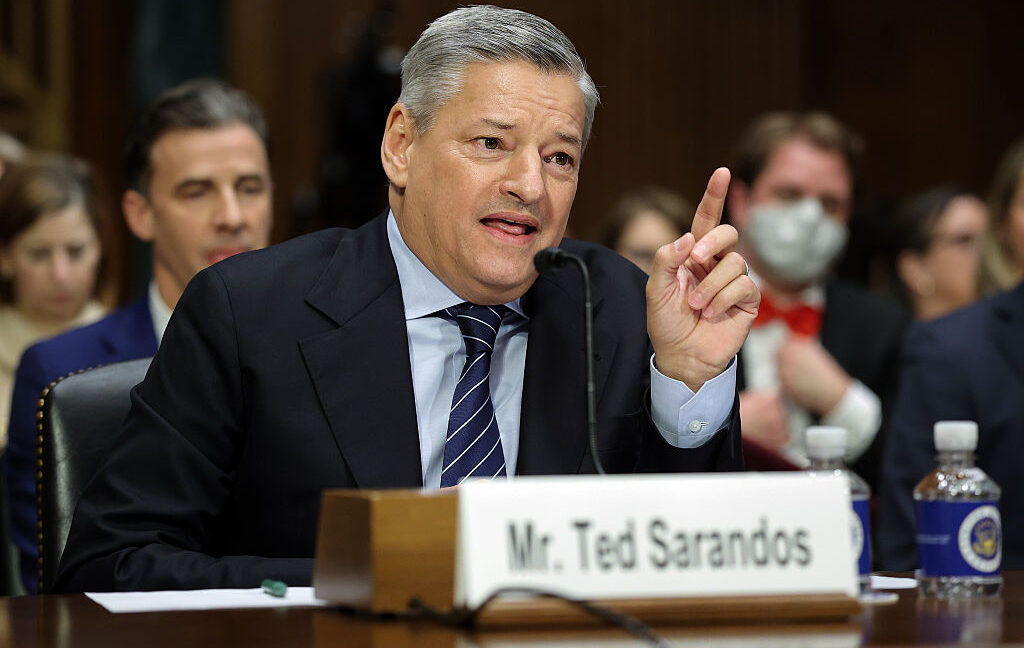
Netflix’s $72 Billion Warner Bros. Discovery Acquisition: Co-CEO Ted Sarandos Claims Merger Will Lower Prices and Expand Content Offerings
In a dramatic twist that has sent shockwaves through the streaming industry, Netflix’s co-CEO Ted Sarandos appeared before the U.S. Senate Judiciary Committee’s Subcommittee on Antitrust, Competition Policy, and Consumer Rights to defend the company’s controversial $72 billion acquisition of Warner Bros. Discovery’s streaming and studio operations.
The hearing, titled “Examining the Competitive Impact of the Proposed Netflix-Warner Brothers Transaction,” took place against a backdrop of mounting concern from consumers, industry analysts, and lawmakers who fear the merger could create a streaming behemoth with unprecedented market power. With Netflix commanding 301.63 million subscribers globally as of January 2025 and Warner Bros. Discovery holding 128 million streaming subscribers across HBO Max and Discovery+, the combined entity would control nearly half a billion paying customers worldwide.
During his testimony, Sarandos made an unexpected argument that directly contradicts the prevailing narrative about the merger’s potential impact on consumer pricing. “Netflix and Warner Bros. both have streaming services, but they are very complementary,” Sarandos told the subcommittee. “In fact, 80 percent of HBO Max subscribers also subscribe to Netflix. We will give consumers more content for less.”
This claim represents a significant departure from the typical consolidation narrative, where industry mergers are almost universally associated with price increases due to reduced competition. Sarandos’s assertion that the merger would actually lead to lower prices has left many industry observers questioning the mathematical logic behind such a statement.
The hearing took a particularly tense turn when Senator Amy Klobuchar (D-Minnesota) pressed Sarandos on how Netflix could guarantee streaming affordability following the merger, especially given that the company had implemented price hikes in January 2025 despite reporting subscriber growth. The timing of these increases—just months before seeking regulatory approval for the largest streaming industry consolidation in history—has drawn sharp criticism from consumer advocacy groups.
Sarandos defended the company’s pricing strategy by arguing that previous Netflix price increases had been accompanied by “a lot more value” for subscribers. “We are a one-click cancel, so if the consumer says, ‘That’s too much for what I’m getting,’ they can cancel with one click,” he added, emphasizing the company’s commitment to customer choice in an era where subscription fatigue has become a growing concern.
The executive’s testimony comes at a critical juncture for the streaming industry, which has undergone seismic shifts over the past decade. What began as a golden age of competition and content abundance has increasingly been characterized by market consolidation, password-sharing crackdowns, and aggressive monetization strategies that have left many consumers feeling squeezed.
Industry analysts have noted that the proposed merger would create a content library of unprecedented scale, combining Netflix’s global originals with Warner Bros. Discovery’s extensive catalog of franchises including DC Comics, Harry Potter, Game of Thrones, and Discovery’s reality TV empire. This content consolidation raises questions about the future of niche streaming services and whether smaller players can survive in an ecosystem dominated by two or three major platforms.
The Department of Justice’s involvement in the proceedings signals the seriousness with which regulators are approaching the merger. Sarandos confirmed that Netflix is working with the DOJ on potential guardrails to prevent future price increases, though he provided few specifics about what such protections might entail. This collaboration suggests that regulators may require significant concessions before approving what would be one of the largest media mergers in history.
Consumer advocacy groups have expressed skepticism about Netflix’s claims regarding pricing benefits. “History shows that when large media companies merge, consumers almost always end up paying more for less choice,” said Sarah Collins, a digital rights advocate at the Electronic Frontier Foundation. “The idea that combining two of the largest streaming services will somehow lead to lower prices defies basic economic principles.”
The timing of the merger proposal is particularly noteworthy given the broader context of the streaming wars. After years of aggressive expansion and content spending, many streaming services are now focused on profitability rather than growth at all costs. This shift has manifested in various forms, from Disney’s recent cost-cutting measures to Paramount’s decision to merge with Skydance Media.
Netflix’s acquisition strategy represents a dramatic departure from its traditional approach of building its own content library and technology infrastructure. The company that once prided itself on being a pure-play streaming service is now positioning itself as a comprehensive media conglomerate capable of competing with traditional Hollywood studios on their own terms.
The merger’s potential impact extends beyond just pricing concerns. Industry experts are debating how the consolidation might affect content creation, with some fearing that a merged Netflix-WBD entity could reduce the diversity of voices and stories in favor of proven franchises and established intellectual property. Others argue that the combined resources could lead to more ambitious productions and greater investment in emerging talent.
International markets add another layer of complexity to the merger’s potential impact. While Netflix has established a strong global presence, Warner Bros. Discovery’s content library includes valuable regional assets that could help Netflix strengthen its position in key international markets. However, this expansion also raises questions about how the merged company would navigate different regulatory environments and cultural preferences across various countries.
The streaming industry’s evolution from a disruptive force to a consolidated market dominated by a few major players mirrors patterns seen in other technology sectors, from social media to e-commerce. This trajectory has led some policymakers to call for stronger antitrust enforcement and new regulatory frameworks specifically designed for digital platforms.
As the Senate hearing concluded, it became clear that Netflix faces an uphill battle in convincing regulators and the public that its acquisition of Warner Bros. Discovery would benefit consumers. While Sarandos’s arguments about complementary services and potential price benefits represent a novel approach to defending the merger, many remain unconvinced that combining two of the largest streaming services will lead to the promised land of more content at lower prices.
The coming months will be crucial as regulators conduct their review of the proposed merger. With billions of dollars and the future structure of the streaming industry hanging in the balance, all eyes will be on Washington as lawmakers and regulators determine whether Netflix’s vision of a more integrated, content-rich streaming future will become reality or whether concerns about market concentration and consumer harm will prevail.
Tags
Netflix acquisition, Warner Bros Discovery merger, streaming wars, Ted Sarandos testimony, Senate hearing, antitrust concerns, subscription prices, content library, streaming consolidation, DOJ investigation, HBO Max, Netflix subscribers, media merger, streaming competition, consumer advocacy, digital rights, entertainment industry, streaming economics, market concentration, password sharing crackdown
Viral Sentences
Netflix claims merger will LOWER prices – defying basic economics!
80% of HBO Max users already have Netflix – what does this mean for the merger?
Netflix co-CEO makes bombshell claim: “We’ll give consumers MORE content for LESS”
Streaming giant faces Senate scrutiny over $72B Warner Bros deal
Netflix working with DOJ on “guardrails” to prevent future price hikes
The streaming wars just got REAL – Netflix moves to dominate Hollywood
Will Netflix become the Amazon of streaming? Senators want answers!
Netflix’s radical pivot: From streaming disruptor to media conglomerate
Consumers fear “Netflix-ification” of all entertainment content
One-click cancel culture – Netflix’s defense against monopoly claims
Streaming industry braces for seismic shift as Netflix eyes Warner Bros
The math doesn’t add up: How can merging two giants LOWER prices?
Netflix’s $72B gamble: Can bigger really mean better for consumers?
Hollywood watches nervously as streaming’s biggest player makes its move
The end of streaming competition? Senators probe Netflix’s megadeal
Netflix’s January price hike now looks like terrible timing
80% overlap between Netflix and HBO Max subscribers – complementary or redundant?
Streaming consolidation accelerates as Netflix goes Hollywood
Will indie streamers survive in a Netflix-WBD world?
The streaming paradox: More consolidation, but promises of lower prices
Netflix’s bold claim: We’re not becoming a monopoly, we’re expanding choice
Streaming’s golden age ends as giants merge and prices rise
Netflix’s Senate charm offensive: Can they convince regulators?
The DOJ steps in as Netflix’s megamerger raises red flags
Streaming fatigue meets merger mania – consumers caught in the middle
Netflix’s radical transformation from disruptor to establishment player
The math is simple: Less competition usually means HIGHER prices, not lower
Netflix’s Warner Bros deal could reshape entertainment as we know it
Streaming’s future hangs in the balance as Netflix faces regulatory scrutiny
Can Netflix really promise lower prices while raising them in January?
The streaming wars escalate as Netflix plays hardball with Warner Bros
Netflix’s megamerger: Innovation or just corporate consolidation?
Streaming subscribers hold their breath as Netflix’s $72B deal unfolds
The entertainment industry waits anxiously for Netflix’s next move
Netflix’s bold vision: One app to rule all streaming content
Will Netflix’s Warner Bros acquisition create a content monopoly?
The streaming paradox: Consolidation promises choice but threatens diversity
Netflix’s Senate testimony: A masterclass in corporate spin?
Streaming’s future looks a lot like cable TV’s past
,


Leave a Reply
Want to join the discussion?Feel free to contribute!