
New AI Model Lets Farm Robots Identify Weeds – Then Kill Them With Lasers
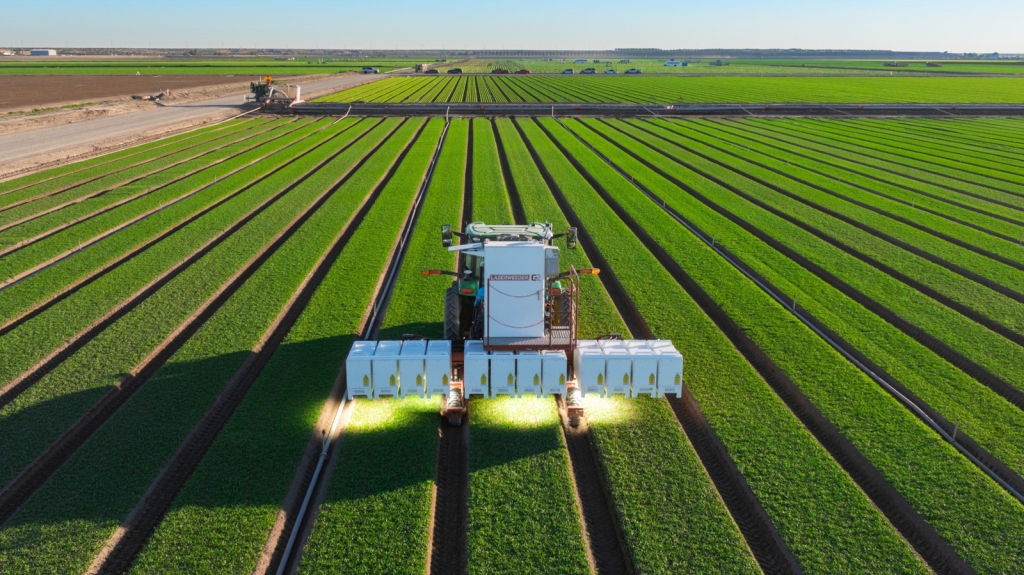
AI-Powered Weed-Killing Robots Are Here—and They’re Laser-Focused on the Future of Farming
If you thought AI was only good for writing essays and answering questions, think again. The next frontier in artificial intelligence isn’t just in your smartphone or laptop—it’s rolling through farm fields, armed with lasers, and it’s called the Large Plant Model (LPM).
Developed by Carbon Robotics, a Seattle-based agricultural technology company, this breakthrough AI model has been trained on over 150 million labeled plants. Its mission? To recognize virtually any weed, anywhere in the world. It’s a leap forward for computer vision in agriculture, a field that’s rapidly evolving. Just recently, another startup made headlines using computer vision in mushroom-picking robots, proving that AI is reshaping farming from the ground up.
At the heart of this innovation is LaserWeeder, Carbon Robotics’ fleet of autonomous, four-wheeled robots that literally kill weeds with lasers. This isn’t science fiction—it’s precision agriculture. Unlike traditional herbicide spraying, which can disturb soil and harm crops, these lasers offer a targeted, eco-friendly solution. Think of it as a supercharged, high-tech version of a weed burner—except these lasers work at blinding speed, firing every 50 milliseconds.
LaserWeeders have been around for over three years, but the new LPM software is about to supercharge their capabilities. Previously, every time a new weed appeared or an existing one looked different due to soil or weather conditions, Carbon Robotics had to manually label the data and retrain the machines. That process took about 24 hours each time. But now, thanks to LPM, those days are over.
With LPM, the robot can instantly identify and respond to a weed it’s never seen before. As CEO Paul Mikesell told TechCrunch, “The farmer can live in real time and say, ‘Hey, this is a new weed. I want you to kill this.'” No new labeling, no retraining—just instant recognition and action.
The real magic is that LaserWeeders are already operating on over 100 farms across 15 countries, and every machine is constantly feeding data back into the model. This continuous learning loop means the system only gets smarter over time.
Carbon Robotics has also introduced a feature called Plant Profiles, which lets farmers customize how the AI behaves in their specific fields. Using just two or three photos via an iPad app, farmers can fine-tune the robot’s behavior in minutes—a process that traditionally took weeks or even months with other AI systems.
The Road to Robot Weed Killers
Carbon Robotics was founded in 2018 by Paul Mikesell, whose background includes work on autonomous vehicle infrastructure at Uber and contributions to Meta’s Oculus VR headsets. The company spent its early years experimenting with different weed control methods before settling on carbon dioxide lasers as the most effective solution.
The first Autonomous LaserWeeder shipped around 2021-2022. Weighing in at 10,000 pounds, it was equipped with 20 high-resolution cameras and lasers capable of firing every 50 milliseconds. The robot targets the meristem—the growth cells at the center of a plant—killing the weed without disturbing surrounding soil or crops. Early models could eliminate around 100,000 weeds per hour, and by 2022, an upgraded version doubled that number.
These machines sold out almost immediately. Mikesell says that once farmers see the LaserWeeder in action, it practically sells itself. The economics are compelling: Carbon Robotics has demonstrated an 80% reduction in weed control costs, with farmers typically breaking even on their investment within two to three years.
The Future of Farming Is Here—and It’s Laser-Focused
With the rollout of LPM and Plant Profiles, Carbon Robotics is setting a new standard for precision agriculture. The combination of AI, robotics, and laser technology is not only making farming more efficient but also more sustainable. As these robots continue to learn and adapt, the future of weed control—and perhaps farming as a whole—looks brighter, greener, and a whole lot more high-tech.
Tags:
AI in agriculture, LaserWeeders, Carbon Robotics, Large Plant Models, autonomous farming robots, weed-killing lasers, precision agriculture, sustainable farming, computer vision in farming, agricultural technology, Paul Mikesell, future of farming, eco-friendly weed control, robotic weed killers, AI-powered robots, smart farming, LaserWeeder technology, agricultural AI, farm automation, laser weed control
Viral Sentences:
- “Weed control just got a laser upgrade—literally.”
- “AI-powered robots are now zapping weeds with lasers, and it’s as cool as it sounds.”
- “Say goodbye to herbicides—robots with lasers are taking over the fields.”
- “Farming’s future is here, and it’s got a 10,000-pound robot with a laser focus.”
- “From Uber to Oculus to autonomous weed killers—this CEO is changing the game.”
- “100,000 weeds per hour? That’s farming at the speed of light.”
- “The robots are coming, and they’re here to save your crops (and the planet).”
- “Lasers, AI, and farming—who knew the future would be so sci-fi?”
- “Farmers are breaking even in just two years—thanks to robot weed killers.”
- “This isn’t just tech—it’s a revolution in how we grow our food.”
,


Leave a Reply
Want to join the discussion?Feel free to contribute!