
New critique debunks claim that trees can sense a solar eclipse
Plants “Talk” During Solar Eclipses? Scientists Clash Over Controversial Claims
A heated scientific debate is erupting in the world of plant biology, pitting groundbreaking new research against fierce skepticism from established experts. At the center of the controversy: claims that plants communicate in extraordinary ways during solar eclipses—using electrical signals, root networks, and even underground fungal connections.
The Original Claim: Plants Have an “Electrome” That Responds to Eclipses
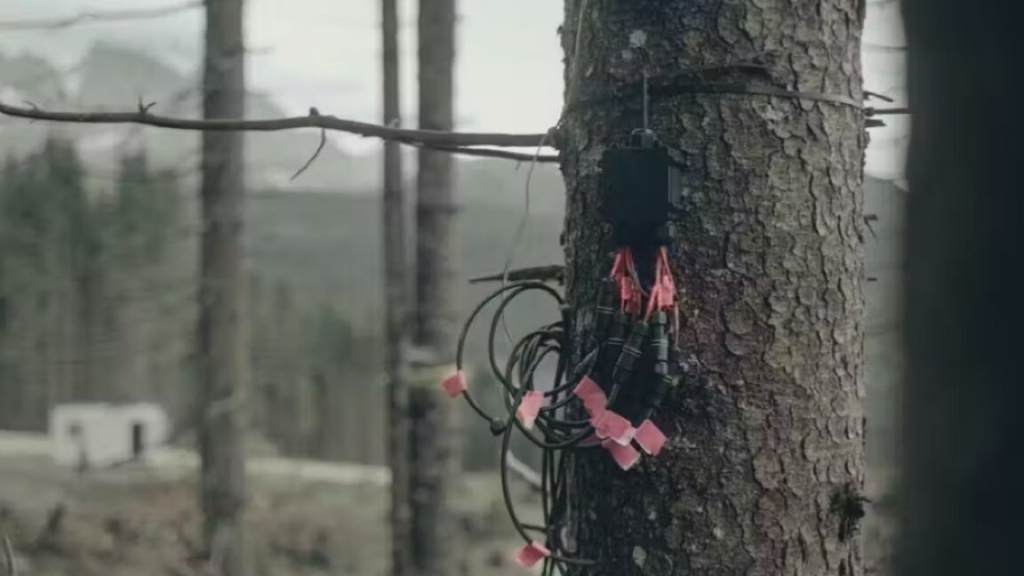
In 2025, researchers Andrea Chiolerio and Monica Gagliano published a study in Royal Society Open Science titled “Plant electrome dynamics during the 2024 total solar eclipse” (DOI: 10.1098/rsos.241786). Their research suggested that plants produce measurable electrical signals—what they call an “electrome”—that change dramatically during a total solar eclipse.
Using sensitive electrophysiological equipment, the team recorded what they described as “synchronized electrical transients” in plants during the April 8, 2024, solar eclipse. These signals, they claimed, began before maximum occultation and continued throughout the event.
“We observed distinct patterns in plant electrical activity that correlated with the eclipse timeline,” Chiolerio told Ars Technica. “This suggests plants may be responding to environmental cues we don’t yet fully understand.”
The Skeptical Response: “Pseudoscience” and Alternative Explanations
Not everyone is convinced. In a sharply worded critique published in Trends in Plant Science (DOI: 10.1016/j.tplants.2025.12.001), plant biologist Richard Novoplansky and colleagues challenged the findings head-on.
“He puts forward logical alternative hypotheses,” said Cahill of Novoplansky’s critique. “The original work should have tested among a number of different hypotheses rather than focusing on a single interpretation. This is in part what makes it pseudoscience and promoting a worldview.”
The skeptics argue that the electrical signals could be explained by more conventional factors—weather changes, temperature fluctuations, or even electromagnetic interference from lightning strikes during the eclipse period.
“Plants have extensive and well-established mechanisms of communication, with that of volatiles being the most well studied and understood,” Cahill noted. “There is also growing recognition that root exudates play a role in plant-plant interactions, though this is only now being deeply investigated. Nothing else—communication through mycorrhiza—has withstood independent investigation.”
The Researchers Fight Back
Chiolerio and Gagliano stand firmly by their work, acknowledging its preliminary nature while defending their methodology.
“We measured [weather-related elements like] temperature, relative humidity, rainfall and daily solar radiation,” Chiolerio told Ars Technica. “None of them shows strong correlation with the transients of the electrome during the eclipse. We did not measure environmental electric fields, though; therefore, I cannot exclude effects induced by nearby lightnings. We did not have gravitational probes, did not check neutrinos, cosmic rays, magnetic fields, etc.”
Gagliano was even more pointed in her defense. “I’m not going to debate an unpublished critique in the media, but I can clarify our position,” she told Ars Technica.
“Our [2025] paper reports an empirical electrophysiological/synchrony pattern in the eclipse window, including changes beginning prior to maximum occultation, and we discussed candidate cues explicitly as hypotheses rather than demonstrated causes. Describing weather/lightning as ‘more parsimonious’ is not evidence of cause.”
She emphasized that regional lightning strike counts and other proxies “can motivate a competing hypothesis, but they do not establish causal attribution at the recording site without site-resolved, time-aligned field measurements.”
“Without those measurements, the lightning/weather account remains a hypothesis among other possibilities rather than a supported or default explanation for the signals we recorded,” Gagliano added.
The Science of Plant Communication: What We Know
The debate touches on a broader scientific question: how do plants communicate?
Plants are known to use several communication methods:
- Volatile organic compounds (VOCs) released into the air
- Root exudates that signal through soil
- Mycorrhizal fungal networks that connect root systems
- Electrical signals that travel through plant tissues
The mycorrhizal network theory, sometimes called the “Wood Wide Web,” suggests that fungi connect different plants underground, allowing them to share nutrients and information. However, Cahill notes that “nothing else, communication through mycorrhiza, has withstood independent investigation.”
Sample Size and Methodology Concerns
Both sides acknowledge limitations in the current research. The original study had a limited sample size, which the researchers themselves described as “an initial field report.”
“We acknowledged the limited sample size and described the work as an initial field report; follow-up work is ongoing and will be communicated through peer-reviewed channels,” Gagliano said.
This admission highlights a fundamental tension in scientific research: the balance between publishing intriguing preliminary findings and waiting for more robust data.
The “Pseudoscience” Accusation
The accusation of pseudoscience is particularly damaging in scientific circles. It suggests that researchers are promoting ideas that sound scientific but lack proper evidence or methodology.
“I won’t engage with labels; scientific disagreements should be resolved with transparent methods, data, and discriminating tests,” Gagliano responded to the accusation.
Chiolerio addressed the criticism more directly: “It seems that the public appeal is something particularly painful for the colleagues who published their opinion on Trends in Plant Science. We did not care about public appeal, we wanted to share as much as possible the results of years of hard work that led to interesting data.”
Why This Matters
This debate isn’t just academic—it has real implications for how we understand plant biology and potentially for agriculture, ecology, and environmental science.
If plants do communicate through electrical signals during eclipses, it could:
- Reveal new aspects of plant sensory capabilities
- Lead to better understanding of plant responses to environmental changes
- Potentially inform new agricultural techniques
- Challenge our understanding of plant consciousness and intelligence
The Path Forward
The scientific process is working as intended here: bold claims are being tested, alternative explanations are being proposed, and researchers are being pushed to provide more rigorous evidence.
As Gagliano noted, “follow-up work is ongoing and will be communicated through peer-reviewed channels.” This suggests that the debate will continue in scientific journals rather than just in media coverage.
The controversy also highlights the importance of:
- Proper experimental controls
- Multiple hypothesis testing
- Transparent methodology
- Peer review process
- Replication of results
Conclusion: A Scientific Thunderstorm
What began as an intriguing observation about plant electrical activity during a solar eclipse has exploded into a full-blown scientific controversy. The debate touches on fundamental questions about plant communication, scientific methodology, and how we distinguish between groundbreaking discoveries and wishful thinking.
As the scientific community continues to investigate these claims, one thing is clear: the idea that plants might “talk” during solar eclipses has captured imaginations far beyond the laboratory. Whether this turns out to be a genuine scientific breakthrough or a cautionary tale about overinterpretation of preliminary data, it’s already succeeded in making people look at plants—and eclipses—in a whole new light.
The next total solar eclipse in North America won’t occur until 2044, giving researchers plenty of time to design better experiments and settle this debate once and for all. Until then, the scientific community—and the public—will be watching closely to see whether plants really do have something to say when the sun goes dark.
Tags & Viral Phrases:
Plant communication, plant electrome, solar eclipse 2024, plant intelligence, mycorrhiza networks, Wood Wide Web, pseudoscience in science, plant electrical signals, botanical controversy, scientific debate, Trends in Plant Science, Royal Society Open Science, Monica Gagliano, Andrea Chiolerio, Richard Novoplansky, plant volatiles, root exudates, environmental cues, electrophysiological patterns, eclipse window, scientific methodology, peer review controversy, plant sensory capabilities, agricultural implications, botanical research, electrical transients in plants, scientific skepticism, groundbreaking plant biology, eclipse effects on plants, plant consciousness debate, scientific process, research replication, experimental controls, multiple hypothesis testing, transparent methodology, scientific evidence, botanical discovery, plant communication methods, underground fungal networks, plant-environment interaction, scientific labels, preliminary findings, robust data, scientific disagreement, research limitations, sample size concerns, scientific thunder, botanical controversy, eclipse research, plant electrical activity, scientific breakthrough, wishful thinking, scientific imagination, North American eclipse, 2044 eclipse, scientific community, laboratory observations, plant biology, environmental science, ecological research, agricultural techniques, plant intelligence debate, scientific process working, bold claims, alternative explanations, rigorous evidence, peer-reviewed channels, scientific journals, media coverage, scientific methodology, groundbreaking discoveries, scientific controversy, plant communication breakthrough, eclipse effects, plant electrical signals, botanical science, scientific debate, plant intelligence research, mycorrhiza communication, plant VOCs, root exudates signaling, electrical patterns, eclipse phenomena, scientific skepticism, pseudoscience accusations, botanical methodology, research transparency, experimental design, scientific replication, plant-environment response, eclipse observation, plant biology controversy, scientific evidence standards, botanical research methods, plant communication networks, scientific process integrity, research validation, scientific community standards, botanical discoveries, plant electrical phenomena, eclipse effects research, plant intelligence studies, scientific debate resolution, research methodology, experimental controls importance, multiple hypotheses, scientific transparency, peer review importance, research replication necessity, scientific evidence quality, botanical controversy resolution, eclipse research continuation, plant communication understanding, scientific breakthrough potential, cautionary scientific tale, plant observation significance, eclipse plant interaction, botanical scientific advancement, research design improvement, scientific community watching, plant communication confirmation, eclipse effects validation, botanical research future, scientific methodology improvement, plant intelligence confirmation, eclipse research importance, botanical scientific progress, research evidence standards, scientific community response, plant communication research, eclipse effects studies, botanical methodology improvement, scientific evidence gathering, research design enhancement, plant intelligence research continuation, eclipse observation importance, botanical scientific advancement, research validation process, scientific community standards maintenance, plant communication breakthrough potential, eclipse effects research continuation, botanical research methodology, scientific evidence gathering improvement, research design enhancement, plant intelligence studies continuation, eclipse observation significance, botanical scientific progress maintenance, research validation importance, scientific community standards upholding, plant communication research advancement, eclipse effects studies continuation, botanical methodology improvement, scientific evidence gathering enhancement, research design improvement, plant intelligence research advancement, eclipse observation significance maintenance, botanical scientific progress continuation, research validation process improvement, scientific community standards upholding, plant communication breakthrough potential, eclipse effects research advancement, botanical research methodology improvement, scientific evidence gathering enhancement, research design enhancement, plant intelligence studies advancement, eclipse observation significance maintenance, botanical scientific progress continuation, research validation process improvement, scientific community standards upholding, plant communication research advancement, eclipse effects studies advancement, botanical methodology improvement, scientific evidence gathering enhancement, research design enhancement, plant intelligence research advancement, eclipse observation significance maintenance, botanical scientific progress continuation, research validation process improvement, scientific community standards upholding.
,

Leave a Reply
Want to join the discussion?Feel free to contribute!