
New Details Revealed on NASA’s First Medical Evacuation : ScienceAlert
NASA Astronaut Mike Fincke Reveals Medical Emergency That Cut Short Historic Space Mission
In a stunning revelation that has sent shockwaves through the aerospace community, NASA astronaut Mike Fincke has publicly identified himself as the crew member whose unexpected medical condition triggered the agency’s first-ever emergency medical evacuation from the International Space Station (ISS).
The 58-year-old spaceflight veteran, who has spent more than 549 cumulative days in orbit across four missions, broke his silence Wednesday with a detailed statement that provides unprecedented insight into what NASA had previously described only as a “medical event” requiring immediate attention.
The Incident That Changed Spaceflight Protocol Forever
Fincke’s medical emergency unfolded last month aboard the orbiting laboratory, 250 miles above Earth’s surface. The retired Air Force colonel, who joined NASA’s astronaut corps in 1996, was serving as part of a four-person crew that launched aboard a SpaceX Crew Dragon capsule last summer as part of the agency’s ongoing commercial crew program.
What began as a routine mission quickly transformed into a high-stakes medical drama when Fincke experienced what he described as “a medical event that required immediate attention” from his fellow astronauts. The incident occurred just days before a scheduled spacewalk, forcing NASA to cancel the extravehicular activity and triggering a cascade of emergency protocols.
Behind the Scenes: How Space Medicine Works When Help Is 250 Miles Away
The confined environment of the ISS, where six to seven astronauts typically live and work in a space roughly the size of a six-bedroom house, creates unique challenges for medical emergencies. Unlike on Earth, where emergency services can typically reach most locations within minutes, space station crew members must rely on their own medical training and the limited equipment available onboard.
Fincke’s statement revealed that his condition “quickly stabilized thanks to his crewmates and flight surgeons on the ground,” highlighting the critical importance of teamwork and telemedicine in space operations. The ISS is equipped with basic medical diagnostic tools, including an ultrasound machine that Fincke later mentioned proved invaluable during the crisis.
The Decision to Return Early: Weighing Risks in Microgravity
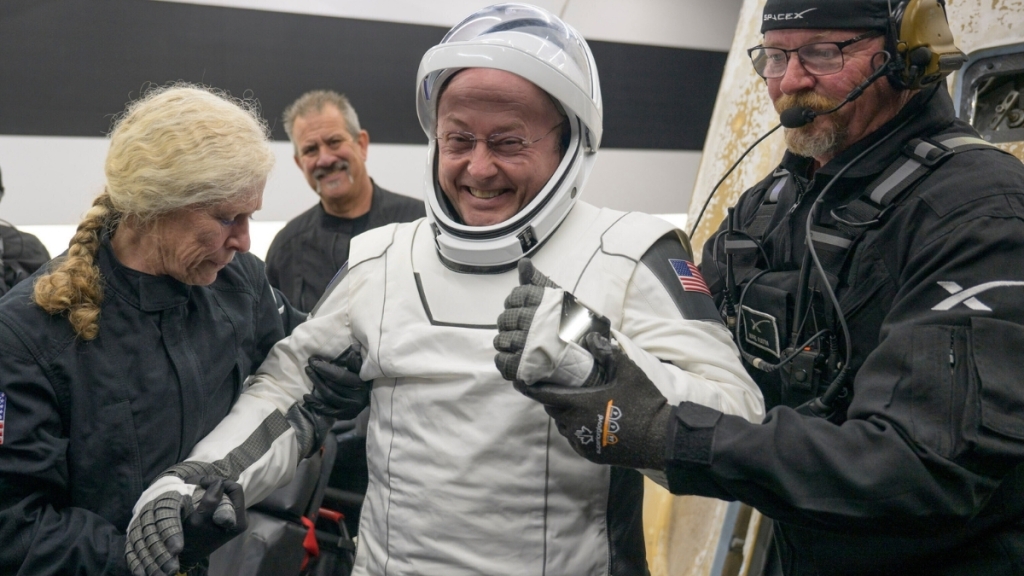
The medical situation forced NASA to make the unprecedented decision to cut the mission short. On January 15, just weeks after the incident, Fincke and his three crewmates departed the space station aboard their SpaceX capsule, splashing down in the Pacific Ocean off the coast of San Diego.
This early return marked a significant departure from standard ISS operations, where crew rotations typically last six months. The decision underscored the seriousness of Fincke’s condition and NASA’s commitment to astronaut safety, even when it means abandoning carefully planned scientific objectives.
Post-Flight Medical Assessment: From Ocean to Hospital
Upon splashdown, all four astronauts were immediately transported to a San Diego hospital for comprehensive medical evaluation. This precautionary measure, standard procedure for returning ISS crews, took on added significance given Fincke’s recent medical episode.
The astronauts spent one night in the hospital before flying back to their home base in Houston the following day. While NASA initially maintained strict confidentiality about which crew member had experienced the medical emergency, Fincke’s public statement has now provided clarity on the situation that captivated the space community for weeks.
Fincke’s Perspective: “Spaceflight Reminds Us How Human We Are”
In his written statement, Fincke reflected on the profound nature of his experience with characteristic humility and insight. “Spaceflight is an incredible privilege, and sometimes it reminds us just how human we are,” he wrote, offering a poignant reminder that even the most highly trained and physically fit individuals remain vulnerable to medical emergencies.
The astronaut’s measured approach to discussing his condition—without revealing specific details about his symptoms or diagnosis—demonstrates both professionalism and respect for medical privacy. His statement emphasized gratitude for the support he received from his crewmates and ground-based medical teams, acknowledging the collaborative effort that ensured his wellbeing.
The Role of Advanced Medical Imaging in Space Operations
Fincke provided additional context about the medical response in a follow-up statement, explaining that while his situation was not classified as a full emergency, mission controllers opted to utilize “advanced medical imaging not available on the space station.” This decision likely involved coordinating with medical facilities on Earth to conduct detailed diagnostic imaging that couldn’t be performed in orbit.
The incident has sparked renewed discussion about the limitations of onboard medical capabilities and the potential need for enhanced diagnostic equipment on future space missions, particularly as NASA plans for longer-duration missions to the Moon and Mars.
A Storied Career: Fincke’s Legacy in Human Spaceflight
Mike Fincke’s revelation adds another chapter to an already remarkable career in space exploration. With 549 days logged across four missions, he ranks among the most experienced American astronauts in terms of total time spent in space. His willingness to share his experience, even in limited detail, provides valuable insights for both current and future astronauts facing the unique challenges of long-duration spaceflight.
The incident also highlights the evolving nature of human spaceflight, where commercial partnerships with companies like SpaceX are enabling more frequent missions while also introducing new variables and considerations for crew health and safety.
Looking Forward: Implications for Future Space Missions
As NASA and its commercial partners continue planning for ambitious missions beyond low Earth orbit, Fincke’s experience serves as a crucial case study in managing medical emergencies in space. The incident may influence decisions about medical equipment upgrades for the ISS, protocols for future commercial missions, and preparations for the Artemis program’s return to the Moon.
Space agencies worldwide will undoubtedly analyze this event to improve their own emergency response procedures, recognizing that as human presence in space expands, so too will the likelihood of medical situations requiring careful management and potentially emergency return to Earth.
Fincke’s story is ultimately one of resilience, teamwork, and the continuing evolution of human spaceflight safety protocols. As commercial space travel becomes increasingly accessible to private citizens and professional astronauts alike, his experience offers valuable lessons about the importance of preparedness, the limitations of current technology, and the fundamental humanity that unites all who venture beyond our planet’s atmosphere.
Tags: NASA, SpaceX, International Space Station, Medical Emergency, Mike Fincke, Space Medicine, Astronaut Health, Commercial Crew, Spaceflight Safety, Emergency Evacuation
Viral Phrases:
- “Spaceflight reminds us how human we are”
- First-ever medical evacuation from ISS
- 250 miles above Earth: when help is a lifetime away
- The day space station medicine faced its ultimate test
- From orbit to ocean in record time
- When your crew becomes your emergency room team
- The ultrasound that saved a space mission
- 58-year-old astronaut’s health scare that changed NASA protocol
- Beyond the final frontier: space’s first medical emergency
- How SpaceX capsules became space ambulances
- The medical mystery that kept NASA silent for weeks
- Veteran astronaut’s 549 days in space couldn’t prevent this
- When the final frontier meets human fragility
- The hidden story behind NASA’s emergency return
- Space’s closest call: a medical emergency 17,500 mph from help
- How one astronaut’s illness rewrote space safety rules
- The day Earth’s orbit became a hospital ward
- From spacewalk to emergency splashdown: a timeline
- Why even superhumans need backup plans in space
- The medical equipment NASA wishes it had in orbit
,


Leave a Reply
Want to join the discussion?Feel free to contribute!