
New Hydrogel Micromachines May Transform How We Study Living Tissues
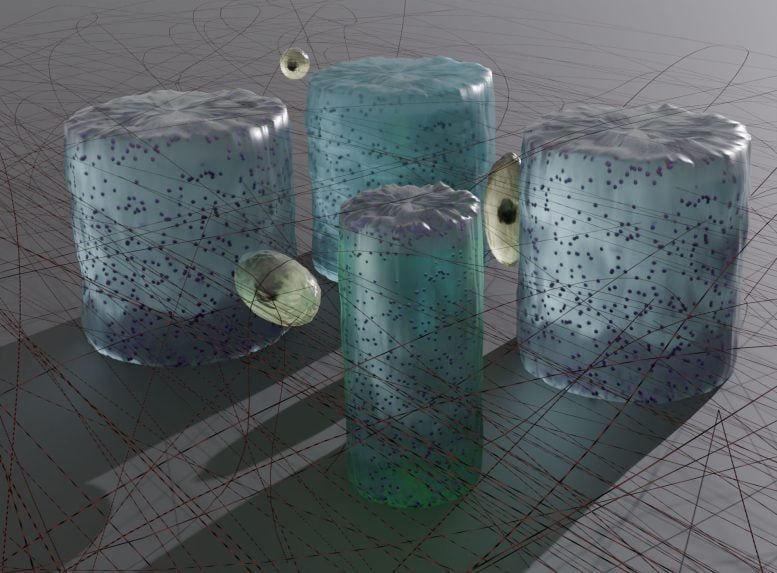
New Hydrogel Micromachines May Transform How We Study Living Tissues
In a breakthrough that could reshape the future of cellular biology, researchers at the Max Planck Institute for Medical Research have unveiled an innovative lab-on-a-chip system capable of applying precisely controlled mechanical forces to biological materials that mimic the extracellular matrix. This cutting-edge development, which centers on the use of light-responsive hydrogel micromachines, promises to unlock new dimensions in our understanding of how cells interact with their physical environment — interactions that are fundamental to tissue development, healing, and disease.
Inside the human body, cells are never isolated; they exist within a complex, three-dimensional network known as the extracellular matrix (ECM). This intricate scaffold not only provides structural support but also serves as a dynamic interface where cells receive mechanical and chemical cues essential for their survival, function, and adaptation. The physical forces exchanged between cells and the ECM are critical for processes such as tissue morphogenesis, wound repair, and even the progression of diseases like cancer. Yet, replicating these nuanced interactions in a laboratory setting has long posed a significant challenge for scientists.
The new hydrogel micromachines, described in a recent publication, are designed to bridge this gap. These microscopic devices are embedded within a collagen network — a key component of the ECM — and are engineered to respond to light stimuli. By shining specific wavelengths of light onto the system, researchers can manipulate the micromachines to exert precise mechanical forces on the surrounding biological materials. This level of control allows scientists to simulate the dynamic physical environment that cells experience in vivo, providing unprecedented insights into cellular behavior.
What sets this technology apart is its ability to operate at the microscale with remarkable precision. Traditional methods of studying cell-ECM interactions often involve bulk mechanical forces that can obscure the subtle, localized cues cells rely on. The hydrogel micromachines, however, can target specific regions within the collagen network, applying forces that are both spatially and temporally controlled. This opens the door to experiments that were previously impossible, such as observing how individual cells respond to changes in their mechanical environment in real time.
The implications of this innovation are vast. For one, it could revolutionize our understanding of mechanobiology — the study of how physical forces influence cellular processes. By providing a more accurate model of the ECM, the technology could lead to breakthroughs in regenerative medicine, enabling researchers to develop more effective strategies for tissue engineering and wound healing. Additionally, it could offer new avenues for studying diseases where cell-ECM interactions play a pivotal role, such as fibrosis, cancer metastasis, and cardiovascular disorders.
Beyond its scientific applications, the hydrogel micromachine system also represents a significant leap forward in the field of lab-on-a-chip technology. These miniaturized devices integrate multiple laboratory functions onto a single chip, allowing for high-throughput, automated experiments that are both cost-effective and scalable. By incorporating light-responsive materials, the researchers have added a new dimension of control to these systems, paving the way for even more sophisticated experimental designs.
The development of these micromachines is a testament to the power of interdisciplinary collaboration. It brings together expertise in materials science, biology, and engineering to address a fundamental question in cellular biology. As the technology continues to evolve, it is likely to inspire new research directions and applications, further blurring the lines between biology and engineering.
In the coming years, we can expect to see this technology adopted by research labs around the world, driving discoveries that could transform medicine and biology. From unraveling the mysteries of cellular mechanics to developing next-generation therapies, the potential of hydrogel micromachines is only beginning to be realized. As scientists continue to push the boundaries of what is possible, one thing is clear: the future of cellular biology is being shaped by innovations like these, and the journey has only just begun.
Tags, Viral Words, and Phrases:
Hydrogel micromachines, lab-on-a-chip, extracellular matrix, cellular biology, Max Planck Institute, light-responsive materials, mechanobiology, tissue engineering, regenerative medicine, collagen network, cellular interactions, microscale precision, biomedical innovation, cutting-edge technology, scientific breakthrough, interdisciplinary collaboration, future of medicine, cellular mechanics, disease research, high-throughput experiments, automated biology, next-generation therapies, transformative technology, unlocking cellular secrets, bioengineering marvels, microscopic devices, real-time cellular observation, medical research revolution, science meets engineering, pioneering discovery, cellular environment simulation, advanced biomaterials, groundbreaking innovation, microscopic control, cellular behavior insights, medical science frontier, technology-driven biology, future of cellular research, scientific game-changer, light-controlled micromachines, cellular scaffolding, ECM dynamics, microscale biology, transformative lab tools, cellular force application, innovative biomedical devices, cellular microenvironment, scientific advancement, microscopic engineering, cellular adaptation studies, medical technology breakthrough, cellular force dynamics, hydrogel innovation, cellular mechanotransduction, cutting-edge biology tools, future of healthcare, cellular force microscopy, microscale manipulation, cellular force sensors, hydrogel-based devices, cellular force mapping, cellular force microscopy, cellular force dynamics, cellular force sensors, hydrogel-based devices, cellular force mapping.
,

Leave a Reply
Want to join the discussion?Feel free to contribute!