
New NASA Chief Blames Prior Leadership for Botched Starliner Mission
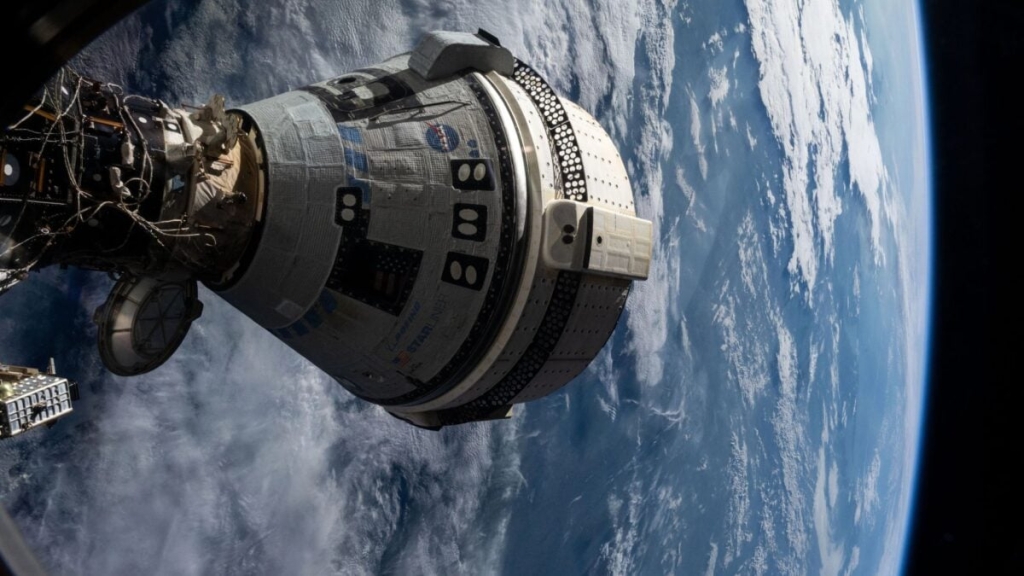
NASA Blames Own Leadership for Starliner Disaster That Left Astronauts Stranded for Nine Months
In a stunning admission that has sent shockwaves through the aerospace community, NASA Administrator Jared Isaacman has pointed the finger squarely at his own agency’s leadership for the catastrophic Starliner mishap that left astronauts Sunita Williams and Barry Wilmore marooned on the International Space Station for an agonizing nine months.
During a bombshell press briefing Thursday, Isaacman didn’t mince words about where the blame truly lies. While technical failures with Boeing’s Starliner spacecraft certainly played a role, the NASA chief revealed that leadership’s stubborn commitment to maintaining multiple crew transport systems—even when astronaut safety was at stake—created a perfect storm of mismanagement and cultural breakdown.
“We made decisions from docking through post-mission actions that prioritized program goals over mission and crew safety,” Isaacman stated bluntly. “A considerable portion of the responsibility and accountability rests here.”
The saga began in June 2024 when Starliner launched with Williams and Wilmore aboard for what was supposed to be an eight-day mission. Instead, the spacecraft’s helium leaks and thruster malfunctions turned their brief visit into a nine-month nightmare. Rather than immediately utilizing another available spacecraft to bring them home, NASA leadership spent nearly three months attempting to diagnose and fix Starliner’s problems.
“The issue extended across multiple levels of the agency and right up to the administrator of NASA,” Isaacman revealed, referring to his predecessor Bill Nelson. “I can’t imagine in a situation like that why there would not have been some direct involvement to bring people back to the mission and the crew and figure out the correct pathway forward.”
The internal investigation, released Thursday, paints a damning picture of oversight failures and technical shortcomings. Design compromises and inadequate hardware qualification “extended beyond NASA’s complete understanding,” according to Isaacman. While technical anomalies are common in spaceflight, Starliner’s qualification deficiencies made it less reliable for crew survival than other vehicles.
“We managed the contract, we accepted the vehicle, we launched the crew to space, we made decisions from docking through post-mission actions,” Isaacman said. “The breakdown in culture and trust issues that resulted were failures of leadership at every level.”
Despite the scathing self-criticism, NASA insists it won’t abandon Starliner entirely. The agency plans to continue working with Boeing to address the technical issues, with a cargo mission potentially launching as early as April, followed by up to three crew rotations.
Isaacman defended the program’s future by emphasizing NASA’s goal to “ignite the orbital economy,” which will require numerous commercial space stations after the ISS retires in 2030. Having multiple vehicles capable of transporting crew and cargo to low-Earth orbit will remain essential, he argued.
However, the path forward remains fraught with challenges. Engineers must first identify the proximate causes of the thruster anomalies, implement recommendations from the independent investigation, and rebuild trust between leadership, the workforce, and the astronauts who depend on sound decision-making.
The Starliner debacle serves as a stark reminder that in the unforgiving environment of space, leadership failures can have life-or-death consequences. As NASA works to right the ship, the aerospace world watches closely to see if the agency can learn from its mistakes—or if history will repeat itself in the final frontier.
Tags: NASA, Boeing, Starliner, Space, Astronauts, ISS, Investigation, Leadership, Failure, Spaceflight, Technical Issues, Helium Leaks, Thruster Malfunctions, Crew Transport, Orbital Economy, Commercial Space, Jared Isaacman, Sunita Williams, Barry Wilmore, Space Mishap, Agency Culture, Oversight, Accountability
Viral Phrases: “NASA blames itself for stranding astronauts,” “Leadership prioritized program over safety,” “Nine months in space due to management failure,” “Culture breakdown at NASA,” “Accountability rests at the top,” “Multiple transport systems vs. crew safety,” “Rebuilding trust in space exploration,” “Technical failures meet leadership failures,” “The unforgiving nature of space leadership,” “Can NASA learn from Starliner disaster?”
,


Leave a Reply
Want to join the discussion?Feel free to contribute!