
New Rust Driver Aims To Improve Upstream Linux On Synology NAS Devices
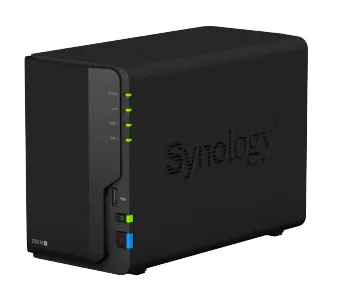
Linux Kernel Gets New Synology NAS Driver Written in Rust: Microp Takes Hardware Control to the Next Level
In an exciting development for Linux enthusiasts and Synology NAS users alike, a fresh set of patches has hit the Linux kernel mailing list, introducing a brand-new driver that significantly expands the mainline Linux kernel’s support for Synology network attached storage devices. The project, dubbed “Synology Microp,” represents a fascinating intersection of cutting-edge programming languages and practical hardware control, leveraging the Linux kernel’s modern Rust programming language support to deliver unprecedented functionality.
The patches, which first appeared on Friday, are the brainchild of Markus Probst, a developer who has been steadily pushing the boundaries of what’s possible with Rust in the Linux kernel ecosystem. Probst’s work focuses on harnessing the power of a microcontroller connected via serial port to provide comprehensive control over various Synology NAS hardware components, including LEDs, fan speeds, a beeper, and critical system functions like shutdown and restart handling.
This isn’t Probst’s first rodeo in the realm of Rust-powered Linux drivers. In fact, the Synology Microp project builds directly upon his earlier groundbreaking work from last year, when he created the first-ever Linux driver written entirely in Rust specifically for LED control. That pioneering effort laid the crucial groundwork for this more ambitious undertaking, which now extends microcontroller functionality beyond simple LED management to encompass a much broader range of hardware control capabilities.
The technical scope of what Synology Microp aims to achieve is genuinely impressive. By interfacing with the NAS’s microcontroller through a serial connection, the driver promises to give system administrators and users unprecedented low-level control over their Synology devices. The LED control functionality, which was the original focus of Probst’s Rust driver work, remains a core component, allowing for sophisticated lighting configurations and status indicators that can be programmatically controlled through the Linux kernel.
However, the real game-changer here is the expansion into fan speed control. For NAS devices, which often run continuously and handle sensitive data storage tasks, thermal management is absolutely critical. The ability to programmatically control fan speeds through the Linux kernel opens up exciting possibilities for creating more efficient cooling strategies, potentially reducing noise levels during periods of low activity while ensuring adequate cooling during intensive operations. This kind of fine-grained hardware control has traditionally been the domain of proprietary firmware, so bringing it into the open-source Linux kernel represents a significant democratization of hardware management capabilities.
The beeper functionality, while perhaps less glamorous than fan control, serves an important role in system monitoring and alerting. Whether it’s signaling hardware failures, temperature warnings, or other critical system events, having programmatic control over the beeper through the Linux kernel means that these alerts can be integrated more seamlessly into broader system monitoring and automation frameworks.
Perhaps most intriguingly, the driver includes support for shutdown and restart handling. This suggests that the microcontroller can serve as a reliable hardware watchdog, capable of initiating system restarts or graceful shutdowns even when the main operating system might be unresponsive. For mission-critical NAS deployments, this kind of hardware-level control could prove invaluable in maintaining system reliability and data integrity.
The development timeline for Synology Microp has been impressively rapid. The initial patch series posted on Friday was quickly followed by a v2 update just two days later on Sunday night. This swift iteration cycle demonstrates both the developer’s commitment to quality and the collaborative nature of open-source development, with the v2 series addressing various fixes and maintenance items identified in the initial release. Such rapid refinement is typical of kernel development, where community feedback plays a crucial role in polishing and perfecting new features.
The use of Rust for this driver is particularly noteworthy. Rust has been making significant inroads into the Linux kernel development community, offering memory safety guarantees that could help reduce the prevalence of certain types of bugs that have historically plagued kernel development. By choosing Rust for a driver that deals with critical hardware control functions, Probst is not only showcasing the language’s capabilities but also contributing to the growing body of evidence that Rust can be a viable and beneficial choice for kernel-level programming.
For the broader Linux community, the implications of this work extend far beyond just Synology NAS users. Each successful Rust driver that makes its way into the mainline kernel helps validate the language’s suitability for kernel development and paves the way for more widespread adoption. The Synology Microp project serves as an excellent case study in how modern programming languages can be applied to traditional systems programming challenges, potentially leading to more robust and secure kernel code in the future.
From a practical standpoint, the availability of this driver in the mainline kernel means that Synology NAS users running Linux distributions with up-to-date kernels will be able to take advantage of these enhanced hardware control capabilities without resorting to custom firmware or third-party patches. This integration into the mainline kernel also ensures better long-term support and compatibility as Linux distributions evolve.
The technical implementation details, while complex, highlight the sophistication of modern kernel development. The driver’s ability to communicate with the microcontroller via serial port, interpret commands, and translate them into hardware actions requires careful attention to timing, error handling, and resource management. The fact that this is being accomplished in Rust adds another layer of complexity, as the language’s safety guarantees must be balanced against the need for low-level hardware access and real-time responsiveness.
As the Linux kernel continues to evolve and incorporate more modern programming practices and languages, projects like Synology Microp represent important milestones in that journey. They demonstrate that the kernel development community is not only willing to embrace new technologies but is also capable of applying them to solve real-world hardware control challenges in innovative ways.
The future looks bright for this project, with the rapid development cycle suggesting that further enhancements and refinements are likely on the horizon. As more Synology NAS models are supported and additional hardware control features are implemented, Synology Microp could become an essential component of the Linux ecosystem for network storage enthusiasts and professionals alike.
This development also serves as a reminder of the vibrant and innovative nature of open-source software development. What began as a simple LED control driver has evolved into a comprehensive hardware management solution, all through the dedication of individual developers and the collaborative power of the open-source community. It’s a testament to how individual initiative, combined with modern programming tools and community support, can lead to significant advancements in core infrastructure software.
For those interested in diving deeper into the technical details, the patch series is available for review on the Linux kernel mailing list, where developers and enthusiasts can examine the implementation, provide feedback, and contribute to the ongoing development of this exciting new driver.
Rust kernel driver, Synology NAS Linux support, hardware control microcontroller, open-source NAS management, Linux kernel development, memory-safe systems programming, fan speed control Linux, LED driver Rust, beeper control kernel, shutdown restart handling, serial port communication, network attached storage, kernel mailing list patches, systems programming innovation, hardware watchdog functionality
Synology Microp driver revolutionizes Linux NAS control, Rust programming language makes kernel history again, unprecedented hardware management capabilities for Synology devices, cutting-edge open-source innovation in network storage, memory safety meets real-time hardware control, developer Markus Probst pushes boundaries of what’s possible, serial port microcontroller communication mastered in Rust, fan speed control finally comes to mainline Linux kernel, beeper and LED management unified under single driver, hardware watchdog functionality ensures system reliability, rapid patch development cycle impresses kernel community, democratizing hardware control through open-source software, thermal management optimization for continuous operation NAS, programmatic system alerts and monitoring capabilities, graceful shutdown handling at microcontroller level, Linux kernel embraces modern programming paradigms, Synology users rejoice at enhanced device control, Rust proves its worth in critical systems programming, collaborative open-source development delivers practical solutions, network storage enthusiasts gain powerful new tools, kernel development reaches new heights of sophistication, individual developer initiative transforms industry standards, comprehensive hardware management solution emerges from simple beginnings, Linux distribution compatibility guaranteed through mainline integration, real-time responsiveness achieved with memory-safe guarantees, innovative approaches to traditional systems challenges, vibrant open-source community drives technological advancement, technical implementation showcases modern kernel sophistication, future enhancements promise even greater functionality, essential component for Linux NAS ecosystem, groundbreaking driver sets new industry benchmarks, revolutionary approach to hardware-software integration, unprecedented level of user control and customization, cutting-edge technology meets practical everyday needs, open-source philosophy enables rapid innovation cycles, individual brilliance amplified by community collaboration, systems programming enters new era of safety and performance, network attached storage redefined through software innovation, kernel-level programming achieves new levels of accessibility, hardware control capabilities previously reserved for proprietary solutions, memory-safe Rust language transforms kernel development landscape, comprehensive solution addresses multiple hardware management needs, rapid iteration and refinement demonstrate development excellence, practical applications span from home users to enterprise deployments, technical sophistication meets user-friendly implementation, innovative driver represents significant leap forward for Linux ecosystem
,


Leave a Reply
Want to join the discussion?Feel free to contribute!