
Newly Discovered Fossil Among The Earliest Land Creatures to Enjoy a Salad : ScienceAlert
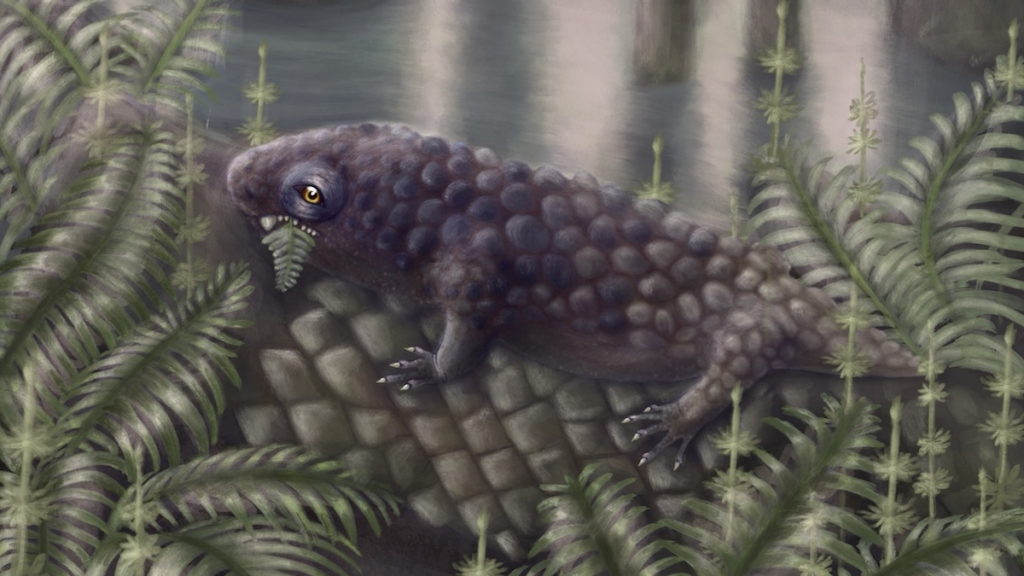
Ancient Veggie Terror: The Tiny Dinosaur-Like Creature That Redefined Herbivory
In a jaw-dropping discovery that’s sending shockwaves through the paleontology world, scientists have unveiled Tyrannoroter heberti—a pint-sized powerhouse that might just be the original “plant-based predator.” This bizarre, dinosaur-like creature, which roamed Earth a staggering 307 million years ago, is rewriting the history books on when and how animals first decided to swap steak for salad.
Meet the Original Plant-Based Predator
Despite its intimidating name—which roughly translates to “tyrant swamp wanderer”—Tyrannoroter was no T-Rex. This little guy measured a modest 25 centimeters (about 10 inches) from snout to tail, roughly the size of a large house cat. But don’t let its small stature fool you. This creature was a revolutionary in the evolutionary kitchen, pioneering a diet that would eventually give rise to everything from gentle giants like elephants to your local vegan influencer.
“This is one of the oldest known four-legged animals to eat its veggies,” explains Arjan Mann, evolutionary biologist at the Field Museum in Chicago and co-lead author of the groundbreaking study. “It shows that experimentation with herbivory goes all the way back to the earliest terrestrial tetrapods—the ancient relatives of all land vertebrates, including us.”
A Dental Revolution Hidden in Stone
The story of Tyrannoroter began in an unexpected place: inside a fossilized tree stump in Nova Scotia, Canada. Paleontologists struck paleontological gold when they discovered the creature’s remarkably preserved skull, which revealed a dental setup so advanced it could make modern orthodontists jealous.
Using cutting-edge micro-CT scanning technology, researchers peered inside this ancient skull to discover something extraordinary. Tyrannoroter possessed what scientists call “dental batteries”—specialized bony plates in its mouth that worked like a prehistoric food processor. These plates, found not just on the roof of its mouth but also in its lower jaw, would have ground together to pulverize tough plant matter with terrifying efficiency.
“We were most excited to see what was hidden inside the mouth of this animal once it was scanned—a mouth jam-packed with a whole additional set of teeth for crushing and grinding food, like plants,” says Hillary Maddin, paleontologist at Carleton University in Canada and senior author of the study.
From Carnivore to Herbivore: The Evolutionary Hack
Here’s where things get really interesting. Tyrannoroter wasn’t born a vegetarian—it evolved into one. The research team believes this creature’s journey to herbivory began with a taste for insects and arthropods. Those same dental batteries that could crush beetle exoskeletons were perfectly suited for grinding down fibrous ferns and other ancient plants.
“It’s like the creature discovered a universal remote control for food,” Mann explains. “First it used these dental batteries to eat crunchy bugs, then realized, ‘Hey, this works great on plants too!'”
This dietary flexibility might have given Tyrannoroter a crucial evolutionary advantage. By eating insects that themselves fed on plants, these early tetrapods could have developed the gut microbiome necessary to digest cellulose—the tough fiber found in plant cell walls that’s notoriously difficult for animals to break down.
Rewriting the Timeline of Plant-Eating
Perhaps the most shocking revelation from this discovery is how it pushes back the timeline for herbivory in land animals. Previous research suggested that plant-eating among tetrapods emerged much later, but Tyrannoroter and its relatives are proving otherwise.
“These findings, among other recent studies, provide direct evidence that revise the timeline of the origin of herbivory, revealing that various herbivorous forms arose quickly following terrestrialization of tetrapods,” the research team writes in their paper published in the journal Systematic Palaeontology.
Even more intriguingly, when researchers re-examined other pantylid specimens—the group to which Tyrannoroter belongs—they found similar herbivorous dental structures in fossils dating back 318 million years. That’s pushing the origins of herbivory back by millions of years earlier than previously thought.
The Bigger Picture: Why This Matters
This discovery isn’t just about one weird little creature from the distant past. It’s about understanding a fundamental shift in how life on Earth evolved. When vertebrates first emerged onto land around 370 million years ago, they found a world already dominated by plants that had been thriving for over 100 million years. For eons, these early land animals stuck to eating each other—until Tyrannoroter and its relatives figured out there was an easier meal just waiting to be exploited.
“The pantylids are from the second phase of terrestriality, when animals became permanently adapted to life on dry land,” Mann notes. “They represent a crucial evolutionary experiment in how vertebrates could survive and thrive in terrestrial ecosystems.”
The Legacy of a Tiny Vegetarian
Today, Tyrannoroter stands as a testament to evolutionary innovation. This small creature’s dietary experimentation paved the way for the incredible diversity of herbivorous animals we see today—from grazing mammals to leaf-eating reptiles to the birds that fill our skies.
So the next time you bite into a salad or marvel at a towering giraffe munching on acacia leaves, remember Tyrannoroter heberti—the tiny, dinosaur-like creature that, 307 million years ago, first dared to ask: “What if I ate the plants instead?”
Tags: #Paleontology #Evolution #Herbivory #AncientLife #Tyrannoroter #PlantEating #Fossils #NovaScotia #CTScanning #DentalBatteries #TerrestrialEvolution #PrehistoricCreatures #ScienceDiscovery #NatureInnovation
Viral Phrases: Ancient veggie terror, pint-sized powerhouse, original plant-based predator, prehistoric food processor, universal remote control for food, rewriting the history books, evolutionary kitchen, jaw-dropping discovery, paleontological gold, tiny vegetarian legacy, dared to eat the plants, evolutionary innovation, sending shockwaves through paleontology, bizarre dinosaur-like creature, crucial evolutionary advantage, pushing back the timeline, testament to innovation, easier meal just waiting, second phase of terrestriality, gut microbiome revolution, cellulose breakthrough, evolutionary experiment, diversity paved the way, tiny dinosaur-like creature, 307 million years ago, original “plant-based predator”, first dared to ask, what if I ate the plants, tiny powerhouse, revolutionary in the evolutionary kitchen, sending shockwaves, jaw-dropping discovery, paleontological gold, universal remote control for food, rewriting the history books, prehistoric food processor, original plant-based predator, pint-sized powerhouse, ancient veggie terror
,

Leave a Reply
Want to join the discussion?Feel free to contribute!