
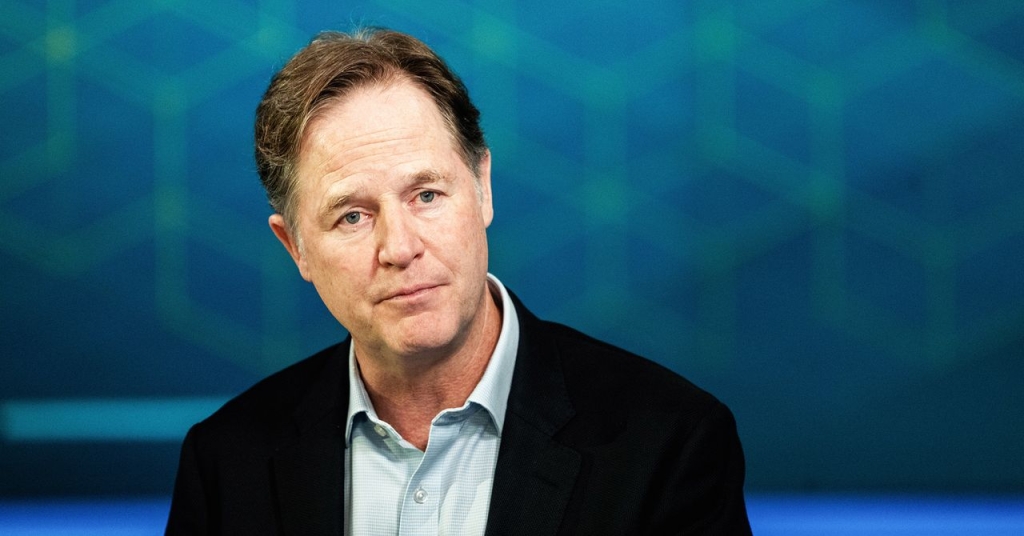
Nick Clegg Doesn’t Want to Talk About Superintelligence
Here’s a rewritten version of the technology news article with an informative and viral tone, expanded to over 1200 words:
The AI Revolution in Education: A Double-Edged Sword?
In a groundbreaking development that’s sending shockwaves through the educational landscape, artificial intelligence is poised to democratize learning on an unprecedented scale. This transformative technology promises to bridge the gap between students in remote corners of the globe and those in the world’s most prestigious academic institutions.
Imagine a young student in a rural Brazilian town, sitting at a computer, engaging in a dynamic, personalized learning experience that rivals that of a student in London’s affluent Mayfair district. This is the vision being brought to life by companies like Efekta, who are harnessing the power of AI to create responsive, adaptive educational tools.
The potential for AI in education is staggering. By providing tailored instruction, instant feedback, and round-the-clock availability, these AI teachers could revolutionize the way we approach learning. No longer constrained by geography, economic status, or the limitations of human teachers, students everywhere could have access to world-class education.
However, this brave new world of AI-assisted learning is not without its critics and concerns. As we stand on the precipice of this educational revolution, we must grapple with some fundamental questions about the nature of learning and the role of technology in our lives.
One of the most pressing concerns is whether the introduction of AI to the classroom might lead to a generation of students who become overly reliant on technology. Will students use AI as a crutch, turning to chatbots to draft essays, solve complex problems, or even think critically on their behalf?
This fear is not unfounded. As AI becomes more sophisticated, the temptation to outsource cognitive tasks to these digital assistants will undoubtedly grow. However, proponents argue that this is not a new phenomenon. When calculators were first introduced, there were similar concerns that students would lose the ability to perform mental arithmetic. Yet, society adapted, and the benefits of this technology far outweighed the perceived drawbacks.
The key, experts say, lies in how we incorporate AI into education. Just as good teachers have always used new tools to enhance learning, while bad teachers have used them to cut corners, the same will be true for AI. The technology itself is neutral; it’s how we wield it that matters.
But there’s a deeper, more fundamental concern at play here. What does it mean for students if they no longer need to develop certain foundational skills? If AI can write essays, solve equations, and analyze data, what’s left for human students to learn?
This question strikes at the heart of what we value in education. Is it the end result – a well-written essay or a correct answer – or is it the process of learning, of grappling with difficult concepts, and of developing critical thinking skills? The introduction of AI to education forces us to reevaluate our priorities and reconsider what we want our educational system to achieve.
Moreover, there are concerns about the vulnerability of young minds to the influence of AI. Children, with their developing sense of self and their natural tendency to anthropomorphize, may be particularly susceptible to forming emotional attachments to AI tutors. The risk of students becoming overly dependent on or unduly influenced by these AI companions is a very real one.
To address these concerns, experts are calling for a precautionary approach to the implementation of AI in education, particularly for younger students. This could involve age-gating, where access to more advanced AI tools is restricted based on the user’s age, similar to the recent social media bans for under-16s in Australia.
However, implementing such restrictions presents its own set of challenges. How do we accurately verify a user’s age online? Some suggest that the solution may lie in leveraging the existing infrastructure of app stores on iOS and Android devices, which already have age verification systems in place.
Despite these concerns, many in the industry argue that the risks associated with AI in education are overstated, particularly when it comes to controlled educational environments. The AI teachers being developed by companies like Efekta are not autonomous entities, but rather tools that are carefully managed and monitored by human educators.
This controlled approach to AI in education stands in stark contrast to the more free-form AI assistants that are becoming increasingly prevalent in other areas of life. By maintaining human oversight and control, these educational AI tools aim to harness the benefits of AI while mitigating the risks.
The perspective of those who have worked at the forefront of AI development, such as former Meta employees, provides valuable insight into the broader context of this technological revolution. The quest for artificial general intelligence (AGI) and even superintelligence has become a central focus of the tech industry, with many companies vying to be the first to achieve these lofty goals.
However, there’s a growing recognition that these concepts are not as clearly defined as they might appear. Even within organizations at the cutting edge of AI research, there’s a lack of consensus on what exactly constitutes AGI or superintelligence. This ambiguity has led some to question whether the pursuit of these goals is more about attracting top talent and generating buzz than about achieving any concrete, measurable outcome.
As we navigate this brave new world of AI-assisted education, it’s clear that we’re standing at a crossroads. The potential benefits are enormous – a truly democratized education system that can provide personalized, high-quality learning experiences to students regardless of their circumstances. But these benefits come with significant risks and challenges that we must address head-on.
The key to successfully integrating AI into education will be finding the right balance. We must harness the power of this technology to enhance learning and broaden access to education, while also preserving the essential human elements of teaching and learning. We must ensure that students develop critical thinking skills and emotional intelligence, even as they benefit from AI-assisted learning.
As we move forward, it will be crucial to maintain an open dialogue between educators, technologists, policymakers, and the public. Only by working together can we create an educational system that leverages the best of what AI has to offer while preserving the core values and skills that we deem essential for human development.
The AI revolution in education is here, and it’s transforming the way we think about learning. As we embrace this change, we must do so with our eyes wide open, ready to navigate the challenges and seize the opportunities that this new era of education presents. The future of learning is here, and it’s more exciting – and complex – than we ever imagined.
Tags and Viral Phrases:
AI education revolution, democratizing learning, AI teachers, personalized learning, technology in classrooms, future of education, artificial intelligence, Efekta, educational technology, AI risks in education, age-gating AI, AGI and superintelligence, Meta AI perspective, educational reform, critical thinking in the AI age, emotional intelligence, human-AI collaboration in education, tech industry buzz, AI talent attraction, open dialogue on AI education, embracing change in learning.
,


Leave a Reply
Want to join the discussion?Feel free to contribute!