
No, Windows Start does not use React — pathar.tl
No, Windows Start Menu Isn’t Built on React—Here’s What’s Actually Happening
If you’ve been anywhere near tech news in the past few days, you’ve probably seen headlines screaming about Microsoft’s latest Windows quality commitment. The blogosphere is abuzz with claims that Microsoft is abandoning React in favor of native WinUI for the Windows Start menu, promising massive performance improvements. But before you join the chorus of keyboard warriors ready to roast Microsoft for yet another questionable engineering decision, let’s take a deep breath and examine what’s actually going on here.
Microsoft’s Quality Commitment: PR Move or Genuine Pivot?
Microsoft recently published a corporate blog post titled “Our commitment to Windows quality,” outlining various feature changes and improvements coming to Windows, particularly Windows 11. The post has been circulating widely, with outlets like Windows Central amplifying the message and sparking intense debate in tech communities.
At first glance, it might seem like Microsoft is making a dramatic about-face, abandoning modern web technologies in favor of native Windows frameworks. The timing is certainly interesting, coming amid growing criticism about Windows performance, bloat, and the company’s increasing reliance on AI features that many users find intrusive.
But here’s the thing: I don’t believe this represents some massive strategic pivot. Rather, it feels like standard corporate PR designed to appease the loudest critics while maintaining the status quo. Microsoft has mastered the art of announcing improvements that sound significant but often amount to incremental changes wrapped in marketing language.
The React Myth: Where Did This Even Come From?
The specific claim that’s causing so much confusion is this: Microsoft is allegedly switching the Start menu from React to WinUI to improve performance. This statement has been repeated across multiple tech publications, but it contains a fundamental misunderstanding that’s worth unpacking.
React is a JavaScript library for building user interfaces, primarily used for web applications. WinUI is Microsoft’s native UI framework for Windows applications. The idea that Windows would build something as fundamental as the Start menu using a web-based framework seemed absurd to many developers, yet the rumor persisted.
The Truth About Windows Start Menu
Let’s set the record straight: No, Windows Start menu does not use React. Not a single part of the core Start menu functionality relies on React or any web-based technology.
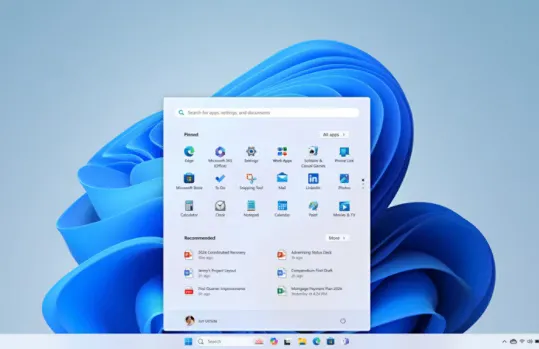
The confusion stems from the fact that Windows 11 includes a small “Recommended” section at the bottom of the Start menu. This section displays recently accessed files, apps, and other suggestions. And yes, this specific section was built using React Native for Windows.
But here’s where things get interesting: React Native for Windows is not your typical React implementation. It’s a specialized framework that compiles React code down to native Windows API calls, including WinUI 3. There’s no web view, no browser engine running in the background, and no JavaScript interpreter gobbling up your system resources.
Understanding React Native for Windows
React Native for Windows represents a fascinating approach to cross-platform development. Instead of running JavaScript in a browser-like environment, it translates React components directly into native Windows controls and API calls. This means the “Recommended” section in your Start menu is essentially compiled native code, just written using React’s component-based architecture.
This approach offers several advantages:
- Familiar Development Experience: Developers can use React’s declarative syntax and component model
- Native Performance: The final output is native Windows code, not interpreted JavaScript
- Code Reuse: Components can potentially be shared across different platforms
- Modern Architecture: Leverages React’s ecosystem and tooling
Performance Implications: Are We Overreacting?
The question of performance impact is where things get nuanced. Yes, there’s likely a small performance overhead compared to hand-written native code. However, this overhead is probably minimal—potentially even negligible—compared to the benefits of using a modern, maintainable codebase.
Consider this: modern JavaScript engines are incredibly fast, and React Native for Windows compiles down to optimized native code. The performance difference between this approach and traditional C#/.NET development might be smaller than many assume. In some cases, the abstraction layer could even result in more efficient code than what a developer might write manually.
The Bigger Picture: Windows’ UI Framework Proliferation
The real issue here isn’t whether a small section of the Start menu uses React Native for Windows. It’s the broader problem of Windows having too many UI frameworks:
- Win32: The traditional Windows API
- WinForms: .NET’s Windows Forms
- WPF: Windows Presentation Foundation
- UWP: Universal Windows Platform
- WinUI: Microsoft’s modern native framework
- React Native for Windows: The React-based approach
This fragmentation creates challenges for developers and can lead to inconsistent user experiences. However, Microsoft has been working to consolidate these frameworks, with WinUI emerging as the preferred choice for new Windows development.
Settings App: Another Victim of Misinformation
Just to add another layer of clarity: the Windows Settings app also isn’t built on a web framework, contrary to some claims circulating online. While it does use modern web-like technologies (including HTML and CSS-like styling), it’s not running a full web browser or JavaScript engine.
Why This Matters: Beyond the Technical Details
The React Start menu controversy highlights several important trends in software development:
1. Cross-Platform Development Pressure
Companies are under increasing pressure to develop applications that work across multiple platforms efficiently. This drives interest in frameworks that promise “write once, run anywhere” capabilities.
2. The Native vs. Web Debate
There’s an ongoing tension between native application development (which offers optimal performance and platform integration) and web-based approaches (which offer broader compatibility and faster development cycles).
3. Corporate Communication Challenges
Microsoft’s messaging around these technical decisions often lacks the clarity needed to prevent misunderstandings, leading to confusion and misinformation spreading rapidly through tech communities.
4. Performance vs. Productivity Trade-offs
Every engineering decision involves trade-offs. Using React Native for Windows might slightly impact performance but could significantly improve developer productivity and code maintainability.
Moving Forward: What Should We Actually Care About?
Instead of fixating on whether a small section of the Start menu uses React Native for Windows, we should be asking more substantive questions:
- Why does Windows still feel sluggish on modern hardware?
- Why are there so many redundant UI frameworks?
- How can Microsoft improve the overall Windows user experience?
- What’s the long-term strategy for Windows app development?
These are the questions that actually impact users’ daily experiences with Windows, not the specific technology choice for a small recommendation widget.
The Bottom Line
The Windows Start menu React controversy is largely a storm in a teacup. A small, optional section of the Start menu uses React Native for Windows, which compiles to native code rather than running JavaScript in a browser. The performance impact is likely minimal, and the technology choice probably made sense from a development perspective.
Microsoft’s quality commitment announcement is more about PR than revolutionary change. The company is making incremental improvements while continuing to evolve its technology stack. The real story isn’t about React or WinUI—it’s about Microsoft’s ongoing efforts to modernize Windows while managing developer expectations and user experience.
So can we please move on to discussing actual Windows quality issues now? The React Start menu debate has been entertaining, but there are far more important topics worthy of our collective attention in the Windows ecosystem.
Tags: #Windows #Microsoft #React #WinUI #StartMenu #TechNews #SoftwareDevelopment #Performance #UIFrameworks #CrossPlatform #Windows11 #TechControversy
Viral Phrases: “React Start menu drama,” “Microsoft quality commitment,” “Windows framework fragmentation,” “native vs web debate,” “tech misinformation,” “corporate PR moves,” “developer productivity vs performance,” “Windows modernization efforts,” “UI framework proliferation,” “tech community overreaction”
,


Leave a Reply
Want to join the discussion?Feel free to contribute!