
Not An April Fool’s Joke, You Can Run Linux and Windows on This Android Smartphone
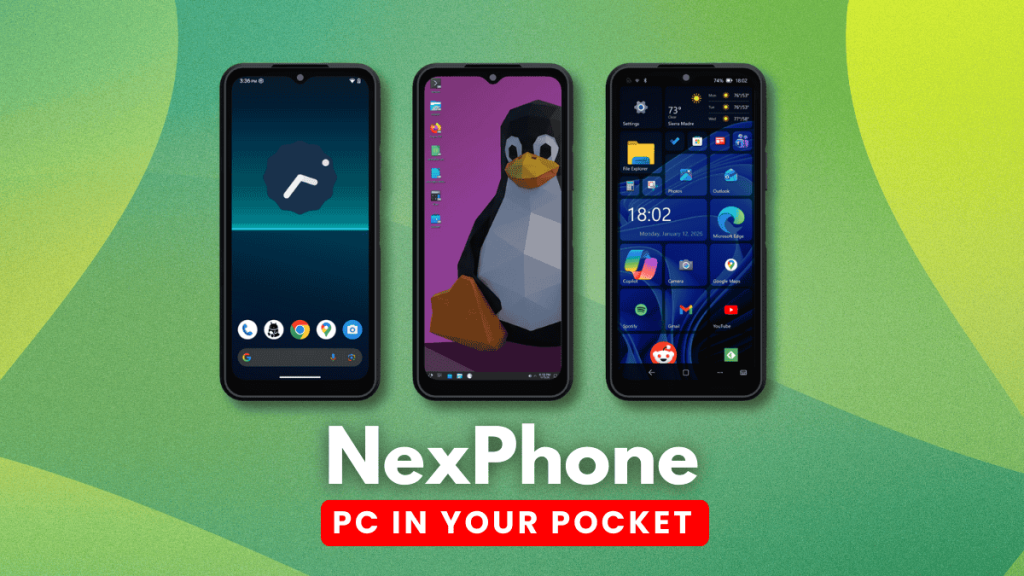
NexPhone: The 14-Year Dream Becomes Reality – Android 16, Debian, and Windows 11 in Your Pocket
In a stunning comeback that proves persistence pays off, Nex Computer has finally delivered on a vision first teased back in 2012: a smartphone that transforms into a complete desktop computing experience. The NexPhone isn’t just another Linux phone trying to find its place in the market—it’s a bold reimagining of what mobile computing could be.
The Long-Awaited Return of a Revolutionary Concept
Remember when Canonical first showed us Ubuntu for Android, promising a future where our phones could be our primary computers? That dream never quite materialized, but Nex Computer never gave up on the idea. Now, after 14 years of development and refinement, they’re ready to ship what might be the most versatile smartphone ever created.
The timing couldn’t be more interesting. While the Linux smartphone market continues to mature with options like PinePhone, Librem 5, and various Android-based alternatives, Nex Computer is taking a completely different approach. Instead of creating another niche Linux device, they’re building a mainstream Android phone that happens to offer unprecedented computing flexibility.
Hardware That Balances Performance and Practicality
Let’s address the elephant in the room: the NexPhone uses the Qualcomm QCM6490 processor, which some might consider dated by 2026 standards. However, Nex Computer is refreshingly honest about their positioning. This isn’t meant to compete with flagship killers or premium devices—it’s designed to be your secondary or backup phone that happens to offer capabilities far beyond what you’d expect.
The QCM6490, while not cutting-edge, is a proven performer that powered devices like the Fairphone 5. It features an Adreno 643 GPU that’s more than capable of handling the phone’s unique multitasking requirements. Paired with 12GB of RAM and 256GB of expandable storage (up to 512GB via microSD), the hardware package is surprisingly robust for its intended purpose.
Software: The Real Magic Happens Here
Where the NexPhone truly shines is in its software approach. Out of the box, you get NexOS, a clean, bloatware-free version of Android 16 that provides a smooth, modern smartphone experience. But that’s just the beginning.
Debian Linux runs as an application with GPU acceleration, meaning you can fire up a full Linux desktop environment without leaving your Android interface. This isn’t some limited container or chroot environment—it’s a genuine Debian installation with access to the full repository of Linux applications.
For those who need Windows compatibility, the NexPhone offers dual-boot Windows 11 functionality. Yes, you read that correctly—this Android phone can boot into Microsoft’s latest operating system. While this requires a restart to access, it opens up possibilities for running Windows-exclusive applications or providing a familiar environment for users transitioning from traditional PCs.
Desktop Transformation That Actually Works
The NexPhone’s ability to transform into a desktop workstation is perhaps its most compelling feature. By connecting to a USB-C or HDMI display and adding a keyboard and mouse, you get a full desktop computing experience. The included 5-port USB-C hub extends this functionality even further, allowing you to connect multiple peripherals simultaneously.
This isn’t just a novelty feature—it’s a practical solution for users who want to travel light without sacrificing computing power. Imagine carrying one device that handles your smartphone needs during the day and transforms into a capable desktop workstation when you need to get serious work done.
Camera System That Punches Above Its Weight
The NexPhone features a dual-camera setup that includes a 64MP wide Sony IMX787 sensor and a 13MP ultrawide Samsung S5K3L6XX. The front-facing camera is a 10MP Samsung S5K3J1SX. While these specifications might not compete with flagship smartphones, they’re more than adequate for most users and represent a significant upgrade over what you’d find on many Linux-focused devices.
Durability That Inspires Confidence
Nex Computer hasn’t cut corners on build quality. The NexPhone boasts MIL-STD-810H military-grade durability certification, along with IP68 and IP69K water and dust resistance ratings. At 256 grams (approximately 9.0 ounces), it has a substantial feel that suggests quality construction.
Complete Sensor Suite
The device includes a comprehensive array of sensors: fingerprint scanner, accelerometer, magnetometer, gyroscope, ambient light sensor, and proximity sensor. This ensures that the NexPhone can handle everything from basic smartphone functions to more advanced computing tasks that might require precise motion tracking or environmental sensing.
What the Founder Has to Say
Emre Kosmaz, Founder and CEO of Nex Computer, expressed his long-held vision: “NexPhone is the device I’ve wanted to carry for 14 years: a phone that becomes your Linux machine, your Windows PC, and your everyday Android device—without compromise on the idea. Reserving NexPhone is the strongest signal you can send that phone-as-PC should be the next standard.”
How to Get Yours
The NexPhone is priced at $549, positioning it as a mid-range device with premium capabilities. Interested buyers can reserve their unit with a $199 refundable deposit, which secures priority access and early-bird pricing. The remaining $350, plus shipping and applicable taxes, will be due at shipment.
The device is slated for a Q3 2026 release (July-September) with worldwide availability. This gives potential buyers several months to decide and ensure they’re ready for what could be a transformative computing experience.
The Verdict: A Niche Device with Massive Potential
The NexPhone isn’t for everyone. If you’re looking for the latest and greatest smartphone hardware, you’ll find better options elsewhere. However, if you’re intrigued by the idea of a single device that can handle your mobile needs while also serving as a capable desktop computer, the NexPhone represents a compelling option.
It’s particularly well-suited for developers, IT professionals, and tech enthusiasts who appreciate having multiple operating systems at their disposal. The ability to run Android, Debian Linux, and Windows 11 on the same device, coupled with the desktop transformation capabilities, makes it a unique tool in the mobile computing landscape.
The NexPhone represents more than just another smartphone—it’s a statement about the future of computing. As our digital lives become increasingly mobile-centric, devices that can adapt to different use cases and environments will become increasingly valuable. Nex Computer’s persistence in pursuing this vision, despite the challenges and the long development timeline, deserves recognition.
Whether the NexPhone becomes a mainstream success or remains a beloved niche device, it pushes the boundaries of what we expect from our mobile devices and challenges other manufacturers to think beyond traditional smartphone paradigms.
Tags: #NexPhone #Android16 #LinuxPhone #Windows11 #MobileComputing #TechInnovation #DualBoot #DesktopTransformation #NexOS #QualcommQCM6490 #TechNews2026
Viral Phrases: “The phone that becomes your PC,” “14 years in the making,” “Android, Linux, and Windows in your pocket,” “Your smartphone just got a serious upgrade,” “The future of mobile computing is here,” “One device to rule them all,” “Transform your phone into a desktop powerhouse,” “The ultimate tech geek’s dream device,” “Breaking the smartphone mold,” “Computing without compromise”
,

Leave a Reply
Want to join the discussion?Feel free to contribute!