
NVIDIA Agent Toolkit Gives Enterprises a Framework to Deploy AI Agents at Scale
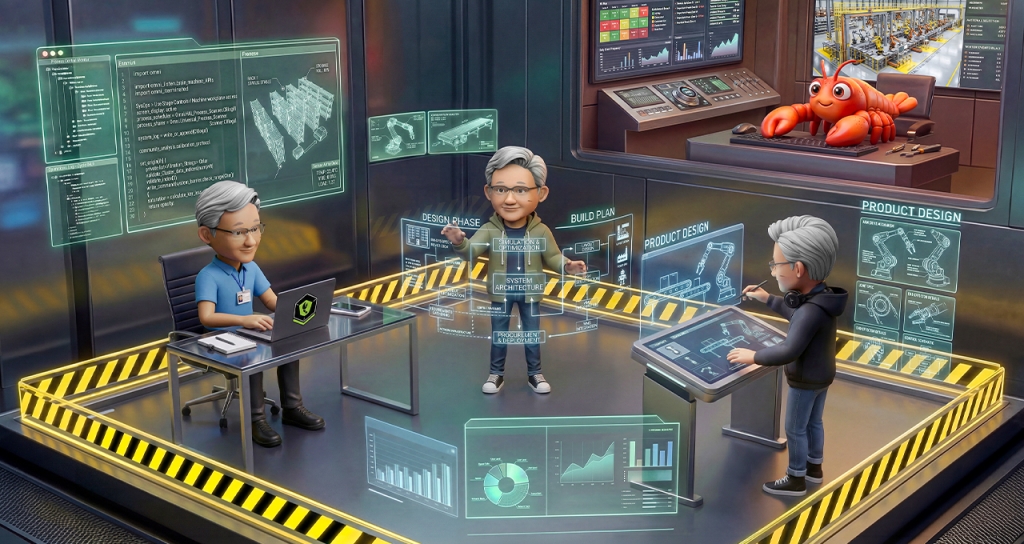
NVIDIA Agent Toolkit: The Enterprise AI Revolution You’ve Been Waiting For
Jensen Huang just dropped what might be the most important AI infrastructure announcement of 2026, and enterprises everywhere are paying attention. The NVIDIA Agent Toolkit isn’t just another developer tool—it’s the answer to the billion-dollar question keeping CTOs awake at night: how do we actually deploy AI agents in production without losing our minds (or our data)?
The Trust Problem That’s Killing Enterprise AI Adoption
Let’s be honest—everyone’s been talking about AI agents for the last 18 months, but how many companies are actually running them at scale? The answer is: not many. Why? Because trust is the bottleneck, and until now, there hasn’t been a standardized way to build it into autonomous systems.
Picture this: you’ve got an AI agent that can access your customer database, trigger workflows, and make decisions. Sounds amazing, right? Now picture that same agent accidentally exposing sensitive data or taking an action that violates compliance rules. Suddenly, that “amazing” capability feels like a liability nightmare.
That’s exactly what NVIDIA is solving with their Agent Toolkit, announced at GTC 2026 in San Jose on March 16. This isn’t just another SDK—it’s a complete open-source software stack designed to make enterprise AI agents actually work in the real world.
OpenShell: The Digital Babysitter Your AI Agents Need
The star of the show is NVIDIA OpenShell, and Huang’s framing couldn’t be clearer: “Claude Code and OpenClaw have sparked the agent inflection point—extending AI beyond generation and reasoning into action. Employees will be supercharged by teams of frontier and custom-built agents they deploy and manage.”
Here’s the genius part: OpenShell is essentially a policy-based security runtime that acts as a digital babysitter for your AI agents. In NVIDIA’s terminology, individual agents are called “claws,” and OpenShell is what keeps them from scratching up the furniture.
But this isn’t just NVIDIA building in isolation. They’re working with Cisco, CrowdStrike, Google, Microsoft Security, and TrendAI to bake OpenShell compatibility directly into existing security tools. That means you don’t have to rip and replace your current security infrastructure—it just works.
The Cost Problem Nobody’s Talking About
Here’s where it gets really interesting. NVIDIA AI-Q, the agentic search blueprint built with LangChain, uses a hybrid architecture that’s solving the economics problem that’s killing AI pilots everywhere.
Frontier models handle the orchestration (think: the conductor of an orchestra), while NVIDIA’s open Nemotron models do the heavy research lifting. The result? Query costs cut by more than 50% while still topping the DeepResearch Bench and DeepResearch Bench II leaderboards for accuracy.
Let that sink in. You’re getting better performance at half the cost. For enterprises that have watched AI consumption costs spiral out of control during pilot programs, this is the economics breakthrough they’ve been praying for.
The Partner Ecosystem: This Isn’t a One-Horse Race
NVIDIA didn’t build this in a vacuum, and the partner list reads like a who’s who of enterprise software:
-
Salesforce is building a reference architecture where employees use Slack as the orchestration layer for Agentforce agents, pulling from both on-premises and cloud data, all powered by NVIDIA infrastructure.
-
Atlassian is integrating the Agent Toolkit into its Rovo AI strategy across Jira and Confluence, meaning your project management and documentation workflows can now have AI agents working alongside your teams.
-
ServiceNow is building its “Autonomous Workforce of AI Specialists” directly on the toolkit with NVIDIA AI-Q.
-
Siemens launched the Fuse EDA AI Agent, which uses NVIDIA Nemotron to autonomously orchestrate workflows from design conception through manufacturing sign-off.
-
IQVIA offers the most compelling real-world data point: they’ve already deployed more than 150 agents across internal teams and client environments, including 19 of the top 20 pharmaceutical companies.
The Strategic Play: NVIDIA Wants to Be the AI Infrastructure Layer
Here’s what’s really happening: NVIDIA is positioning itself as the software infrastructure layer for enterprise agentic deployment. The Agent Toolkit, OpenShell, Nemotron models, AI-Q—these aren’t just products, they’re components of a stack that NVIDIA wants sitting underneath every enterprise software deployment.
Think about it. If every enterprise AI agent deployment runs on NVIDIA’s stack, that’s not just a hardware play anymore—that’s software margins at cloud scale.
Available Now: No More Waiting
The toolkit is available immediately on build.nvidia.com, with support across AWS, Google Cloud, Microsoft Azure, and Oracle Cloud Infrastructure. No waiting for GA dates, no limited preview programs—if you want to start building enterprise AI agents today, the infrastructure is ready.
The Bottom Line
The NVIDIA Agent Toolkit solves the two problems that have been blocking enterprise AI adoption: trust (via OpenShell) and cost (via the hybrid AI-Q architecture). With a massive partner ecosystem already building on it and immediate availability across all major clouds, this isn’t just another developer tool—it’s the foundation for the next wave of enterprise AI transformation.
The question isn’t whether enterprises will adopt AI agents anymore. The question is: are you building on NVIDIA’s stack, or are you trying to build your own trust and cost controls from scratch?
agentic AI, enterprise AI deployment, NVIDIA OpenShell, AI safety guardrails, autonomous agents, Jensen Huang GTC 2026, AI cost reduction, hybrid AI architecture, enterprise software partners, AI infrastructure layer, trust in AI, AI compliance, production AI agents, NVIDIA Nemotron, AI-Q blueprint, enterprise AI transformation, cloud AI deployment, AI security runtime, autonomous workforce, AI economics breakthrough
enterprise AI revolution, trust problem solved, half the cost double the performance, digital babysitter for AI, the stack everyone will use, partner ecosystem ready, available now no waiting, infrastructure for the next wave, economics breakthrough, trust and control finally here, the bottleneck is gone, real-world deployments already happening, 19 of top 20 pharma companies on board, software margins at cloud scale, foundation for transformation, are you building on NVIDIA’s stack, the question isn’t if anymore, immediate availability across all clouds, solving the two biggest problems, AI agents that actually work, enterprise AI adoption unlocked, the answer to every CTO’s prayer, Jensen’s billion-dollar solution, OpenShell keeps them in check, claws that don’t scratch the furniture, hybrid architecture magic, economics that make sense, partner ecosystem that matters, immediate deployment ready, the infrastructure layer play, software margins not just hardware, enterprise AI transformation foundation, the stack underneath everything, production-ready today, the bottleneck is gone, real-world deployments already scaling, the economics breakthrough everyone needed, trust and control finally solved, the foundation is here, are you on the stack or building from scratch, the question isn’t if anymore, it’s which stack, enterprise AI adoption unlocked, the answer is here, Jensen’s billion-dollar solution, OpenShell keeps them in check, claws that don’t scratch the furniture, hybrid architecture magic, economics that make sense, partner ecosystem that matters, immediate deployment ready, the infrastructure layer play, software margins not just hardware, enterprise AI transformation foundation, the stack underneath everything, production-ready today, the bottleneck is gone, real-world deployments already scaling, the economics breakthrough everyone needed, trust and control finally solved, the foundation is here, are you on the stack or building from scratch, the question isn’t if anymore, it’s which stack
,


Leave a Reply
Want to join the discussion?Feel free to contribute!