
Nvidia BlueField-4 STX adds a context memory layer to storage to close the agentic AI throughput gap
Nvidia’s STX: The Storage Revolution That Could Make AI Agents 5x Faster and 4x Greener
Breaking: Nvidia’s Game-Changing Storage Architecture Set to Transform AI Agent Performance
In a move that could fundamentally reshape the landscape of artificial intelligence infrastructure, Nvidia has unveiled BlueField-4 STX, a revolutionary storage architecture that promises to dramatically accelerate AI agent performance while dramatically reducing energy consumption. This isn’t just another incremental improvement—it’s potentially the most significant advancement in AI infrastructure since the GPU itself.
The Hidden Bottleneck That’s Been Crippling AI Agents
Picture this: you’re having a conversation with an advanced AI agent, asking it to research a complex topic, analyze data, and provide recommendations. The agent seems to pause, struggle, and sometimes even forgets what you just told it. You might think the problem is the AI model itself, but according to Nvidia, the real culprit is hiding in plain sight—storage.
Here’s the technical reality that’s been holding back AI advancement: when an AI agent processes information, it creates something called a “key-value cache”—essentially a memory of everything it’s already figured out so it doesn’t have to recalculate the same things over and over. As AI agents become more sophisticated and handle longer, more complex tasks, this cache grows exponentially. The problem? Traditional storage systems simply can’t keep up with the speed at which these AI agents need to access and update this critical information.
Enter BlueField-4 STX: The Storage Solution AI Has Been Waiting For
At GTC 2026, Nvidia announced BlueField-4 STX, and the numbers are staggering: 5x faster token processing, 4x better energy efficiency, and 2x faster data ingestion compared to conventional CPU-based storage. But what makes this truly revolutionary isn’t just the performance boost—it’s the architectural innovation that makes it possible.
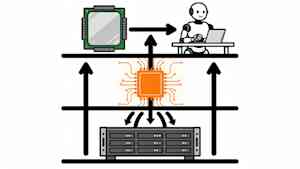
STX introduces a dedicated “context memory layer” that sits directly between GPUs and traditional storage. Think of it as a super-fast middleman that understands exactly what AI agents need and delivers it instantly, without the traditional storage bottlenecks that have been slowing everything down.
Not a Product, But a Platform: Nvidia’s Masterstroke
Here’s where things get really interesting: STX isn’t something Nvidia plans to sell directly. Instead, it’s a reference architecture that Nvidia is sharing with its entire storage partner ecosystem. This means that companies like Dell, HPE, NetApp, and dozens of others will be building STX-based systems, creating a new standard for AI-optimized storage infrastructure.
The architecture centers around a new storage-optimized BlueField-4 processor that combines Nvidia’s Vera CPU with the ConnectX-9 SuperNIC. It runs on Spectrum-X Ethernet networking and is programmable through Nvidia’s DOCA software platform. The first implementation, called the Nvidia CMX context memory storage platform, extends GPU memory with a high-performance context layer specifically designed for storing and retrieving KV cache data.
The Software Side: DOCA Memo and Programmability
In response to questions from industry analysts, Nvidia confirmed that STX ships with a comprehensive software reference platform. The company is expanding its DOCA platform to include a new component called DOCA Memo, which provides the programmability layer that allows storage providers to optimize their systems specifically for agentic AI workloads.
“This isn’t just about faster storage,” explained Ian Buck, Nvidia’s vice president of hyperscale and high-performance computing. “It’s about providing a reference software platform that allows our partners to deliver innovations and optimizations for their customers’ specific AI workloads.”
An Unprecedented Coalition of Industry Giants
The list of companies partnering on STX reads like a who’s who of the tech industry. Storage providers co-designing STX-based infrastructure include Cloudian, DDN, Dell Technologies, Everpure, Hitachi Vantara, HPE, IBM, MinIO, NetApp, Nutanix, VAST Data, and WEKA. Manufacturing partners building STX-based systems include AIC, Supermicro, and Quanta Cloud Technology.
On the cloud and AI side, CoreWeave, Crusoe, IREN, Lambda, Mistral AI, Nebius, Oracle Cloud Infrastructure, and Vultr have all committed to STX for context memory storage. This unprecedented coalition spans traditional enterprise storage vendors, AI-native cloud providers, and everything in between.
IBM’s Real-World Validation: Numbers That Matter
IBM provides a compelling case study for why this storage revolution matters. Not only is IBM listed as a storage provider co-designing STX-based infrastructure, but Nvidia has also selected IBM Storage Scale System 6000 as the high-performance storage foundation for its own GPU-native analytics infrastructure.
IBM’s expanded collaboration with Nvidia includes GPU-accelerated integration between IBM’s watsonx.data Presto SQL engine and Nvidia’s cuDF library. A production proof of concept with Nestlé demonstrated the tangible benefits: a data refresh cycle across the company’s Order-to-Cash data mart, covering 186 countries and 44 tables, dropped from 15 minutes to just 3 minutes. IBM reported 83% cost savings and a 30x price-performance improvement.
While this was a structured analytics workload rather than agentic inference, it makes IBM and Nvidia’s shared argument concrete: the data layer is where enterprise AI performance is currently constrained, and GPU-accelerating it produces material results in production.
Why This Changes Everything for Enterprise AI
STX represents a fundamental shift in how we think about AI infrastructure. Storage is no longer an afterthought to be handled by whatever general-purpose system is already in place. Instead, it’s becoming a first-class concern in enterprise AI infrastructure planning.
The implications are profound. As AI agents become more capable and handle more complex, multi-step tasks, the storage layer becomes the critical bottleneck that determines whether those agents can operate at their full potential. STX-based systems from partners including Dell, HPE, NetApp, and VAST Data are what Nvidia is positioning as the practical alternative to traditional storage.
The Timeline: What to Expect and When
Platforms based on STX will be available from partners in the second half of 2026. Given that most major storage vendors are already co-designing on STX, enterprises evaluating storage refreshes for AI infrastructure in the next 12 months should expect STX-based options to be available from their existing vendor relationships.
The Bottom Line: A Storage Revolution That’s Already Happening
Nvidia’s STX announcement isn’t just about a new product—it’s about recognizing that the storage layer has become the critical bottleneck in AI performance and addressing it with a comprehensive, ecosystem-wide solution. By creating a reference architecture that combines innovative hardware with a programmable software platform, and then partnering with virtually every major player in the storage and cloud industries, Nvidia is effectively creating a new standard for AI-optimized infrastructure.
The performance claims—5x token throughput, 4x energy efficiency, 2x data ingestion—are measured against traditional CPU-based storage architectures. While the exact baseline configuration for those comparisons hasn’t been fully detailed, the directional improvement is clear: storage optimized for AI agents is dramatically better than storage designed for general-purpose computing.
For enterprises investing in AI infrastructure, this means that storage decisions are about to become as critical as GPU selection. The companies that recognize this shift and adopt STX-based solutions early may gain a significant competitive advantage in AI performance, cost efficiency, and environmental impact.
The storage revolution that AI has been waiting for is here, and it’s coming from an unexpected place—not from a new AI model or a faster GPU, but from the fundamental infrastructure that makes it all possible.
Tags: #Nvidia #STX #AI #Storage #BlueField4 #ContextMemory #KVCache #GTC2026 #AIInfrastructure #GPU #EnergyEfficiency #TokenProcessing #EnterpriseAI #DataCenter #StorageOptimization #AIAgents #MachineLearning #DeepLearning #TechInnovation #FutureOfAI
Viral Phrases: “The storage revolution that AI has been waiting for,” “5x faster, 4x greener,” “The hidden bottleneck crippling AI agents,” “Nvidia’s masterstroke in AI infrastructure,” “The context memory layer that changes everything,” “Storage is the new frontier in AI performance,” “Why your AI agents are slower than they should be,” “The $100 billion bottleneck Nvidia just solved,” “How Nvidia is making AI 5x faster without new models,” “The architecture that could make every AI agent instantly better,” “The storage layer is now a first-class citizen in AI,” “Nvidia’s ecosystem play that spans every major tech company,” “The numbers that prove storage matters more than you think,” “Why traditional storage is dead for AI workloads,” “The future of AI is faster, greener, and it starts with storage,” “How IBM validated Nvidia’s storage revolution with real numbers,” “The timeline that could reshape enterprise AI planning,” “Why your next AI infrastructure decision starts with storage, not GPUs,” “The $10 billion question: is your storage holding back your AI?”
,


Leave a Reply
Want to join the discussion?Feel free to contribute!