
Nvidia Expects Agentic AI To Drive $1 Trillion In Revenue
NVIDIA’s Trillion-Dollar AI Gamble: Blackwell and Vera Rubin Platforms Poised to Reshape Global Tech
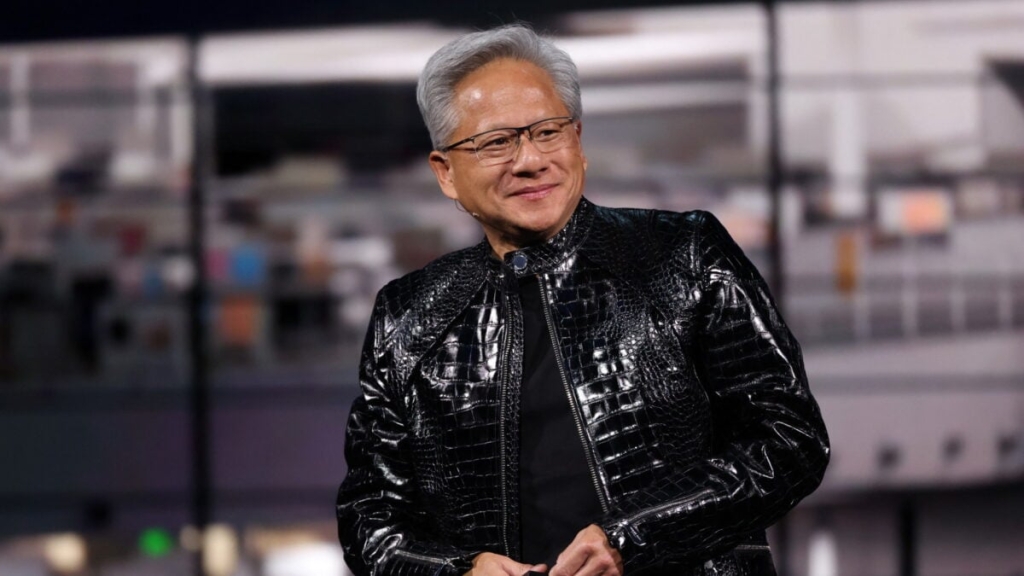
NVIDIA is setting its sights on an audacious milestone: generating $1 trillion in revenue through 2027 from its Blackwell and Vera Rubin platforms, CEO Jensen Huang announced at the annual GPU Technology Conference in San Jose, California. This projection represents a staggering 200% increase from the company’s previous forecast of $500 billion in revenue through 2026, announced just last year at the same conference.
“A trillion dollars is an enormous amount of infrastructure; you have to have complete confidence that the trillion dollars you’re putting down will be utilized, would be performant, would be incredibly cost-effective and have useful life for as long as you could see,” Huang told the audience of developers, engineers, and industry leaders.
The foundation for this confidence lies in NVIDIA’s bet on agentic AI—autonomous systems capable of reasoning, planning, and executing tasks with minimal human intervention. Huang argues that demand for AI will rise exponentially as these systems mature, fundamentally reshaping how businesses operate and how software is developed.
The Token-Driven AI Economy: A New Revenue Model
NVIDIA’s trillion-dollar projection is anchored in what Huang calls a “token-driven AI economy,” a concept he first detailed in the company’s latest earnings report. This new revenue model pivots on the rising importance of inference—the process by which AI models generate responses or complete tasks—as agentic AI proliferates.
“The inflection point for this new order came with Anthropic’s Claude Code AI agent,” Huang explained. “Claude Code has revolutionized software engineering. There’s not one software engineer [at NVIDIA] today who is not assisted by one or many AI agents helping them code.”
During his marathon keynote—which stretched beyond two and a half hours—Huang repeatedly positioned agentic AI as a foundational technology breakthrough on par with the internet or mobile computing. “Every single SaaS company will become an AgaaS company, an agentic as a service company,” he predicted.
From Training to Inference: The Shifting AI Landscape
The transformation Huang describes represents a fundamental shift in the AI ecosystem. Historically, the industry has focused on training large models—the computationally intensive process of teaching AI systems to recognize patterns and generate responses. However, as agentic AI matures, the volume of data these systems manage expands dramatically, and the importance of inference begins to outstrip that of training.
This shift explains NVIDIA’s strategic moves over the past year. In January, the company unveiled its Rubin platform with inference as the centerpiece. Weeks earlier, NVIDIA made its largest acquisition ever by purchasing Groq (not to be confused with Elon Musk’s Grok), a chipmaker specializing in inference acceleration.
Three Pillars of NVIDIA’s Agentic AI Strategy
NVIDIA’s renewed mission crystallized in three major announcements:
1. A Major Push into CPUs
Recognizing that AI workloads require more than just GPUs, NVIDIA is expanding into central processing units to create comprehensive AI infrastructure solutions.
2. NVIDIA’s First Groq Chips
The company will ship its first Groq-designed chips in the second half of this year, marking NVIDIA’s entry into specialized inference hardware.
3. Collaboration with OpenClaw
NVIDIA announced a partnership with OpenClaw, the open-source AI agent software that achieved viral success earlier this year after launching under a different name just months prior.
“OpenClaw has open-sourced, essentially, the operating system of agentic computers,” Huang said. “It is no different than how Windows made it possible for us to create personal computers.”
Huang drew parallels between the rise of agentic AI and the internet revolution, suggesting that just as every company once needed an “HTML strategy,” they will now need an “OpenClaw strategy.”
The Cybersecurity Minefield: OpenClaw’s Security Concerns
However, OpenClaw represents a double-edged sword. The agent requires full access to users’ computers and files, creating significant cybersecurity vulnerabilities. Top tech companies and even the Chinese government have reportedly advised employees against using OpenClaw and similar platforms due to security fears.
The risks became painfully apparent when an AI agent actually deleted a Meta executive’s entire inbox last month—a stark reminder of what can happen when AI systems are given boundless control over digital environments.
To address these concerns, Huang unveiled NemoClaw, NVIDIA’s attempt to make OpenClaw more secure and private for enterprise use. This move also signals NVIDIA’s desire to be more competitive in the open-source space, positioning itself as an emerging open-source model provider to drive further global reliance on its hardware.
Beyond Earth: NVIDIA’s Cosmic Ambitions
NVIDIA’s vision extends beyond terrestrial computing. Huang announced plans for a new Vera Rubin computer to be used in space-based AI data centers, pushing the boundaries of where and how AI infrastructure can operate.
The company is also partnering with major automakers including Hyundai, Nissan, and Chinese giants BYD and Geely to build 18 million robotaxis annually, demonstrating NVIDIA’s ambition to embed AI deeply into transportation infrastructure.
Investor Skepticism: The Growing AI Bubble Concerns
NVIDIA’s bold projections come amid growing skepticism in the finance world about the sustainability of AI investments. Investors who once celebrated multibillion-dollar AI spending commitments have grown increasingly wary, concerned that NVIDIA’s revenue growth might be peaking.
Bloomberg reported that NVIDIA shares fell 5.5% the day after a stellar earnings report last month, suggesting that even exceptional financial results may no longer be sufficient to satisfy market expectations. Despite Huang’s typically share-spiking keynote, NVIDIA shares were down slightly less than 1% after market close.
This investor caution reflects broader concerns about whether the rapid growth trajectory for AI demand can be sustained. The finance community is grappling with questions about whether we’re witnessing an AI bubble, with some analysts comparing the current situation to previous technology investment frenzies that ultimately corrected.
The Trillion-Dollar Question
NVIDIA’s trillion-dollar projection represents more than just ambitious revenue targets—it’s a statement of belief in the transformative power of agentic AI. If Huang’s vision proves correct, we could be witnessing the early stages of a technological revolution that fundamentally reshapes how humans interact with computers, how businesses operate, and how value is created in the digital economy.
However, the path to that trillion-dollar milestone is fraught with challenges: technological hurdles in scaling AI systems, cybersecurity risks from autonomous agents, geopolitical tensions around AI development, and the very real possibility that investor enthusiasm could wane if growth doesn’t materialize as projected.
Whether NVIDIA’s bet on agentic AI will pay off remains to be seen, but one thing is certain: the company is all-in on a future where AI agents don’t just assist humans—they become the primary interface through which we interact with the digital world.
Tags:
NVIDIA #AI #AgenticAI #Blackwell #VeraRubin #JensenHuang #GTC #MachineLearning #DeepLearning #OpenClaw #NemoClaw #Groq #Inference #Training #TokenEconomy #Robotaxis #SpaceAI #TechInnovation #SiliconValley #AIRevolution
Viral Phrases:
“A trillion dollars is an enormous amount of infrastructure”
“Every SaaS company will become an AgaaS company”
“OpenClaw has open-sourced the operating system of agentic computers”
“Claude Code has revolutionized software engineering”
“The new computer is agentic AI”
“HTML strategy is now OpenClaw strategy”
“Complete confidence in trillion-dollar infrastructure”
“Token-driven AI economy”
“Space-based AI data centers”
“18 million robotaxis annually”
“The cybersecurity minefield of OpenClaw”
“NVIDIA’s cosmic ambitions”
“The growing AI bubble concerns”
“Investor skepticism peaks”
“AI agents don’t just assist humans—they become the primary interface”
,

Leave a Reply
Want to join the discussion?Feel free to contribute!