
Nvidia GTC: Day 3 of AI Agent News, Disney Robots and More from the World’s Biggest Company
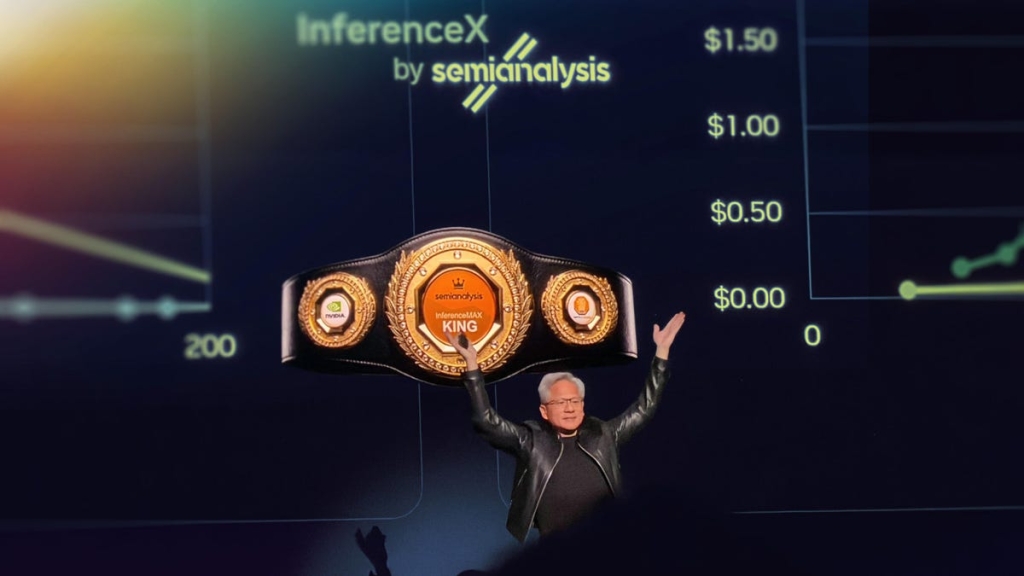
Nvidia CEO Jensen Huang: AI and Robots Won’t Replace Us—They’ll Fill the Gaps
At a time when artificial intelligence is reshaping industries at breakneck speed, one of the most pressing concerns is whether automation will wipe out human jobs. This fear has sparked intense debates among economists, tech leaders, and workers alike. Yet, Jensen Huang, the visionary CEO of Nvidia, one of the world’s largest AI companies, isn’t sweating it.
In a recent discussion, Huang offered a refreshingly optimistic take on the future of work in an AI-driven world. His perspective is worth examining closely—not just because of his position at the helm of a trillion-dollar AI powerhouse, but because it challenges the prevailing narrative of AI as a job-killing force.
The Manufacturing Paradox: Labor Shortages Meet Automation
Huang began by addressing a fundamental paradox in today’s economy: labor shortages coexisting with high employment rates. He pointed specifically to the manufacturing sector, a critical backbone of the AI ecosystem. “Employment is very high, and yet many companies don’t have enough labor,” Huang observed. “Robots will fill in that gap.”
This isn’t just about convenience—it’s about necessity. The AI revolution demands massive infrastructure, particularly data centers that power millions of AI agents and applications. Without sufficient human workers to build and maintain this infrastructure, the entire AI ecosystem could stall. Huang’s solution? Robotic automation stepping in where human labor falls short.
But here’s where Huang’s vision gets interesting: he doesn’t see this as a zero-sum game where robots take jobs and humans are left behind. Instead, he predicts a virtuous cycle where automation enables economic growth, which in turn creates more opportunities for human workers.
The Evolution of Work: From Doing to Supervising
The jobs of tomorrow, according to Huang, won’t necessarily disappear—they’ll transform. “Instead of doing tasks yourself, you may be managing or supervising a robot or AI agent,” he explained. This shift represents a fundamental change in how we conceptualize work.
Think about it: today’s factory worker might become tomorrow’s robot supervisor. The cashier might evolve into a customer experience coordinator who oversees automated checkout systems. The truck driver could become a fleet manager monitoring autonomous vehicles. In each case, the human role shifts from execution to oversight, strategy, and problem-solving.
This isn’t theoretical—it’s already happening. Companies are increasingly deploying AI systems that handle routine tasks while humans focus on higher-level decision-making, creativity, and customer relationships. The key difference is that these human roles often require new skills and a different mindset.
The Uncomfortable Truth: Some Jobs Will Disappear
Huang’s optimism shouldn’t be mistaken for denial. He acknowledges, as any honest observer must, that technological revolutions inevitably create winners and losers. “As with any technological revolution, there will be job losses because of AI,” he admits.
This reality hit home recently when legacy tech companies saw their stock prices tumble. Salesforce, Workday, and others experienced dramatic falls after Anthropic demonstrated AI capabilities that could disrupt their core business models. These market reactions reflect investor concerns about which companies and job categories will survive the AI transition.
The pattern is familiar from previous technological shifts. When personal computers emerged, typing pools vanished. When ATMs appeared, bank teller roles changed dramatically. When e-commerce grew, traditional retail workers faced new challenges. Each time, some jobs disappeared while others emerged—often in ways that were hard to predict in advance.
The CEO’s Perspective: Self-Interest or Insight?
It’s worth pausing to consider Huang’s position. As CEO of Nvidia, he has a clear financial interest in AI’s success. If AI were to crash the economy or eliminate most jobs, his company’s growth would stall. This context matters when evaluating his predictions.
When Huang says he isn’t worried about AI taking his job, it’s a statement few of us can relate to. CEOs of major tech companies operate in a different universe than most workers. Their concerns about automation are more strategic than personal. This disconnect between executive perspectives and worker realities is a recurring theme in technology transitions.
Yet, Huang’s insights might still hold value precisely because of his vantage point. As someone who builds the tools driving this transformation, he has unique visibility into where AI is heading and how it might integrate with human workflows.
The Irony of Modern Busyness
Perhaps the most relatable moment in Huang’s discussion came when he reflected on how AI has affected our daily lives. “When was the last time you sat on a rocking chair on your porch and drank a glass of lemonade and watched the sun go down?” he asked, his question carrying both humor and truth. “We’re busier than ever.”
This observation cuts to the heart of the AI paradox. Despite promises of automation making life easier, many people feel more overwhelmed than ever. Email volume hasn’t decreased with better spam filters. Productivity tools haven’t necessarily given us more leisure time. Instead, we often use technological gains to do more, not to work less.
Huang’s point suggests that AI might follow the same pattern. Rather than freeing us from work entirely, it might enable us to take on more complex, interesting challenges—or simply more work of all kinds. The question isn’t whether AI will make us busier, but whether that busyness will be more fulfilling and valuable.
Looking Ahead: The Human Element
The debate over AI and jobs ultimately comes down to how we value human work. If we see humans primarily as task-executors, then automation looks threatening. If we see humans as creative problem-solvers, relationship builders, and strategic thinkers, then AI becomes a tool for augmentation rather than replacement.
Huang’s vision leans toward the latter view. He sees a future where humans and AI systems complement each other, with automation handling routine tasks while humans focus on what they do best: innovating, empathizing, and making complex judgments.
This future isn’t guaranteed. It requires intentional choices about how we deploy AI, how we train workers for new roles, and how we structure our economies to ensure that technological gains benefit everyone. It also requires acknowledging that some people will struggle through transitions that others navigate smoothly.
The AI revolution, like previous technological transformations, will likely prove both disruptive and creative. Some doors will close while others open. The challenge—and opportunity—lies in ensuring that as many people as possible can walk through those new openings.
As we continue this journey into an AI-enabled future, perspectives like Huang’s remind us that the story isn’t simply about machines replacing humans. It’s about how we choose to integrate new capabilities into our lives and work, and whether we can create a future where technology amplifies rather than diminishes human potential.
Tags: #AI #Automation #Jobs #Robotics #Nvidia #JensenHuang #FutureOfWork #Technology #Manufacturing #EconomicGrowth #HumanPotential
Viral Phrases:
- “Robots will fill in that gap”
- “Instead of doing tasks yourself, you may be managing or supervising a robot”
- “When was the last time you sat on a rocking chair on your porch and drank a glass of lemonade and watched the sun go down?”
- “We’re busier than ever”
- “The AI revolution will prove both disruptive and creative”
- “Technology amplifies rather than diminishes human potential”
- “Humans and AI systems complement each other”
- “The story isn’t simply about machines replacing humans”
,

Leave a Reply
Want to join the discussion?Feel free to contribute!