
Nvidia is quietly building a multibillion-dollar behemoth to rival its chips business
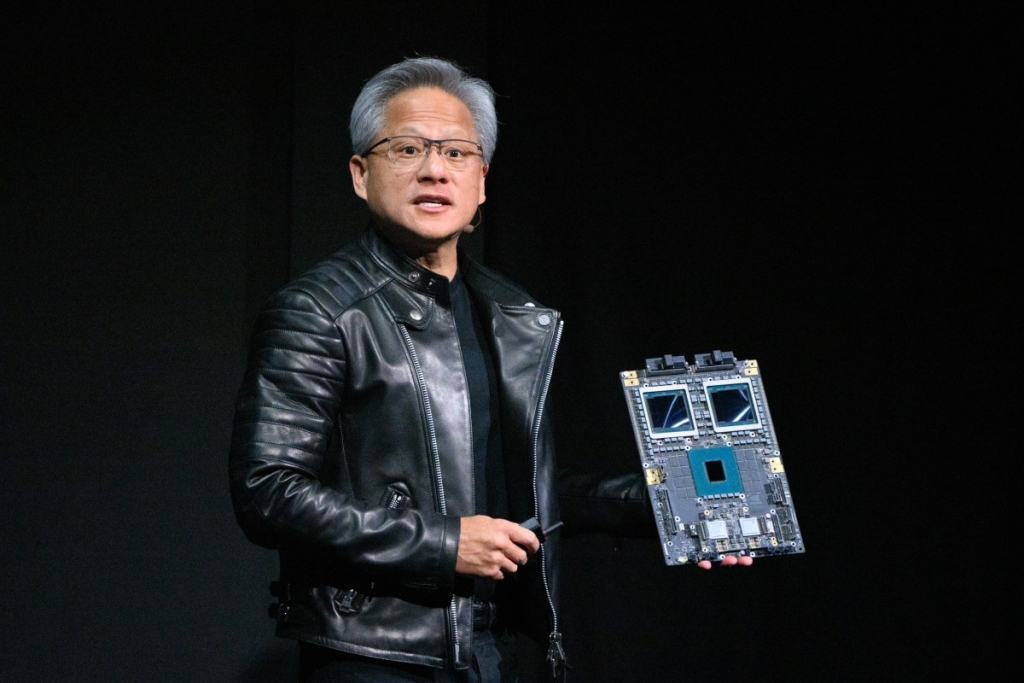
Nvidia’s Secret Weapon: The $11 Billion Networking Empire That’s Powering the AI Revolution
In the high-stakes, high-speed world of artificial intelligence, every tech giant is racing to build the most powerful data centers, the fastest chips, and the smartest algorithms. But while Nvidia is universally celebrated for its groundbreaking GPUs, there’s a lesser-known story unfolding behind the scenes—one that could very well be the key to the company’s next wave of dominance. Nvidia’s networking business, once a quiet acquisition, has exploded into a $31 billion juggernaut, quietly powering the AI revolution from the shadows.
The Visionary Move That Changed Everything
Rewind to 2010. While most of the tech world was still grappling with the basics of cloud computing, Nvidia CEO Jensen Huang was already dreaming of a future driven by artificial intelligence. He pushed his company to start developing AI-specific chips, a gamble that would take over a decade to pay off—but when it did, it changed everything.
Fast forward to 2020. Huang saw another gap in the market: the need for ultra-fast, ultra-reliable data center networking. His solution? The $7 billion acquisition of Mellanox, an Israeli networking powerhouse. At the time, some questioned the move. But as AI workloads exploded, so did the value of that acquisition. Today, Nvidia’s networking business is its second-largest revenue driver, raking in $11 billion in just the last quarter—a staggering 267% year-over-year increase.
More Than Just Cables and Switches
When most people think of networking, they picture plugging in a printer or connecting to Wi-Fi. But in the world of AI, networking is the backbone of everything. Nvidia’s networking division isn’t just about moving data—it’s about moving it at mind-bending speeds, with zero latency, across sprawling data centers that are now being called “AI factories.”
The tech behind this includes NVLink, which lets GPUs talk to each other at lightning speed; Nvidia InfiniBand Switches, a platform for in-network computing; Spectrum-X, an Ethernet platform built for AI; and co-packaged optics switches, among others. Together, these technologies form the nervous system of the modern AI factory—a data center purpose-built for training the next generation of AI models.
The Numbers That Shock Even Analysts
To put Nvidia’s networking success in perspective, consider this: last quarter, the division brought in $11 billion. That’s more than Cisco’s entire networking business makes in a year. In fact, Nvidia’s networking division does in one quarter what Cisco’s does in 12 months.
Kevin Cook, a senior equity strategist at Zacks Investment Research, calls it “one of the most impressive new segments from the company.” And yet, for all its financial clout, the networking business remains in the shadow of Nvidia’s GPU division and even its gaming business, which, despite being nearly three times smaller, still gets more attention.
The Mellanox Connection
The roots of Nvidia’s networking empire trace back to Mellanox, a company founded in Israel in 1999. When Nvidia acquired Mellanox in 2020, it wasn’t just buying a company—it was buying a critical piece of the AI puzzle. Kevin Deierling, now senior vice president of networking at Nvidia, joined through the acquisition. He admits that even he didn’t fully grasp the significance of the move at first.
“People think of networking as just, ‘I got a printer, and I need to connect to it,’” Deierling told TechCrunch. But Huang saw something bigger: the data center as the new unit of computing. Networking, in this context, isn’t a peripheral—it’s the foundation.
The Full-Stack Advantage
One of the secrets to Nvidia’s networking success is its full-stack approach. Unlike competitors who sell individual components, Nvidia only sells complete, integrated solutions—and it doesn’t even sell them directly. Instead, it works through partners, ensuring that every piece of the puzzle fits perfectly with its GPUs.
“I can’t think of other companies that have the full-stack capabilities that we have,” Deierling said. “We build the full compute stack, fully integrated, and then we go to market through all of our partners.”
This strategy ensures that when customers buy Nvidia networking tech, it’s already optimized to work seamlessly with Nvidia’s GPUs—creating a moat that’s hard for competitors to cross.
GTC 2026: The Next Chapter
At Nvidia’s annual GTC technology conference in March 2026, Huang unveiled the next generation of Nvidia’s networking and computing platforms. The new Nvidia Rubin platform includes six new chips designed to power an “AI supercomputer.” The company also announced the Nvidia Inference Context Memory Storage platform and more efficient Spectrum-X Ethernet Photonics switches, among other innovations.
“It’s no longer a peripheral to connect the printer, some other slow I/O device,” Deierling said. “It’s fundamental to the computer. Today, the network is the back lining of the AI factory, and it’s super important.”
The Future Is Networking
As AI models grow ever larger and more complex, the demand for ultra-fast, ultra-reliable networking will only increase. Nvidia’s bet on Mellanox is looking more prescient by the day. With its full-stack approach, relentless innovation, and deep integration with its GPU business, Nvidia’s networking division is poised to be a cornerstone of the AI revolution for years to come.
In a world where data is the new oil, Nvidia isn’t just drilling for it—it’s building the pipelines, refineries, and distribution networks that will keep the AI economy humming. And if history is any guide, Jensen Huang’s latest vision may be the one that defines the next decade of technology.
Tags: Nvidia, AI, Networking, Mellanox, Data Centers, GPUs, Jensen Huang, Spectrum-X, NVLink, InfiniBand, AI Factory, GTC 2026, Rubin Platform, Full-Stack Solution, Tech Acquisition
Viral Phrases:
- “The data center is the new unit of computing.”
- “Networking is the back lining of the AI factory.”
- “Nvidia does in one quarter what Cisco does in a year.”
- “The $7 billion bet that’s now worth $31 billion.”
- “The secret weapon behind Nvidia’s AI dominance.”
- “From printer cables to AI superhighways.”
- “Jensen Huang’s $7B masterstroke.”
- “The full-stack moat that keeps competitors out.”
- “Nvidia’s networking: the unsung hero of the AI boom.”
- “The quiet revolution powering the AI gold rush.”
,


Leave a Reply
Want to join the discussion?Feel free to contribute!