
Nvidia quarterly earnings show immunity to AI bubble fears as it cashes in on datacenter boom | Technology
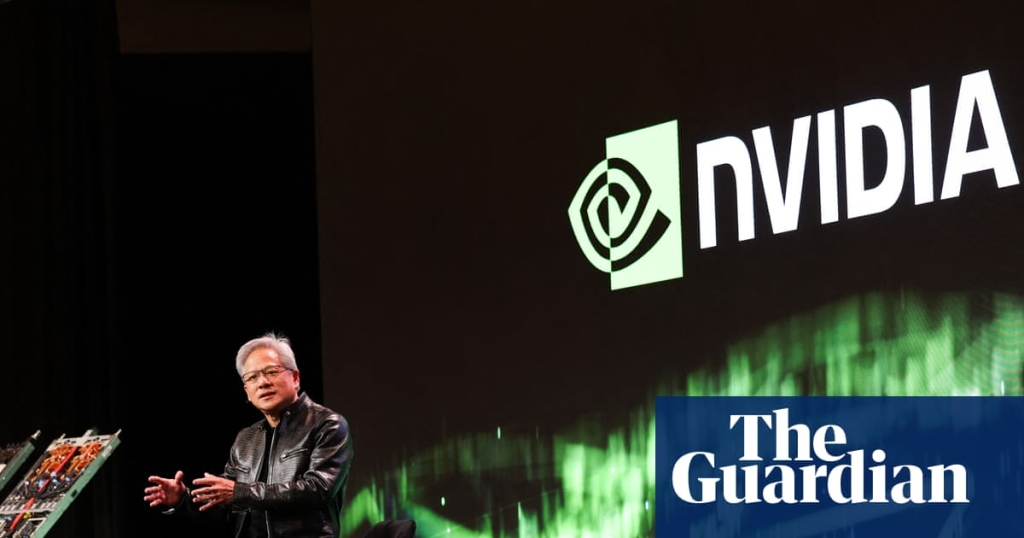
Nvidia Shatters Records Again, Proving AI’s Unstoppable Momentum
In a jaw-dropping display of dominance, Nvidia has once again proven why it’s the undisputed king of the AI revolution. The semiconductor giant’s latest quarterly earnings report reads like a Silicon Valley fever dream, with numbers so astronomical they almost defy belief.
Let’s cut straight to the chase: Nvidia just posted a staggering $68.13 billion in quarterly revenue, obliterating Wall Street’s already lofty expectations of $66.2 billion. But here’s where it gets really wild—the company’s earnings per share hit $1.62, leaving analysts’ predictions of $1.53 in the dust. This isn’t just beating expectations; it’s making them look like amateur hour.
The real story, though, is in the datacenter business, which now accounts for the vast majority of Nvidia’s revenue. We’re talking about a mind-blowing 75% year-over-year growth, bringing in a cool $62.3 billion. For context, that’s more than the GDP of many small countries. This explosive growth is being fueled by the tech industry’s insatiable appetite for AI infrastructure—companies are building “AI factories” at a pace that would make Henry Ford dizzy.
Jensen Huang, Nvidia’s visionary CEO (and let’s be honest, tech’s most charismatic showman), didn’t mince words during the earnings call. “Our customers are racing to invest in AI compute—the factories powering the AI industrial revolution and their future growth,” he declared. This isn’t just business; it’s a full-blown technological gold rush, and Nvidia owns the picks and shovels.
The numbers get even more absurd when you zoom out. For the fiscal year, Nvidia posted a total profit of $120 billion. That’s billion with a “B.” To put that in perspective, that’s enough money to buy the entire NBA, NFL, and MLB, then have enough left over to purchase the English Premier League. Twice.
What makes this particularly remarkable is the context. While other tech giants in the so-called “Magnificent Seven” have seen their shares stumble at the start of the year amid concerns about massive AI spending, Nvidia has been the rock-solid reassurance that the market needed. The stock rallied ahead of the earnings report, and while it rose about 3% in after-hours trading immediately following the announcement, the gains moderated to less than 1% as the day progressed—still impressive for a company already valued in the stratosphere.
This marks another chapter in Nvidia’s unprecedented streak of beating Wall Street expectations every single quarter throughout the 2024 and 2025 fiscal years. It’s not just consistency; it’s a level of performance that’s rewriting the rules of what’s possible in the tech industry.
But it’s not all smooth sailing. The company faces increased scrutiny over its complex web of multibillion-dollar deals with AI firms like OpenAI. There’s growing concern about the “circular nature” of these deals—where Nvidia invests in a company, which then turns around and buys Nvidia’s chips. Some analysts worry this could indicate that the AI industry’s foundations might be shakier than they appear on the surface.
Speaking of OpenAI, one of Nvidia’s marquee deals—a proposed $100 billion investment—fell through earlier this month. Instead, Nvidia will reportedly invest $30 billion as OpenAI seeks to go public later this year at a valuation of about $730 billion. Huang remains optimistic, stating, “We continue to work with OpenAI towards a partnership agreement, and believe we are close.”
Throughout all this, Huang has maintained his characteristic optimism about AI’s impact on the workforce. He’s repeatedly pushed back against fears of AI replacing workers, most recently dismissing concerns about AI replacing software technologies during a global selloff of software stocks. At the World Economic Forum in Davos, he framed AI as a job creator that would unlock productivity gains and become core to international infrastructure.
“In this new world of AI, compute equals revenues,” Huang said on the call, and the numbers back him up. The company’s growth trajectory suggests we’re still in the early innings of the AI revolution, with Nvidia positioned as the primary beneficiary.
However, the market’s nerves are showing. After years of AI enthusiasm, some investors are growing skittish about potential volatility or negative economic effects. This anxiety was starkly illustrated this week when a piece of speculative fiction from a research firm caused a market downturn and panic on Wall Street. The fictional scenario outlined an imagined future where AI had caused surging unemployment—a reminder that even in the midst of Nvidia’s triumph, there are underlying concerns about the technology’s long-term impact.
What’s clear is that Nvidia isn’t just riding the AI wave—it’s the surfboard, the ocean, and the surfer all at once. As we barrel forward into an increasingly AI-driven future, all eyes will remain on this semiconductor juggernaut to see if it can maintain its breathtaking pace of growth.
Tags: #Nvidia #AI #Earnings #TechGiant #Datacenter #ArtificialIntelligence #WallStreet #JensenHuang #OpenAI #TechRevolution #Semiconductors #MarketDominance #Innovation
Viral Phrases: “AI industrial revolution,” “compute equals revenues,” “AI factories,” “the backbone of the artificial intelligence boom,” “racing to invest in AI compute,” “sky-high expectations,” “jaw-dropping display of dominance,” “Silicon Valley fever dream,” “technological gold rush,” “unprecedented streak,” “breathtaking pace of growth,” “mind-blowing 75% year-over-year growth,” “staggering $68.13 billion,” “cool $62.3 billion,” “level of performance that’s rewriting the rules”
,


Leave a Reply
Want to join the discussion?Feel free to contribute!