
NVIDIA’s H200 wins approval but its entry into China remains uncertain · TechNode
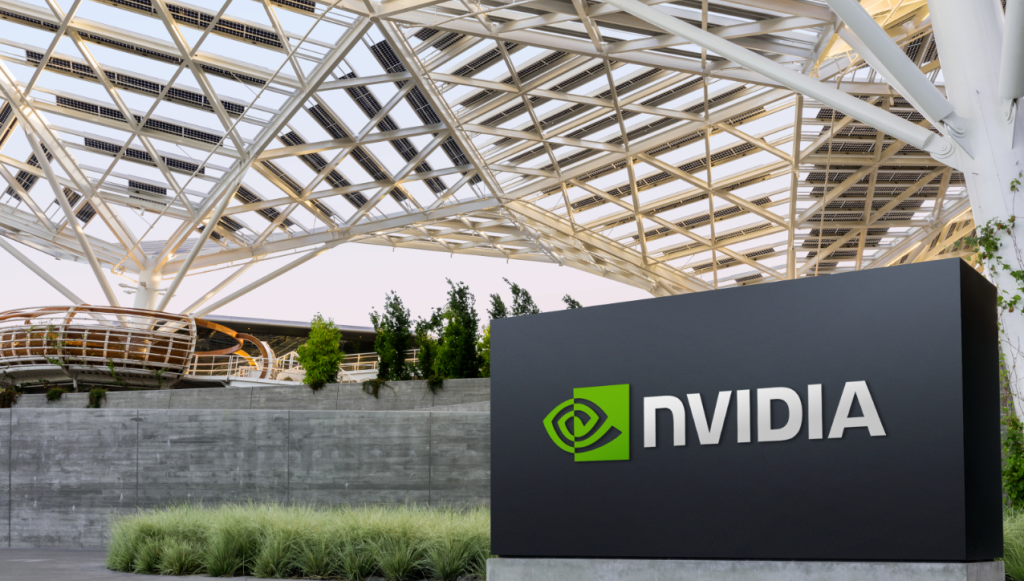
China’s Tech Giants Circle NVIDIA’s H200 Chips as US Approval Sparks Market Buzz
In a seismic shift for the global semiconductor and AI landscape, reports have emerged that China’s tech titans—including ByteDance, Alibaba, and Tencent—are in talks with NVIDIA to potentially purchase the newly approved H200 AI chips. This development follows US President Donald Trump’s announcement that NVIDIA would be allowed to export its H200 chips to “approved customers” in China, albeit under strict conditions.
The news has sent ripples through the tech industry, as the H200 represents one of NVIDIA’s most advanced AI chips, capable of delivering unparalleled performance for large-scale AI model training. For Chinese companies, this could be a game-changer, especially as they grapple with the limitations of domestic alternatives.
Why This Matters
The H200’s potential entry into the Chinese market is more than just a business transaction—it’s a geopolitical chess move. While the US has given the green light for exports, the final decision hinges on a complex interplay of policy, market demand, and the readiness of Chinese firms to adopt homegrown alternatives. The stakes are high: for NVIDIA, it’s a chance to reclaim a significant portion of the Chinese market; for China, it’s a test of its ability to balance reliance on foreign tech with its push for self-sufficiency.
The H200: A Chip Above the Rest
The NVIDIA H200 is no ordinary AI chip. Built on the Hopper architecture, it boasts 141GB of HBM3e memory and delivers up to 8 petaflops of FP8 performance. This makes it particularly well-suited for training large language models (LLMs) and other AI workloads that require massive computational power. For Chinese companies like ByteDance and Alibaba, which are at the forefront of AI innovation, the H200 could provide the edge they need to stay competitive on the global stage.
However, the H200’s superiority comes with a caveat: it’s not just about raw performance. The chip’s ability to handle complex AI training tasks far surpasses that of current Chinese-made alternatives, which are generally optimized for inference rather than training. This has made the H200 an attractive proposition for Chinese firms, despite the geopolitical risks involved.
China’s Tech Giants Circle the H200
According to sources familiar with the matter, ByteDance and Alibaba have already reached out to NVIDIA to explore potential purchases. Tencent, another major player in China’s tech ecosystem, is also reportedly in the mix. These companies are keen to secure the H200, but they’re not without reservations. Supply chain concerns and the uncertainty of regulatory approval loom large, prompting them to seek clarity from NVIDIA on both fronts.
The interest from these tech giants underscores the critical role that advanced AI chips play in driving innovation. For ByteDance, the H200 could supercharge its AI-driven content recommendation algorithms, while Alibaba could leverage it to enhance its cloud computing and e-commerce platforms. Tencent, with its diverse portfolio spanning gaming, social media, and fintech, could use the H200 to push the boundaries of AI in multiple domains.
Regulatory Hurdles and Strategic Calculations
While the US has given the green light for H200 exports, the path to the Chinese market is far from clear. Chinese regulators are reportedly evaluating the potential demand for the H200 and may require companies to submit detailed use cases for approval. This cautious approach reflects Beijing’s broader strategy of encouraging domestic firms to adopt homegrown AI chips, such as those from Cambricon, a leading Chinese semiconductor company.
The decision to allow H200 imports is a delicate balancing act for China. On one hand, the H200’s superior performance could accelerate AI development and innovation. On the other hand, it risks deepening China’s reliance on US technology, which runs counter to its long-term goal of achieving technological self-sufficiency. As one source put it, “Beijing is weighing the costs and benefits of allowing H200 imports, as it aims to continue encouraging domestic firms to adopt homegrown AI chips.”
The US Angle: Revenue Share and Restrictions
The H200’s potential entry into China is not just a win for NVIDIA—it’s also a strategic move for the US. Under the terms of the export approval, NVIDIA will be required to pay a 25% revenue share to the US government for each sale. This not only generates revenue for the US but also ensures that the export of advanced technology remains under tight control.
However, the deal comes with significant restrictions. While the H200 is now cleared for export, NVIDIA’s cutting-edge Blackwell and Rubin series remain banned. This means that while Chinese companies can access a powerful AI chip, they are still barred from the latest and greatest in NVIDIA’s lineup. This selective approach reflects the US’s broader strategy of maintaining its technological edge while still engaging with the Chinese market.
The Road Ahead: Uncertainty and Opportunity
As Chinese tech giants circle the H200, the future remains uncertain. Will regulators approve the purchases? Can NVIDIA meet the demand? And how will this impact the development of domestic AI chips in China? These questions loom large as the industry watches closely.
For now, the H200 represents a tantalizing opportunity for Chinese companies to access cutting-edge AI technology. But it also serves as a reminder of the complex interplay between technology, geopolitics, and market dynamics. As the situation unfolds, one thing is clear: the race for AI supremacy is far from over, and the H200 could be a pivotal piece in this high-stakes game.
Tags & Viral Phrases:
NVIDIA H200, AI chips, China tech giants, ByteDance, Alibaba, Tencent, US-China tech war, semiconductor export, AI training, Hopper architecture, HBM3e memory, FP8 performance, Cambricon, Blackwell series, Rubin series, geopolitical tech, AI innovation, self-sufficiency, revenue share, regulatory approval, supply chain concerns, large language models, cloud computing, e-commerce, gaming, fintech, content recommendation, technological edge, market dynamics, high-stakes game.
,


Leave a Reply
Want to join the discussion?Feel free to contribute!