
Oldest Fossilized Butthole Found in 290-Million-Year-Old Reptile : ScienceAlert
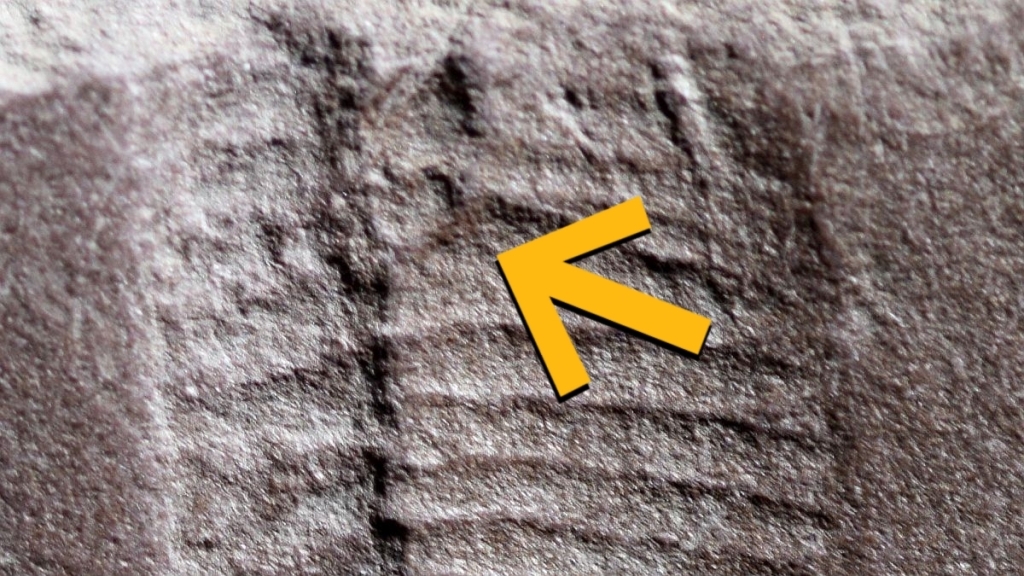
300-Million-Year-Old Reptile Fossil Unearthed in Germany Reveals Oldest Known Cloaca in History
In a stunning discovery that’s sending shockwaves through the paleontology community, researchers have uncovered the world’s oldest known reptile skin fossil—complete with preserved scales and what appears to be the earliest recorded evidence of a cloaca, the all-purpose opening used by many animals for excretion, reproduction, and egg-laying.
The remarkable find, dating back approximately 295 million years to the early Permian period, was made in the Goldlauter Formation of Germany’s Thuringian Forest Basin. The fossil, which researchers have named Cabarzichnus pulchrus, represents not just a new species but a groundbreaking window into the evolutionary history of reptiles.
“This is an extraordinary find that pushes back our understanding of reptile evolution by hundreds of millions of years,” explains Dr. Lorenzo Marchetti, paleontologist at the German Natural History Museum in Berlin and lead researcher on the project. “Such soft-tissue structures are extremely rare in the fossil record—and the further back we look in Earth’s history, the more exceptional they become.”
A Prehistoric Resting Spot That Changed Everything
The story of this fossil begins with a simple moment in prehistoric time: a small reptile, approximately 9 centimeters (3.5 inches) in length, paused to rest in the soft mud of a primordial landscape. That brief respite, occurring during the Asselian age of the early Permian, would ultimately preserve an unprecedented snapshot of ancient life.
The reptile’s body left behind a detailed impression in the sediment, capturing not just its general shape but intricate anatomical features that typically decay away long before fossilization can occur. The creature’s belly scales, tail structure, and remarkably, its posterior anatomy were all preserved in stunning detail.
Based on the fossil’s size and nearby trackways, researchers believe C. pulchrus was likely a bolosaurian—an early branch of the reptile lineage that emerged during a critical period when reptiles were beginning to rapidly diversify and establish themselves as dominant terrestrial vertebrates.
The Cloaca Revelation: Rewriting Evolutionary History
The most sensational aspect of this discovery is undoubtedly the preserved cloaca at the base of the creature’s tail. This multi-functional opening, visible as a vent-like structure surrounded by modified scales, represents the earliest fossil evidence of such anatomy in amniotes—the group that includes reptiles, birds, and mammals.
This finding is particularly significant because it predates the previous record-holder, a Psittacosaurus dinosaur butthole dated to around 120 million years ago, by an astonishing 175 million years. The preservation is so detailed that researchers can observe the distinctive scale patterns surrounding the cloacal opening, providing crucial insights into how these structures evolved over time.
What makes this discovery even more fascinating is the cloaca’s unique morphology. Unlike the structures found in dinosaurs, Psittacosaurus, and crocodiles, C. pulchrus‘s cloaca bears a striking resemblance to those found in modern turtles, lizards, and snakes. This suggests that the basic design of this anatomical feature has remained remarkably consistent across vast evolutionary timescales.
Skin Deep: Understanding Ancient Reptile Armor
Beyond the cloacal revelation, the fossil preserves rows of polygonal skin scales across the creature’s trunk, limbs, head, and tail. Through careful analysis, researchers determined these are epidermal scales—hard, keratin-based structures similar to those found in modern reptiles—rather than the older bony dermal armor seen in some prehistoric creatures.
These scales represent more than just protective armor; they provide crucial evidence about the evolutionary transition from the heavily armored ancestors of reptiles to the more flexible, keratin-based protection systems that characterize modern reptiles. The preservation of these structures in such detail is exceptionally rare for fossils of this age, making C. pulchrus an invaluable specimen for understanding reptilian evolution.
Beyond Footprints: The Power of Trace Fossils
While many people associate fossils primarily with bones and teeth, trace fossils like C. pulchrus offer a different kind of paleontological treasure. These impressions capture moments in time, preserving behaviors and soft tissues that would otherwise be completely lost to the ages.
“Trace fossils are far more than simple footprints,” Marchetti emphasizes. “They preserve anatomical details that would otherwise be completely lost and play a key role in improving our understanding of the evolution of early terrestrial vertebrates.”
The significance of this discovery extends beyond mere curiosity about ancient anatomy. By providing concrete evidence of soft tissue structures from the early Permian period, C. pulchrus helps fill critical gaps in our understanding of how modern reptiles evolved their distinctive features and adaptations.
A Window into the Permian World
The Asselian age, when C. pulchrus lived, represents a pivotal moment in Earth’s history. The planet was recovering from the Carboniferous rainforest collapse, and reptiles were beginning to diversify and expand into new ecological niches. This period saw the emergence of many modern vertebrate groups and the establishment of ecosystems that would persist for hundreds of millions of years.
The Thuringian Forest Basin, where the fossil was discovered, was likely a dynamic environment during this time—perhaps a coastal plain or river delta where sediments could quickly bury and preserve delicate structures like skin impressions. The rapid burial and specific chemical conditions necessary for such exceptional preservation make finds like C. pulchrus extraordinarily rare.
Scientific Impact and Future Research
The discovery of C. pulchrus opens numerous avenues for future research. Paleontologists can now better understand the timeline of cloacal evolution, the development of keratin-based skin structures, and the anatomical diversity of early reptiles. The fossil also provides a crucial data point for calibrating molecular clocks and other evolutionary models.
Moreover, this find highlights the importance of continued exploration in well-studied regions. The Thuringian Forest Basin has been a productive site for paleontologists for decades, yet C. pulchrus represents a completely unexpected type of preservation that demonstrates how much we still have to learn about Earth’s ancient past.
The Research Behind the Discovery
The team’s findings have been published in the prestigious journal Current Biology, where they underwent rigorous peer review. The research involved detailed morphological analysis, comparative studies with modern reptiles, and careful consideration of the fossil’s geological context.
Using advanced imaging techniques and careful preparation methods, the researchers were able to extract maximum information from the delicate fossil impression while preserving it for future study. Their work represents a model of interdisciplinary collaboration, combining expertise in paleontology, comparative anatomy, and evolutionary biology.
Conclusion: A 300-Million-Year-Old Story
The story of Cabarzichnus pulchrus reminds us that sometimes the most profound scientific discoveries come from the simplest moments captured in stone. A reptile resting in the mud 295 million years ago has given us an unprecedented glimpse into the anatomy and evolution of early terrestrial vertebrates.
As we continue to uncover Earth’s ancient history, finds like this demonstrate that the fossil record still holds countless surprises waiting to be discovered. Each new specimen adds another piece to the puzzle of life’s evolutionary journey, helping us understand not just where we came from, but how the incredible diversity of life on Earth came to be.
Tags: #Paleontology #FossilDiscovery #ReptileEvolution #Cloaca #PermianPeriod #TraceFossils #GermanForest #AncientLife #EvolutionaryBiology #SoftTissuePreservation #NaturalHistory #ScientificBreakthrough #PrehistoricAnimals #SkinFossils #Bolosaurian #EarliestCloaca #300MillionYears #ThuringianForest #GoldlauterFormation #CabarzichnusPulchrus
Viral Sentences:
“This 300-million-year-old reptile fossil just changed everything we knew about evolution!”
“Scientists found the world’s oldest butthole in a German forest—and it’s rewriting textbooks!”
“Meet Cabarzichnus pulchrus: the ancient reptile whose bathroom break became a scientific sensation!”
“From prehistoric mud to modern marvel: how one reptile’s rest spot became history’s greatest fossil find!”
“The cloaca that shocked the scientific world: 175 million years older than any other discovered!”
“German forest reveals Earth’s oldest preserved reptile skin—complete with scales and ancient anatomy!”
“Science just got a 300-million-year-old peek at evolution’s most intimate details!”
“This isn’t just a fossil—it’s a time capsule of prehistoric biology!”
“When a simple rest in the mud became the most important reptile discovery in decades!”
“The ancient butthole that’s making headlines worldwide—and changing evolutionary science forever!”
,


Leave a Reply
Want to join the discussion?Feel free to contribute!